Spain is one of the European countries with the best Tesla Supercharger network per capita. As of 2026 there are over 100 active stations with nearly 1,200 charging points spread across the peninsula, Balearics and Canary Islands. Before planning my first long Tesla trip across Spain I sat down to map the whole network and understand what was possible and what wasn't. This article is that map, translated into something useful.
If you have a Tesla or are thinking of buying one, this is the guide that tells you where each station is, which are V3 vs V4 (a detail that drastically changes charging times), and how to plan a route without surprises.
Where the Superchargers are in Spain
The network concentrates along four main corridors:
Mediterranean corridor (A-7/AP-7): densest. From Girona to Algeciras there are stations every 80–100 km. Impossible to run out of options.
Northern corridor (A-2 and A-1): Madrid–Barcelona–Bilbao–Zaragoza. Well covered, with new V4 stations opening in 2025–2026.
Andalusia and south (A-4 and A-92): newer rollout. Seville, Granada, Málaga, Córdoba well connected.
Atlantic north (A-6, A-8): growing fast. Galicia had few stations two years ago; now there's reasonable coverage for Santiago, Coruña and Vigo.
Still weak spots: Extremadura (low density), parts of rural Castilla–La Mancha, and Aragón outside Zaragoza. All on active expansion plans.
V2, V3, V4: the difference that matters
Not all Superchargers are equal. The generation defines charging speed and therefore how long you spend at the stop.
Supercharger V2: up to 150 kW. Oldest. Some remain in Spain but are being replaced. 10–80% charge: 30–40 minutes.
Supercharger V3: up to 250 kW. Most of the Spanish network today. 10–80% charge: 20–28 minutes.
Supercharger V4: up to 350 kW (Tesla caps at 250 kW for now but hardware supports more). Newest. 10–80% charge: 18–22 minutes. Also longer cables and CCS compatibility for non-Tesla cars.
When planning a long route, prioritize V4 over V3 along the same path — you save 10–15 minutes per stop, which on a 600 km trip can mean half an hour total.
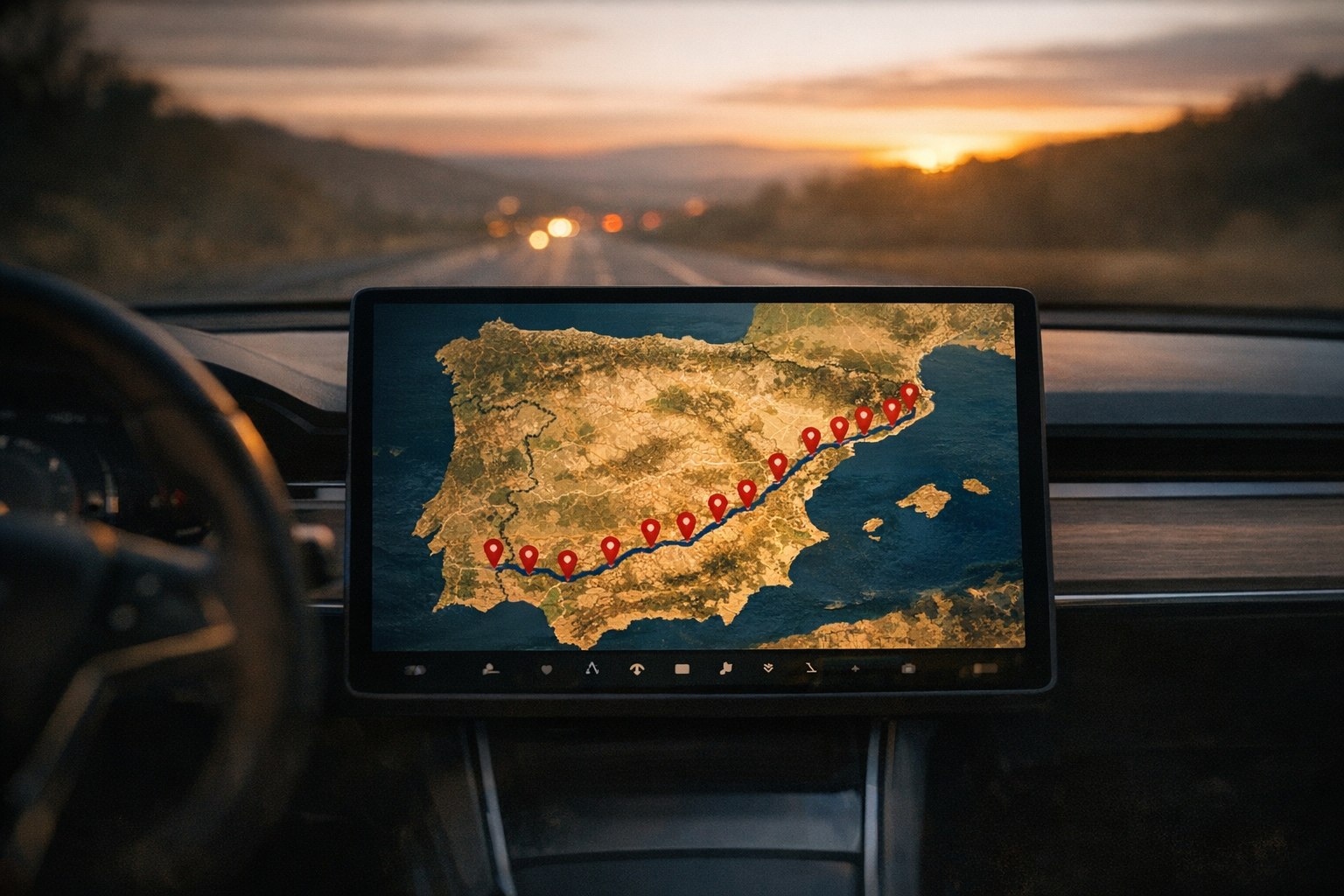
How the real map looks in the car
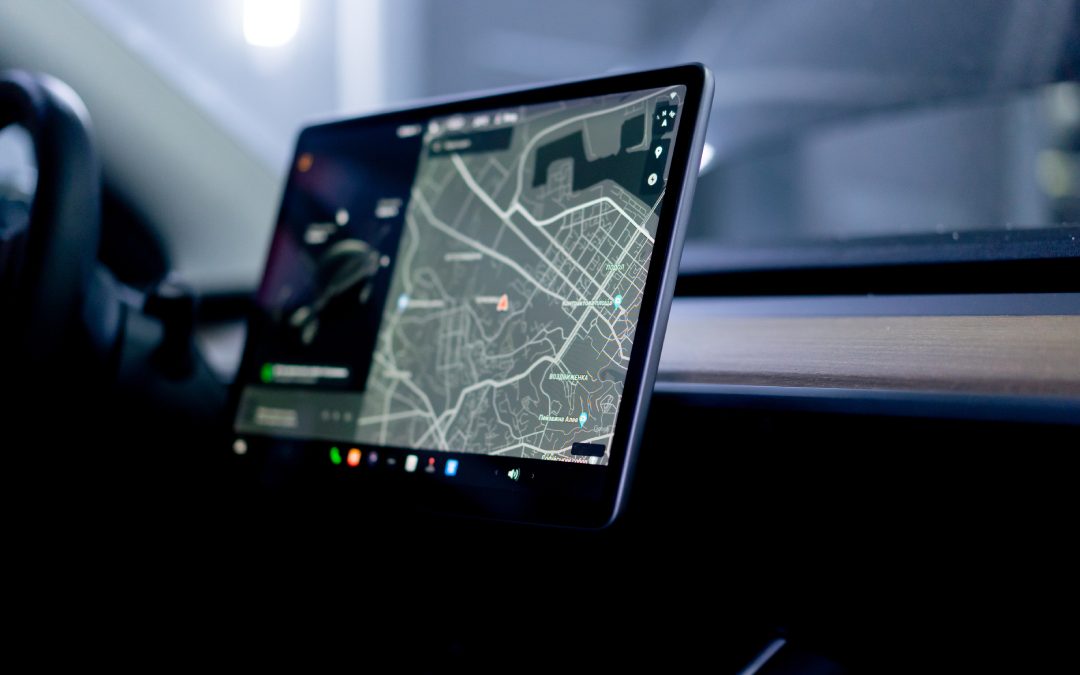
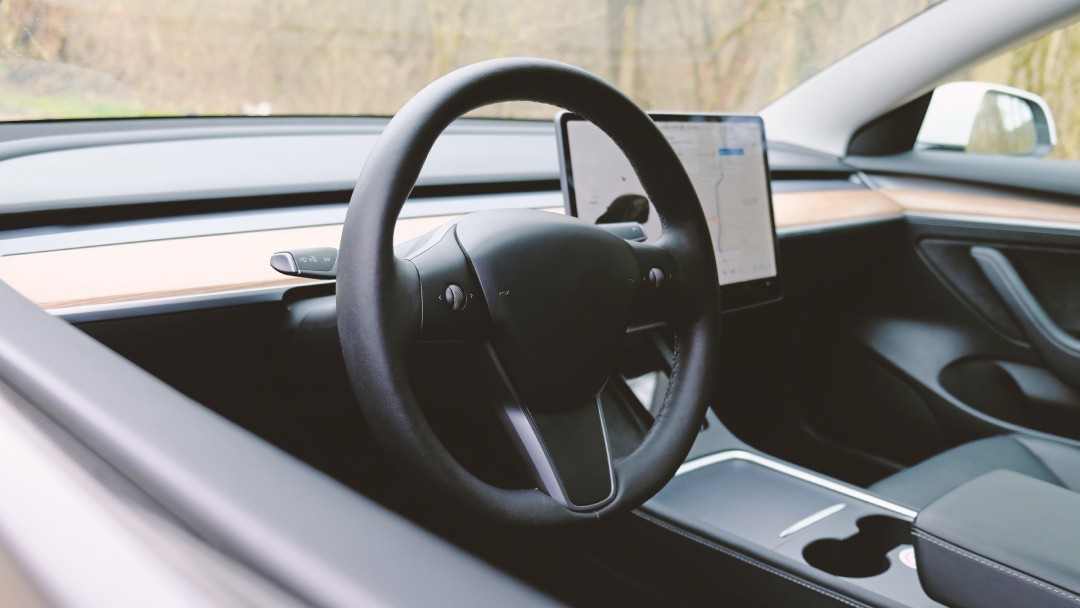
Tesla integrates the Supercharger map directly into the central screen. When you enter a destination, the car automatically calculates which Superchargers to use, how much battery you'll arrive with at each one, and the target charge percentage per stop.
Most useful: the car preconditions the battery before reaching the Supercharger so it charges at max speed. Without preconditioning, you can lose 30–40% of charging power in cold weather.
The native planner is excellent for Spain. The only limitation is that it doesn't integrate non-Tesla chargers, so if you want to combine Supercharger with Iberdrola or EasyCharger, run A Better Routeplanner (ABRP) in parallel.
Updated Supercharger prices in Spain
Prices change dynamically by time and station. 2026 range:
Standard tariff: €0.29 to €0.38/kWh.
Peak hours (12–22h at some stations): €0.38 to €0.45/kWh.
Off-peak (late night): €0.25 to €0.30/kWh.
Idle fee (past 80% if queue): €0.40 to €1.00/minute.
Charging 10–80% (about 50 kWh for Model 3 LR): €12.50 to €22 depending on time and station.
Apps I use on every trip
Native Tesla app: mandatory. Real-time status of every Supercharger (how many available, in use). Also controls charging from your phone.
A Better Routeplanner (ABRP): most serious planner. Integrates Tesla and non-Tesla chargers, lets you load your custom consumption, simulates precisely how long you'll take and how much you'll spend.
Electromaps: best charger database in Spain, with real-time user reviews. If a charger is broken, you'll see it here before any official app.
Plugshare: international alternative to Electromaps. Useful when traveling outside Spain.
Concrete planning tips
Arrive at each Supercharger with 10–15% battery. Charging from 10 to 80% is much faster than 40 to 80%. If you arrive too charged, you waste total time.
Don't leave a Supercharger above 80%. Charging curve after 80% is slow. The 80 to 100% segment can take as long as 10 to 80%. Only charge to 100% if the next charger is very far.
Avoid peak hours at tourist Superchargers. Saturday at 2pm in Tarragona in August you'll find queues. Scheduling the stop an hour earlier or later changes everything.
Combine Supercharger with lunch or dinner. 25 minutes is exactly what a Spanish menu del día takes. Plan well and you don't lose a single minute of actual travel time.
How to find the official updated map
Tesla maintains the official map at tesla.com/findus. Filter by Superchargers only, see details for each station (peak kW, number of stalls, hours) and what's coming soon.
Stations marked "coming soon" typically open within 6–12 months, so check if planning a future route. The network is growing significantly.
Conclusion
Spain has one of the best Supercharger networks per capita in the world. For a Tesla Model 3 or Model Y, planning a long Spanish trip is one of the most comfortable scenarios today. You just need the native planner, ABRP in parallel, and an understanding that V3 vs V4 changes your total trip time.
If you want to know exactly how much each charge will cost you, read my article on how much it costs to charge a Tesla in Spain. And to understand how I plan each leg in detail, see the guide on planning a Tesla route with ABRP.