An eSIM for travelling and working remotely is a digital data card that activates without swapping your physical SIM and works from the first minute in a new country. For people who work while travelling, it solves the three problems hotel WiFi can't: data available at any border crossing, a stable hotspot for your laptop during work calls, and instant access to digital documents without relying on external networks.
Something changes when you travel and work at the same time: connectivity stops being a convenience and becomes infrastructure. Like the laptop, like the credit card. Without it, the trip continues, but the work doesn't.
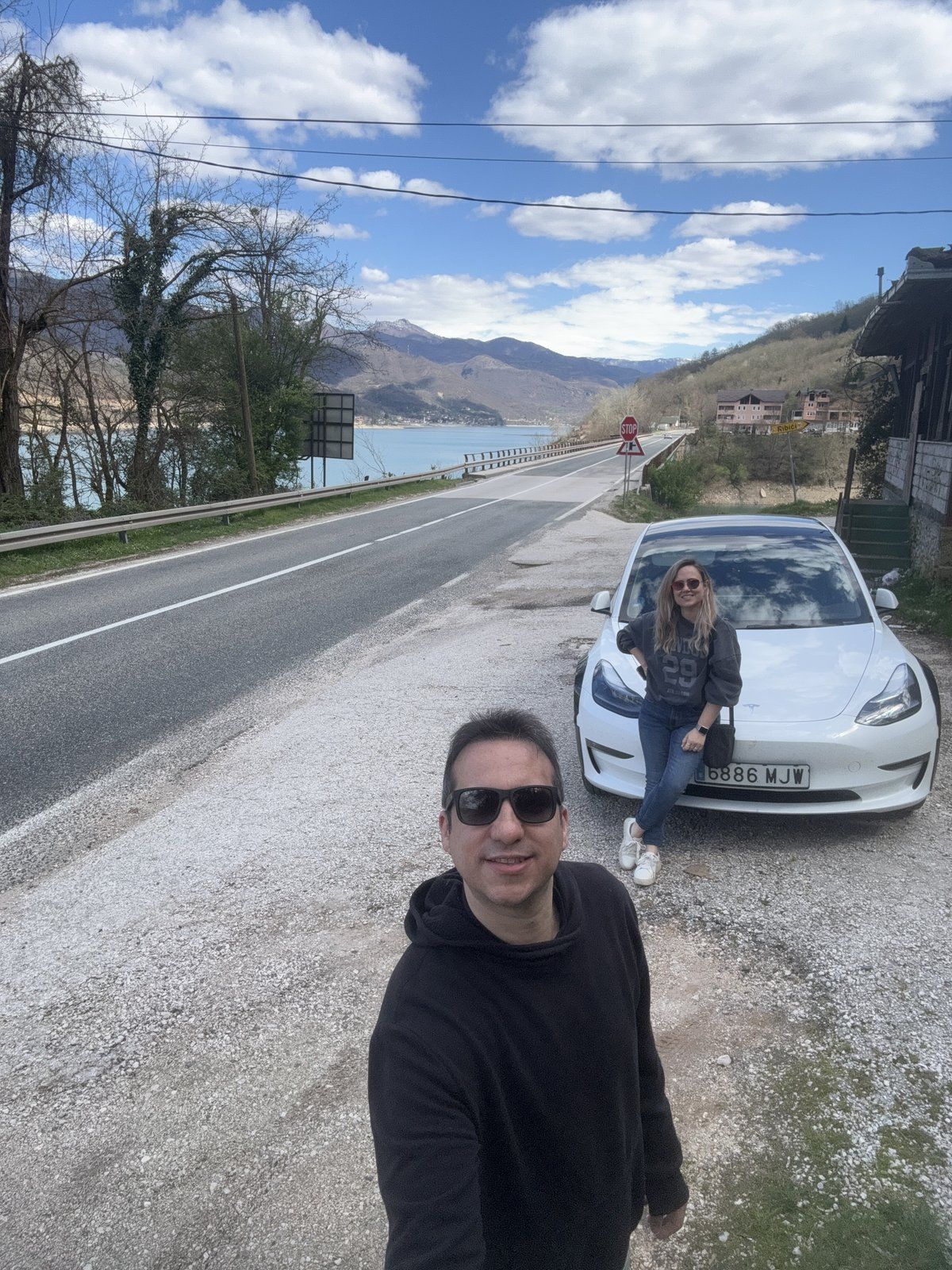
We learned this the hard way: arriving at a border with no active data in the new country. Arriving at a hotel where the WiFi didn't reach the room. Having a client call while crossing Bosnia and the campsite bar's WiFi couldn't load even the audio.
Since we started using an eSIM, that never happens again.

What we actually use it for
- Researching before every border crossing. Does this country require a vignette? Do you buy the toll pass at the border or before? Does our insurance green card cover us here? In Turkey we had to set up the HGS (electronic toll system) before entering the motorways. Without data, you find that out on the motorway. With data, you sort it out before you arrive.
- Documents that live on the phone. The green card, vehicle insurance, accommodation confirmations, entry permits for certain countries — all digital. To access them you need a connection. To show them at the border guard, too.
- ChatGPT for everything we don't understand. Forms in Macedonian. Road signs in Arabic. Rental contracts in Turkish. Payment systems we've never seen. We take a photo, send it to ChatGPT, and in thirty seconds we have the translation and context. This ability to consult anything in real time changed completely how we handle uncertainty on the road.
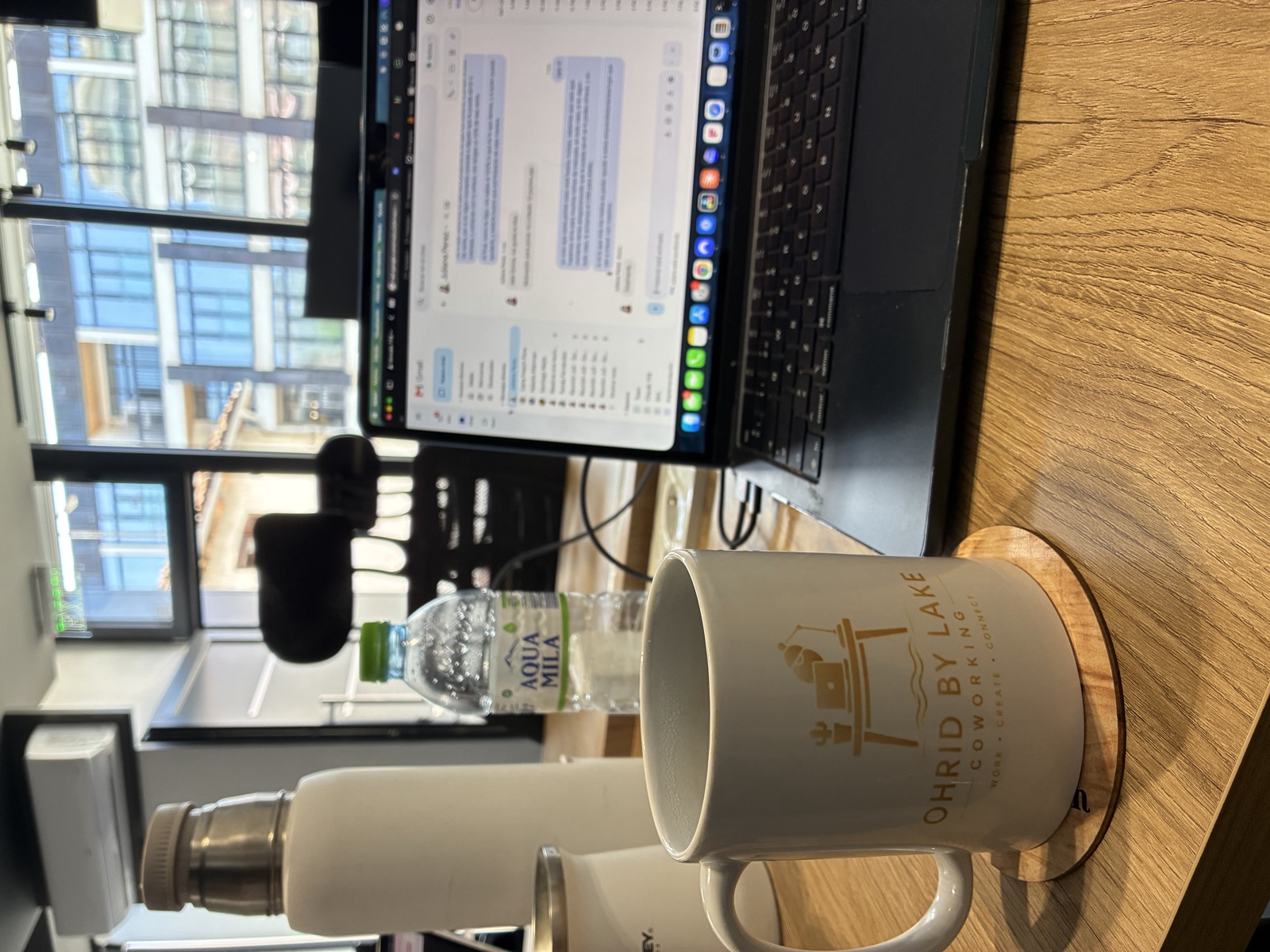
- The day's work. I work in brand positioning. Gonzalo in consulting. That means emails to reply to, projects to deliver, content to publish. There are no days where "I'm not working because I'm travelling." There are days I work three hours in the car while Gonzalo drives, and days we work from a car park with a great view. For that you need stable data, not the hotel WiFi that half-reaches the room.
- Calls and video meetings anywhere. Crossing a border at 10am doesn't cancel the 11am meeting. Having your own data means the call happens, in the car, in a car park, in a café with bad WiFi where you can use yours instead. Without an eSIM, you depend on whether the hotel connection is good enough.
- Time zone differences. When you're in eastern Europe or Turkey, clients in Spain or the Americas have schedules that don't wait. A four or five hour difference means their mornings are your afternoons, and if an urgent meeting comes up while you're on the road, you need to be available. That requires data that doesn't depend on that night's hotel WiFi.
The hotel WiFi problem: why it's not enough
This is something nobody tells you and you learn quickly: hotel WiFi is a lottery. Sometimes it's fast, sometimes it only reaches the corridor, sometimes it's speed-capped to the point where a video call is impossible, and sometimes it goes down at the worst possible moment.
For a leisure trip, that's an inconvenience. For someone working while travelling, it's a real problem. An important call with choppy audio isn't just uncomfortable, it's unprofessional. A project with a deadline you can't deliver because the WiFi went down at 11pm has no valid excuse for the client.
The eSIM is the answer to that. It doesn't replace WiFi, it complements it, and when WiFi fails, you take control without anything stopping.
Per-country or unlimited: how we choose the plan
Holafly has two main modes depending on how you organise your trip:
| Plan type | Best for | Practical example |
|---|---|---|
| Per-country plan | Longer stays in one destination or controlled spending. You pay only for what you need. | One week in Turkey: Turkey plan. |
| Regional / unlimited plan | Crossing several countries in a few days. One plan covers the whole region without activating anything new at each border. | 10-day Balkans trip: Eastern Europe plan. |
In practice, we mix: a regional plan for multi-border stretches, and specific plans for countries where we spend more than a week. The flexibility to choose in the moment, no contract, no commitment, is part of what makes it work when the itinerary changes on the fly.

The day we needed it most: North Macedonia and the green card
We arrived at the Evzoni-Bogorodica border crossing, between Greece and North Macedonia. The guard asks for the car's papers, including the green card. We had it on the phone. eSIM active. Found it in thirty seconds.
The question that came up after: does this insurance cover North Macedonia? Not all European policies include all Balkan countries. We opened ChatGPT, sent a photo of the green card, asked for verification. Answer in a minute. Covered. We carried on.
Without data at that moment, that would have been a wait, a doubt, or a problem at the border itself.

How to activate it, and the discount to get started
- Go to holafly.com, choose your destination country or region and buy the plan.
- You receive a QR by email. Scan it in Settings → Mobile Data → Add Plan.
- Activate whenever you want — you can do it days before without rushing.
- When you cross the border, switch the active line to Holafly. Data immediately.
With the code CARYGONZA you get 5% off any eSIM and 10% off Holafly Plans for the first year. That's what we use.