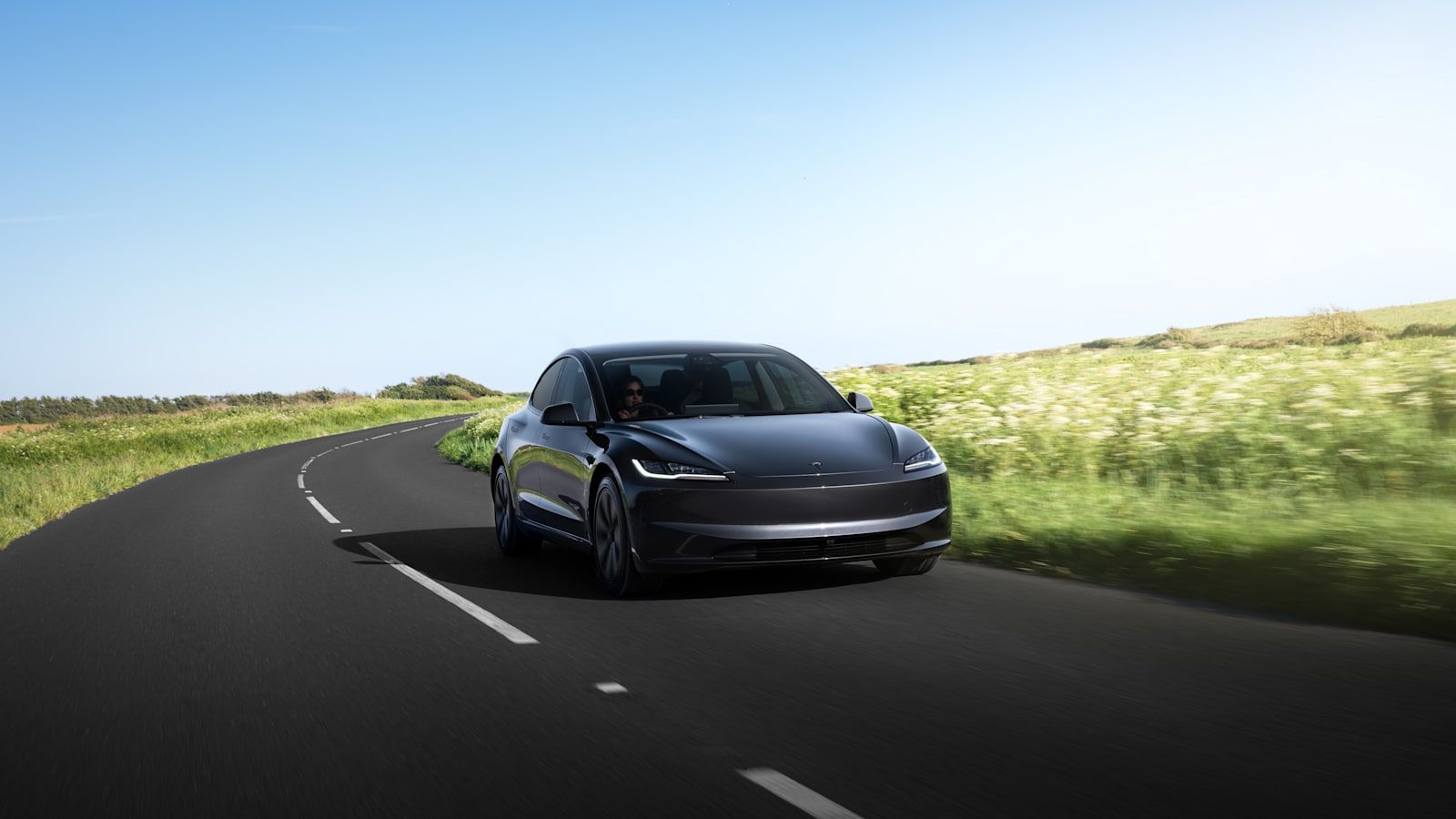
I'm Argentine. I spent the last seven months trying to bring my Tesla Model 3 Long Range from Barcelona to Buenos Aires. The idea was simple: if I was moving back to Argentina after 23 years in Spain, I wanted to keep driving the same car I had already planned a continental trip with. The how, however, was anything but simple. And it still isn't.
This article is the honest conclusion of that process. It's not an import manual, nor a legal guide — for that you need a customs broker and an accountant. It's a summary of what I learned talking to all of them, reading decrees, comparing regimes, and understanding that bringing a Tesla into Argentina today is possible, but difficult, expensive, and depends heavily on how you frame it.
Why bring a Tesla to a country where Tesla doesn't sell
Tesla has no official operation in Argentina. That means no dealerships, no Service Centers, no proprietary Superchargers. If your Tesla breaks, you fix it with an independent mechanic who learned from YouTube, or you ship it to Chile or Uruguay, the closest countries with an official network.
So why insist? Two reasons, one rational and one emotional.
The rational one is that I already had the Tesla. I bought it in 2023 in Spain thinking it was a better way to travel — more efficient, quieter, with technology that evolves via OTA updates. Buying another car just for Argentina, diesel or non-electric, was a step backwards.
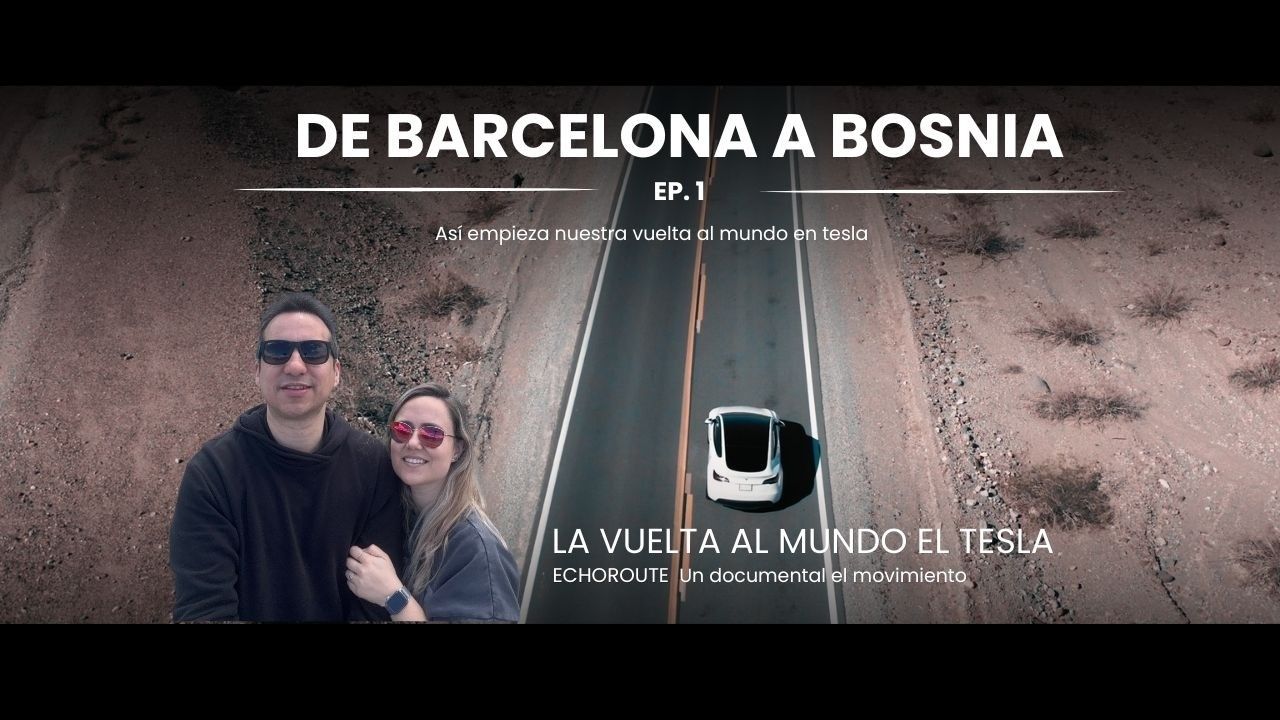
The emotional one is that EchoRoute, the project I've been building with Carla, was planned around that car. The original idea was to cross Europe, ship the Tesla to South America, and travel through Argentina with it as part of the documentary we're filming. Changing the car meant changing the project.
Argentina's electric vehicle import regime in 2026
Until a few years ago, electric cars had sky-high tariffs in Argentina, on top of VAT, internal taxes and various surcharges. Recent reforms reduced some tariffs to encourage e-mobility, but the operational reality remains complex for private individuals.
The key point is that a Tesla, technically, cannot be registered as a new private car in Argentina because of homologation: no official representative has homologated the model with the automotive registration authority. That leaves you with three possible paths, all with serious pros and cons.
The three alternatives I evaluated (and why none of them fully worked)
1. Permanent import as a private individual
The most obvious and most expensive. It implies paying tariff, VAT, internal taxes and a pile of customs-related costs. Estimates from various brokers ran from 75 to 95% on top of the CIF value of the vehicle, depending on who runs the numbers and which tariff category applies.
The main problem isn't the cost. It's that afterwards you have to pass technical homologation with INTI and RNPA, which for a model not represented in the country is a long process, with no guarantees, historically solved only via individual filings with private surveyors.
2. Temporary import regime
This was my Plan A for months. Argentina admits the temporary entry of foreign vehicles under the Carnet de Passages en Douane or equivalent, letting you drive for up to 8 months without paying import duties, as long as the car leaves the country within the deadline.
Sounds perfect, but has three catches: the car has to be registered in your name in the country of origin, you can't be a tax resident in Argentina while using it, and if you overstay you face fines or the seizure of the vehicle.
Since I moved back and became a tax resident in Argentina, the temporary regime gets complicated. Customs looks at fiscal residency. If you're a resident, it stops applying.
Had I kept my Spanish residency and entered as a tourist, bringing the Tesla for several months would not have been a problem. The conflict was created by my decision to move back and become tax-resident in Argentina: at that point the car can no longer circulate under the temporary regime and needs to be nationalized.
3. Import as a company
The most viable option, although also the most tangled. It implies that a company — not you as a person — imports the vehicle under a specific figure, registers it, and assigns it to a declared productive use (typically, transport or content filming). The Tesla becomes a company asset.
Pros: simplifies some paperwork and lets you amortize the cost accounting-wise. Cons: you need an operational corporate structure, continuous tax advisory, and use flexibility is tied to the company's purpose.
What I learned talking to customs brokers, accountants and lawyers
The most important conclusion I drew from all those conversations is that the system is designed so you don't bring a Tesla to Argentina. It's not illegal — it's that every step requires convincing someone that your case fits a regulatory box it wasn't designed for.
One thing repeated in every meeting: "everything is possible, but it depends on the moment, the official and how you present it." For me, coming from a Spanish system where if you meet the requirements the paperwork goes through, that was the hardest thing to process.
I also learned that the EV market in Argentina is moving, although with different brands. BYD just opened dealerships, Volkswagen sells the ID.4, BMW is expanding the iX. Superchargers don't exist, but YPF Ruta and Edenor are installing fast chargers at gas stations. The ecosystem is nascent but growing.
How much does a Tesla cost in Argentina today (if you manage to bring it)
These are the ranges the brokers I talked to handled, to give you a sense of scale. Don't take these numbers as definitive because they vary by month, by official and by tariff category applied:
Used Tesla Model 3 Long Range, estimated CIF value in Europe: 35,000 – 45,000 USD.
Import tariff + VAT + internal taxes: roughly 75–95% on CIF.
Customs clearance, local freight, processing: 3,000 – 6,000 USD.
Registration, additional VAT, agency: 2,000 – 4,000 USD.
Total estimate to have the Tesla legally on the road: between 65,000 and 90,000 USD.
For comparison, a new Tesla Model 3 in Spain today costs between 40,000 and 50,000 EUR. The difference is not trivial: you're paying between 1.5 and 2 times the European price for exactly the same car, with no official warranty and no charging network.
In my specific case, the quotes I received just to nationalize the Tesla I already owned — only the nationalization paperwork, not counting the cost of the car which was already mine — reached up to 50,000 USD. More expensive than the Tesla itself. When I saw that number, I finally understood it wasn't viable and decided to change the whole plan.
Why I redefined the whole trip
Seven months in, I made the decision to change the plan. The trip now starts from Europe heading east: Central Europe, Eastern Europe, the Balkans, and from there we cross into Asia. The ideal end destination is Australia. Argentina is left for the closing chapter, if timing and regulation allow.
It wasn't a defeat. It was a redefinition. The Tesla is built to cover kilometers in regions with good charging infrastructure, and Europe heading east has that infrastructure much better than South America does today. I could have forced the import, but the cost was very high and the regulatory uncertainty left me too exposed.
If you read between the lines, there's also an emotional decision: the journey itself is the project, not the destination. Going from Buenos Aires to Buenos Aires after crossing three continents feels like a more interesting story than fighting customs for a year.
What's happening with EVs in Argentina today (it's not just Tesla)
If you're reading this from Argentina thinking about buying an EV, the landscape improved a lot compared to 5 years ago but is still far from Europe:
Available models: BYD Dolphin, BYD Yuan Plus, Volkswagen ID.4, BMW iX and iX3, Mini Cooper SE, JAC E-Series and several cheaper Chinese models that entered via bilateral agreements. Tesla isn't sold officially, but private importers bring used units from the US at the buyer's expense.
Charging network: growing but still concentrated in CABA, Greater BA and tourist routes (Bariloche, Mendoza, Mar del Plata). YPF Ruta and EDEMSA are installing fast chargers at gas stations along trunk routes. Apps like Plugshare and ABRP map the network better than any official app.
Operating cost: much lower than combustion. Residential kWh is subsidized in most of the country, and even without subsidy it's infinitely cheaper than gasoline. That partially compensates for the high initial price.
If you have a Tesla in Europe or the US and want to travel through Argentina
If you only want to visit Argentina with your Tesla for a few months, the temporary regime still works well, as long as you keep tax residency in your country of origin. Remember to:
Get the Carnet de Passages in your country before leaving. Have international insurance up to date. Plan the route with Plugshare and ABRP, not Tesla's native app. And prepare yourself mentally for some days when there's no fast charger nearby and you'll have to stop 8 hours at a 7 kW Type 2. It's part of the game.
If your plan is to stay and reside, the temporary regime stops applying and you enter the maze I described above. My honest suggestion: talk to two different customs brokers and a customs lawyer before deciding. Opinions vary and it's worth having more than one.
My conclusion and the Plan B I'm executing
If you ask me today whether bringing a Tesla to Argentina is worth it, the answer is it depends heavily on what you want to do with it. If it's just touring for months as a visitor, yes, go for the temporary regime. If it's living there using it as a daily driver, today I wouldn't recommend it — the costs, the uncertainty and the lack of official support will wear you down.
In my case, Plan B is to cross the world first. We leave from Barcelona, travel through Central and Eastern Europe, drop into the Balkans, cross into Asia, and at some point reach Australia. Argentina is left for the closing chapter — if conditions change, we bring it. If not, we'll rent something when we're there.
What helped me most in this process was understanding that plans need to adapt to reality, not the other way around. Fighting the system for seven months forced me to redefine a trip that ended up being richer than I had imagined.
One important note: all of this happened roughly a year ago. Since then, Argentina has been steadily improving the framework for electric vehicles month by month — more brands entering, more fast chargers on the road, tariff reforms reducing EV costs. If you're reading this in 2027 or 2028, it's very likely that many of the numbers in this article have already changed for the better. What doesn't change is the importance of talking to an up-to-date customs broker before making any decision.
If you're in a similar situation — Argentine or foreigner, wanting to bring an EV to Argentina, or thinking about a South American road trip with your Tesla — reach out. I'll share more detail on what I learned, and I'll get to learn how the next one fared too.
If you want to see how the new plan is shaping up, you can read the travel stories, where I'm publishing chapters of each leg, or get to know Carla's and my story, which is where EchoRoute came from.