We had spent a few days in Podgorica and, after meeting up with the Tesla again, we got back on the road. We had used Montenegro to do some shopping and sort things out before moving on. From there to Shkodër was just over an hour, border crossing included.
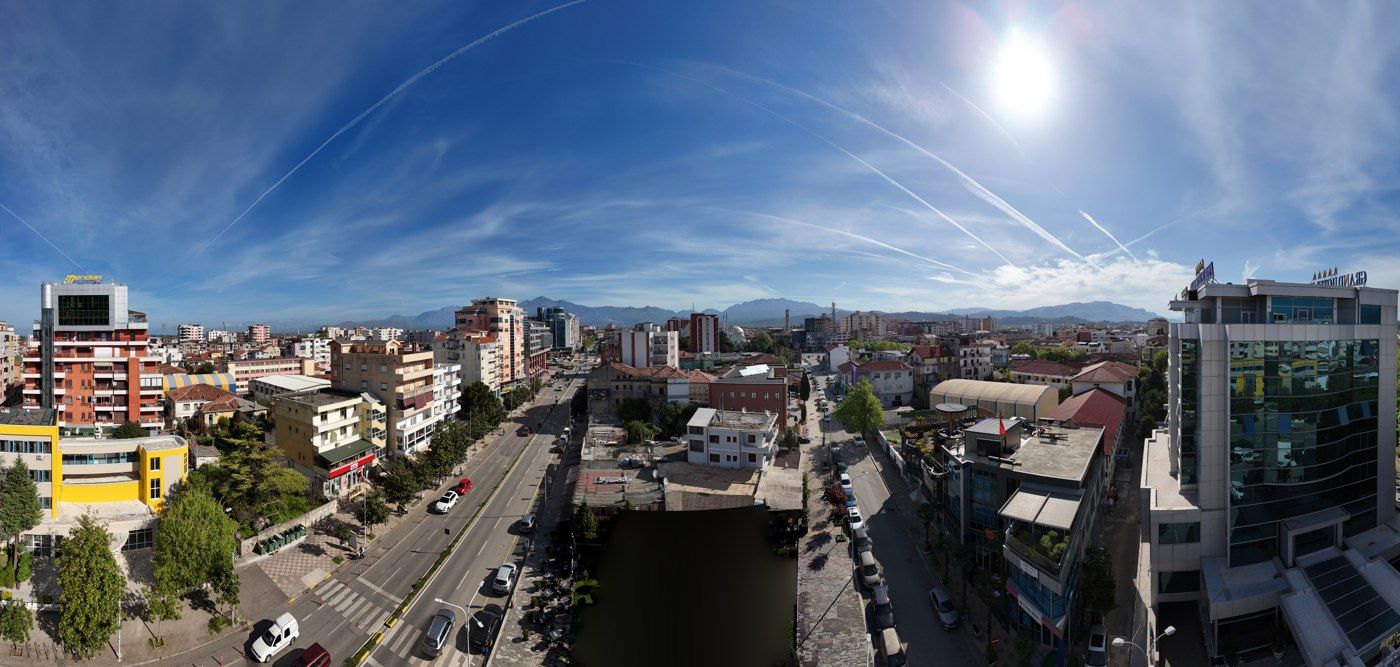
As we drove into the city, we started to notice the landscape changing. There were humbler, somewhat run-down buildings, hanging cables, and some areas that gave us the impression of entering a poorer city. In some places, rubbish had piled up around the large bins lining the streets.
And almost at the same time, we started noticing something else. A Mercedes. Another Mercedes. One more — luxury cars parked in front of buildings that seemed to belong to a completely different economic reality. Gonzalo and I started counting them as we walked. At first it was a joke. Then it turned into almost a game between us because they were everywhere.
During that first week, a conversation came up that we repeated several times: we felt very safe. The curious part was that we had both, almost without realising it, made a fairly basic association — if a place looks poorer, it's probably less safe. We had never really stopped to think about where that idea came from. It was just there.
So we started talking about it between ourselves.
"Isn't it odd that we left the car there without thinking twice."
"Look at the building — the front door's wide open."
"It's eleven at night and the street is full of people walking around perfectly relaxed."
The more we talked about it, the more obvious it became that we were linking two things that didn't necessarily have anything to do with each other.
The flat we had rented, for example, had no garage. When you're travelling with the Tesla it's one of those things you usually try to sort out, because the project depends on the car and, if we have a choice, we prefer to keep it covered. We asked the host where they'd recommend we park. They replied, completely relaxed, that we should just leave it wherever we found a spot and nothing would happen. It was — though we didn't yet have a name for it — our first contact with something we would come to understand better later: Albania is an extremely hospitable country, and you could already feel it in the people.
We found a space on a fairly dark street and the car stayed there for several days. And honestly, absolutely nothing happened. We only moved it once, because so many bikes had accumulated around it that it seemed more practical to shift it.
The bikes were another surprise. There were so many of them. Young people, adults, elderly people going about their lives by bicycle as part of everyday life. It wasn't a tourist activity or something confined to a pretty cycle lane in the centre — people genuinely got around that way.
I later found out that Shkodër is known precisely as the "City of Bicycles." Cycling has been part of the urban culture here for decades, and the city's flat streets help explain why. I won't compare it to Amsterdam because Amsterdam is in a different league when it comes to sheer numbers, but after staying there, Shkodër is probably the second city where I remember seeing the most bikes.
The building we were staying in followed the same relaxed logic we were starting to find everywhere. The front door stayed open twenty-four hours and anyone could walk in. When we ordered food through Wolt — something like Deliveroo — the rider could come straight up and leave the order at our door.
The first few times it surprised us; then we stopped noticing. I suppose that's how it works when you travel for a long time: things you'd comment on five times the first day become perfectly normal a week later.
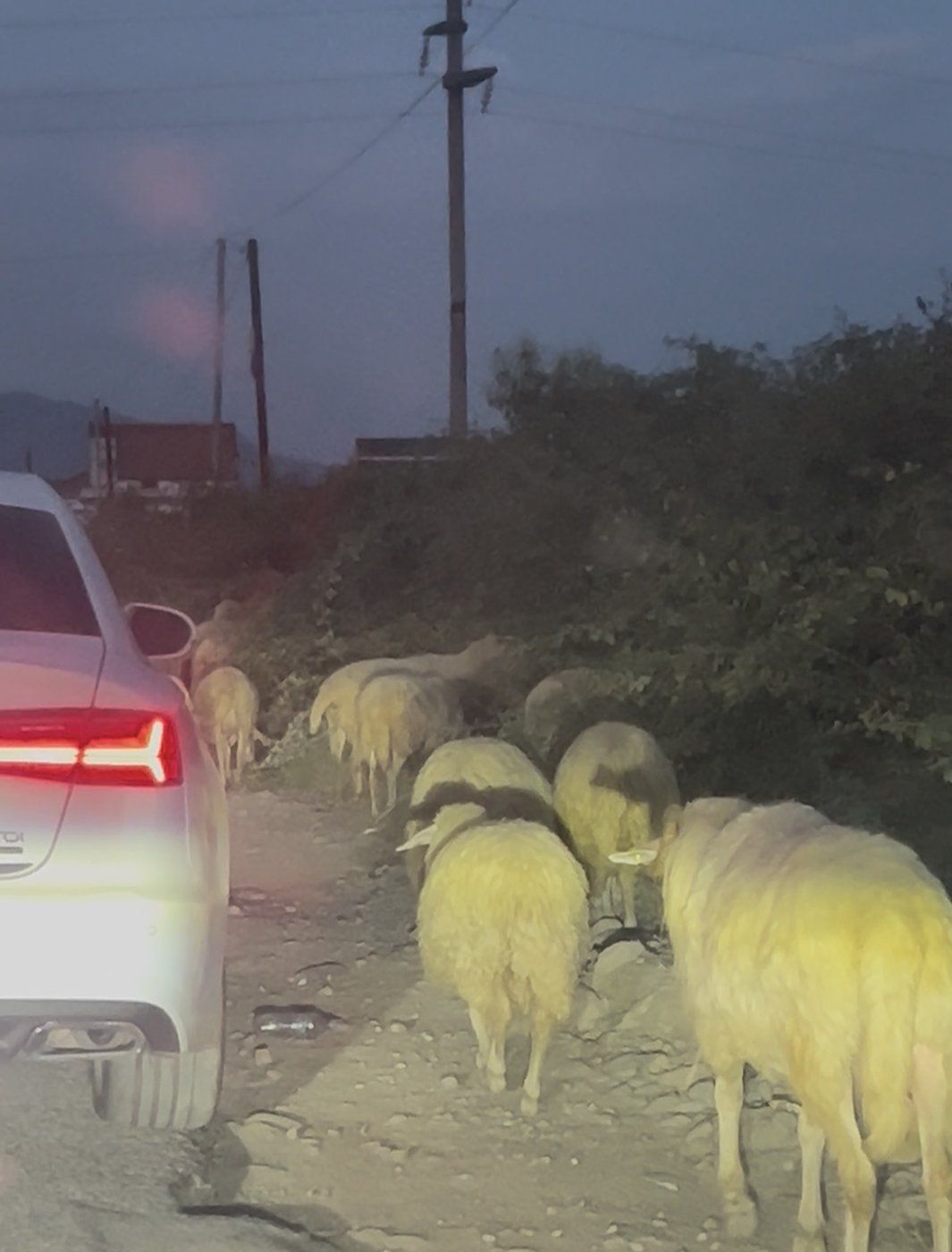
Though there were other things that kept surprising us. Shkodër is very close to rural areas, and at times that boundary between city and countryside seemed far less defined than what we were used to. One day we ended up crawling along behind a group of sheep in the Tesla.
On another occasion we had to stop — along with several other cars — and wait for a sort of procession of ducks to finish crossing the road.
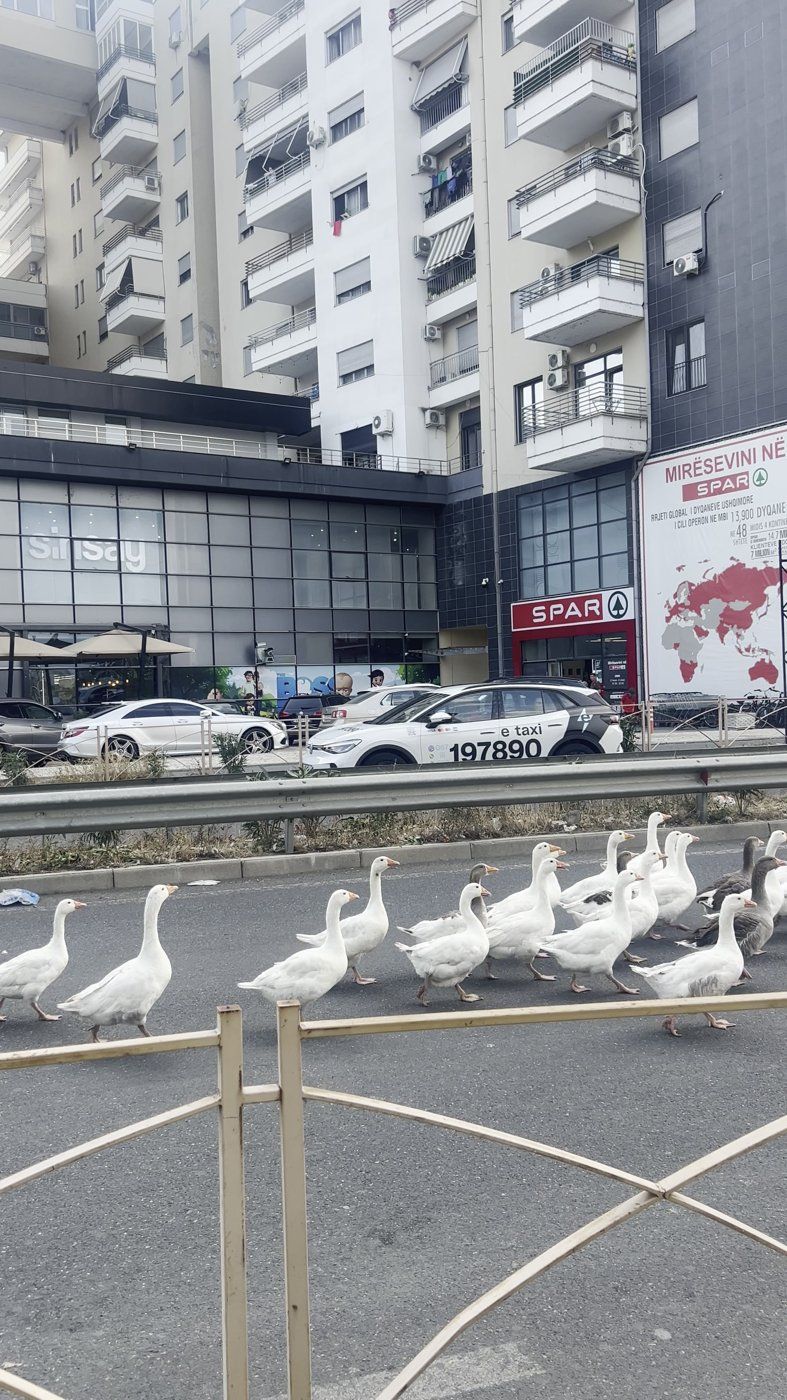
Nobody seemed to be in any great hurry: the animals crossed, the cars waited, and then everyone carried on as if it were the most natural thing in the world. We, of course, took photos.
At night Shkodër had a different energy. And there was something that made it very easy to go out: it was genuinely cheap. Compared to the places we had come from, eating out cost so little that for that week it barely made sense to think about cooking. That would change quite a bit when we got to Tirana, but in Shkodër we could finish work, go for a walk and decide where to eat on the spot. The only condition was remembering to bring cash — many places still worked mainly that way, something we discovered fairly quickly.
The centre of Shkodër was full of life once the sun went down. Restaurants and places open late, people walking around, enough going on to head out without overthinking it. And we made the most of those evenings.
By that point Gonzalo and I had been travelling together for several months, but those conversations were still an important part of getting to know each other. We had gone from first dates to travelling together, then living in Sitges for a while, and now to a life where we could change city every few weeks. And that also changed the conversations.
We talked about what we were seeing, how we felt living like this, what surprised us about each place and what we wanted to do next. Some conversations started talking about Albania and ended hours later somewhere completely different in our lives. Sometimes we'd go out just for dinner and end up staying far longer than planned. I think one of the things we enjoyed most about that period was having time for exactly that — there was nowhere we needed to rush back to.
Shkodër was pretty much that for us that week: working during the day, walking around, going out for dinner when the heat dropped, and staying up late talking.
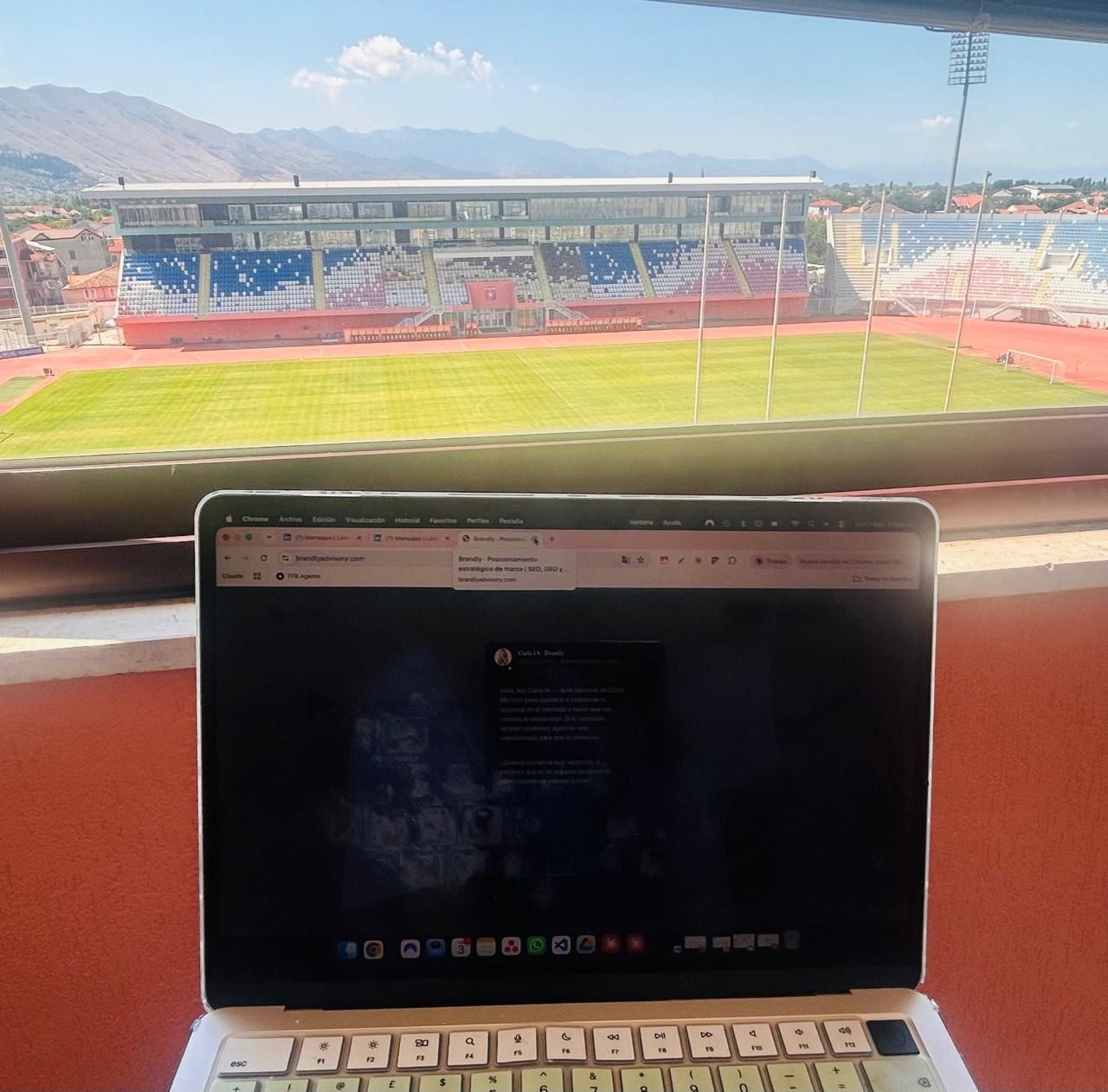
Working from there had something particular about it: the balcony of the flat looked directly onto a football pitch. We never managed to watch a match down below, but it was a pleasantly odd detail all the same.
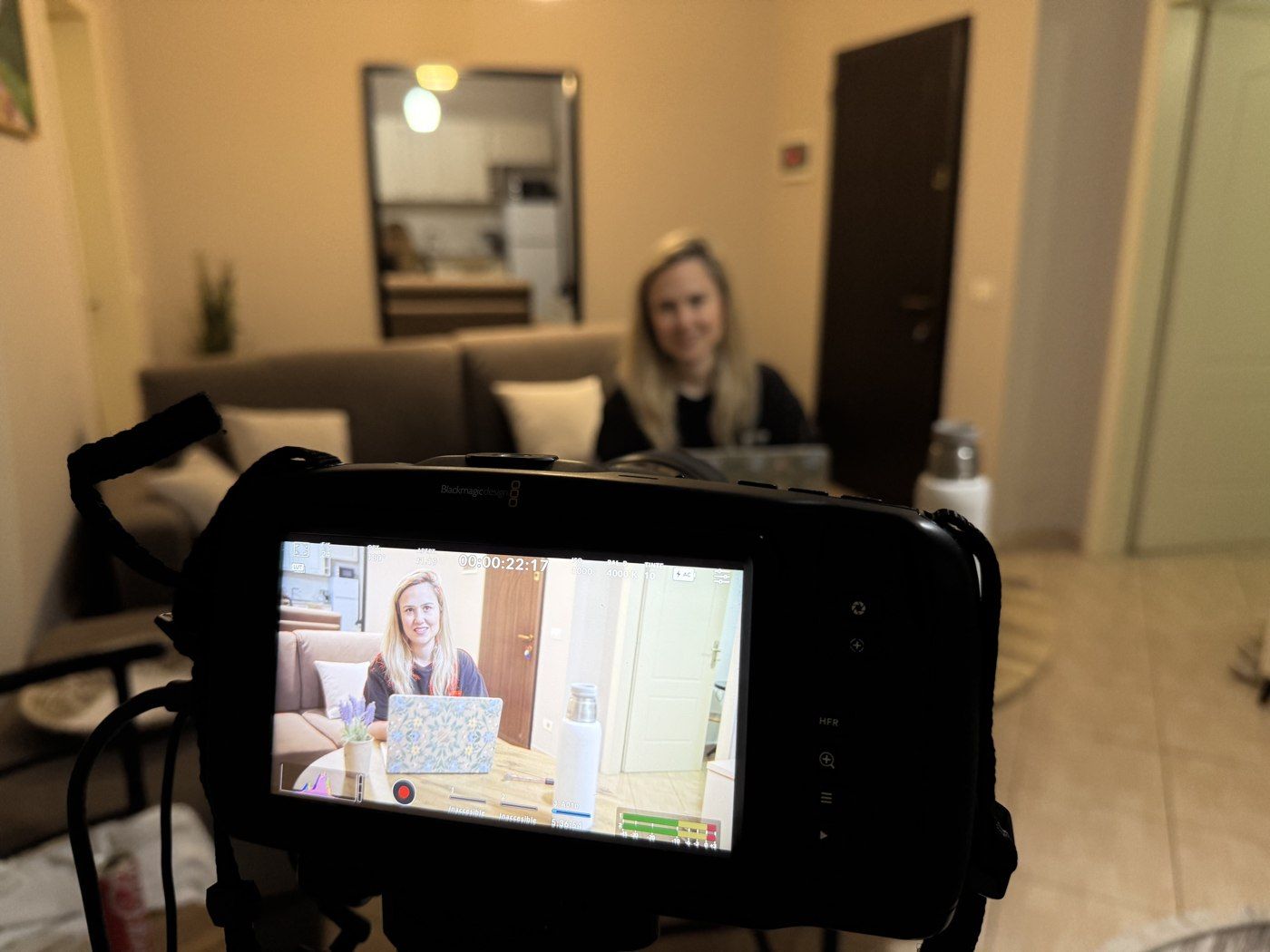
That week we also started filming with me in front of the camera.
Gonzalo had been documenting a good part of our travels, but for me it was fairly new territory. Talking in public doesn't particularly daunt me — I've given talks, taken part in events and can feel quite comfortable in front of an audience. What always felt stranger was watching myself back afterwards.
I'd often finish a talk and never watch the video again. Being there, focused on what you want to say, is one thing; watching yourself from the outside and starting to notice your voice, your gestures, all the things you weren't thinking about while you were speaking — that's quite another.
With Gonzalo there was something extra. He wanted us to watch back what we'd filmed together, not so much to judge it but because we were starting to build something between us and those images were going to form part of the memory too.
That gradually made me want to try.
So in Shkodër we filmed our first sessions together. Afterwards we watched the footage, which took a little getting used to at first, but I was glad we had started.
Rozafa Castle
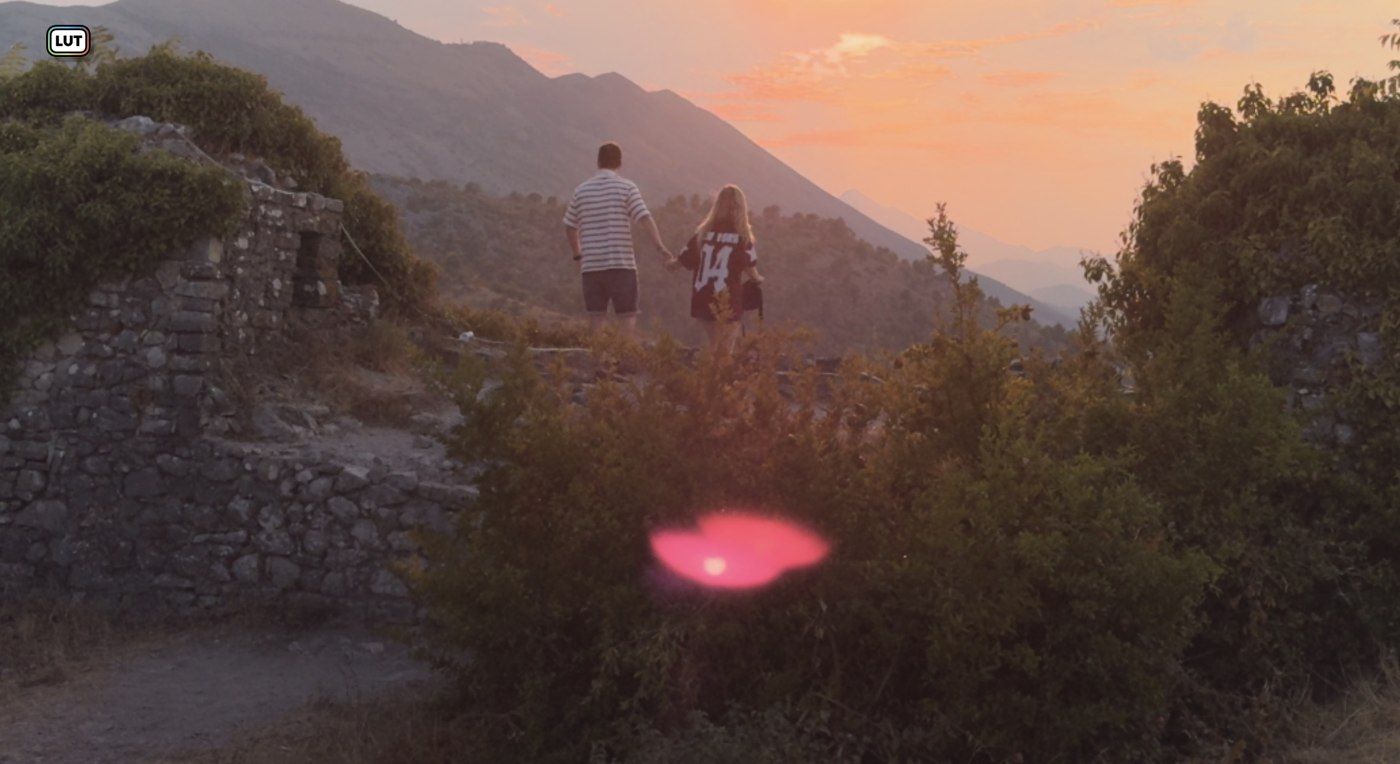
One of those days we went up to Rozafa Castle. It was extremely hot. We climbed up to the fortress and, when we got to the top, one of those incredible views appeared that makes you want to photograph absolutely everything: from up there you could see the city, the lake, the rivers and the mountains stretching out all around.
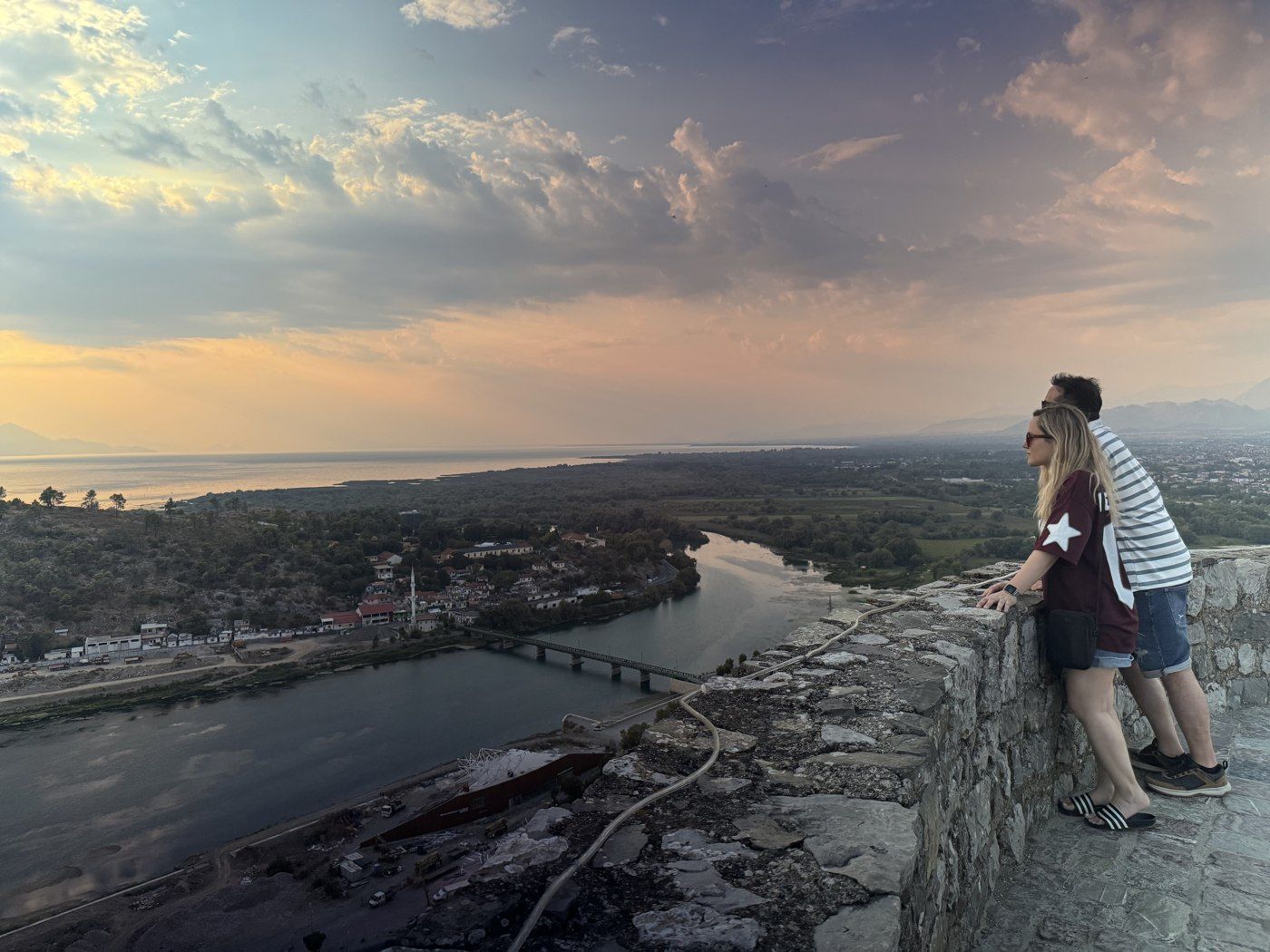
We stayed until sunset and watched one of the most beautiful sunsets we had seen at that point in the trip.
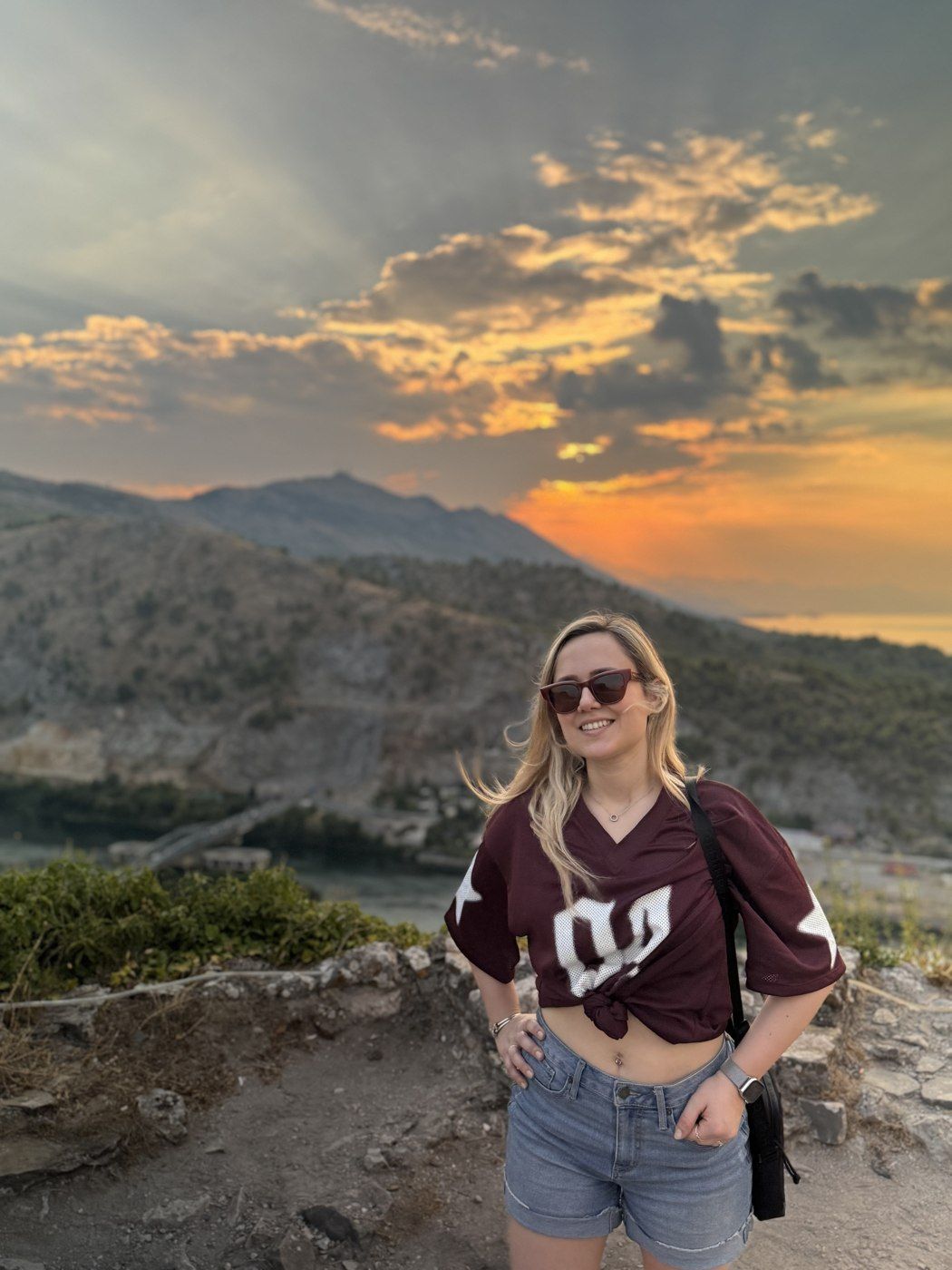
The castle has been looking down at that same geography for centuries. It has passed through different eras, peoples and occupations, though the story most associated with the place has nothing to do with a battle — it involves a woman.
Legend has it that three brothers were trying to build the fortress, but every night the walls they had raised during the day would crumble. For the walls to hold, one of their wives had to be sacrificed within them. The one chosen was Rozafa. Before being sealed into the walls, she asked that part of her body be left outside so she could continue to feed and care for her son.
Near the entrance to the castle there is still a kind of spring — streaks of lime dripping down the stone — that local tradition associates with Rozafa's milk. They say that some mothers still come there looking for that water to help with breastfeeding. Centuries after the legend, it still held some meaning for the people who live around the castle.
We left Shkodër with many surprises and reflections, but the biggest was the incredible hospitality of its people — the way they would take the time to help us even when we couldn't quite understand each other, and how welcome they made us feel.
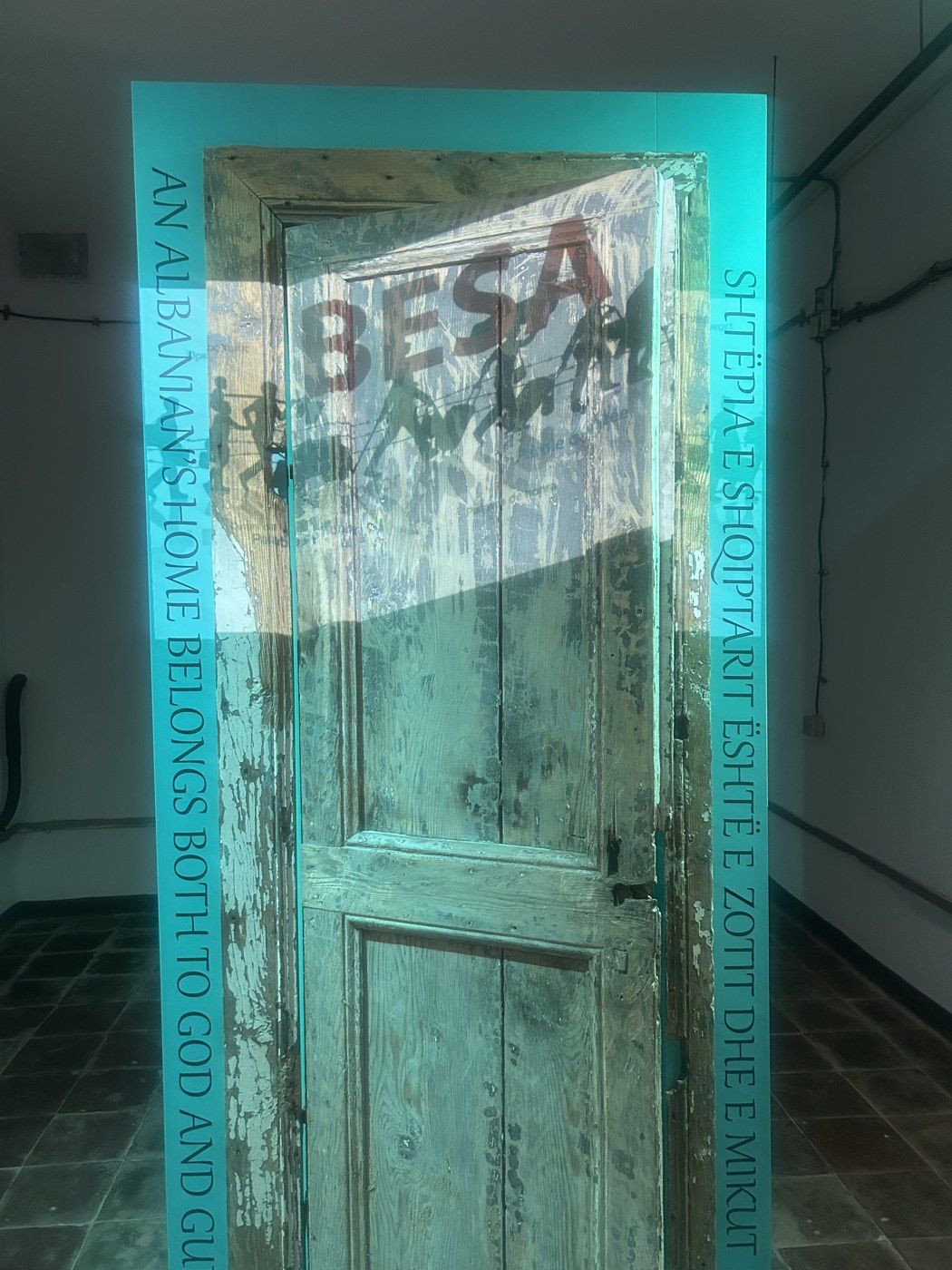
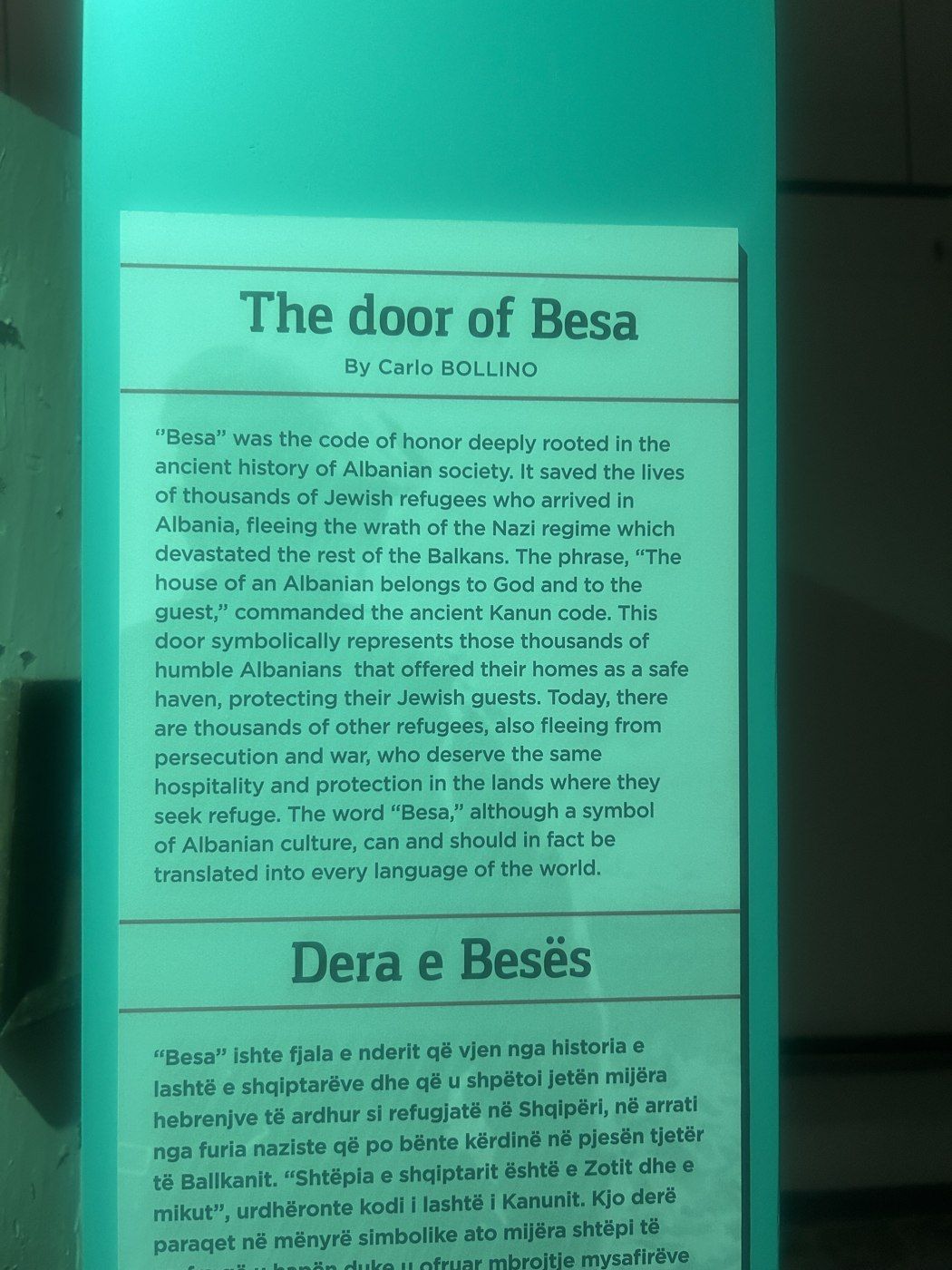
What we didn't know yet was that that hospitality had a proper name: besa, the Albanian word of honour, the promise to protect and receive the other as if they were your own. We would only understand that later, in Bunk'Art, the Tirana bunker turned museum.
Next stop: Tirana.
Keep reading
The story of communism in Albania, Enver Hoxha's Pyramid and the 173,371 bunkers continues in the next article: Albania: 50 Years of Communism and Fear of the Outside World.
You can also watch the episode Gonzalo filmed in Shkodër — the full drive from Montenegro and Albania's first impressions on video: What to See in Albania: Our First Week in Shkodër.


