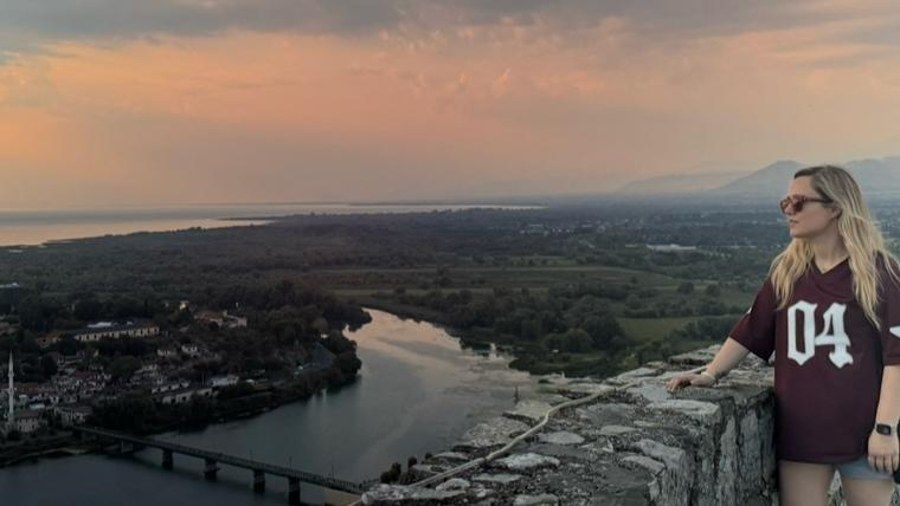
We arrived in a country 100% open to the world — one that is already positioning itself for the coming years with tourism as one of the main drivers of its economy, and that last year alone received close to 12.5 million foreign visitors.
Now imagine that little more than thirty years ago you were living in a country where private ownership of the means of production had been abolished, the land was under State control and agriculture had been collectivised. Even what you grew in your own back garden was regulated and no longer fully yours, and you could be sent to prison for consuming it.
A dictator arrives who, in order to hold onto power, carries purges right into his own inner circle, and while he lives like a king, leaves the entire population in poverty. The outside world becomes "the enemy." The State controls the media, the information that comes in and the information that goes out, and for decades the population has no idea what is happening beyond the border.
Leaving the country without authorisation could mean crossing a border guarded by electrified fences, patrols, dogs trained to kill and the real risk of dying in the attempt. Food was scarce: getting something as basic as bread or milk was not always guaranteed. But even acknowledging that publicly could become a problem.
Saying "there isn't any" could be interpreted as far more than a description of what was missing. This is what the population lived through under Enver Hoxha's communist dictatorship.
The story of an uncle and two words: "there isn't any"
Our local guide told us this through her own family history and, as I listened, I thought about how easy it is to talk about a dictatorship in numbers until someone gives it a name, an age and a family.
Her uncle was 18 years old when he went to buy bread and milk. When he got there, there simply wasn't any left. So he said "there isn't any." It's hard to imagine those three words as a threat, but according to the story she told us, they ended up sending him to prison for twelve years. He was lucky enough to come out alive to tell it; many others never came back. At that time, publicly acknowledging that food was running out could generate discontent, and discontent could lead other people to start questioning the regime.
She also told us about the lasting effects. He never wore short trousers because his body still bore the marks of the torture he had suffered. But perhaps the hardest marks to explain were the ones that couldn't be seen: the fear, the humiliation and the feeling that you could never fully trust anyone. Not even your own shadow.
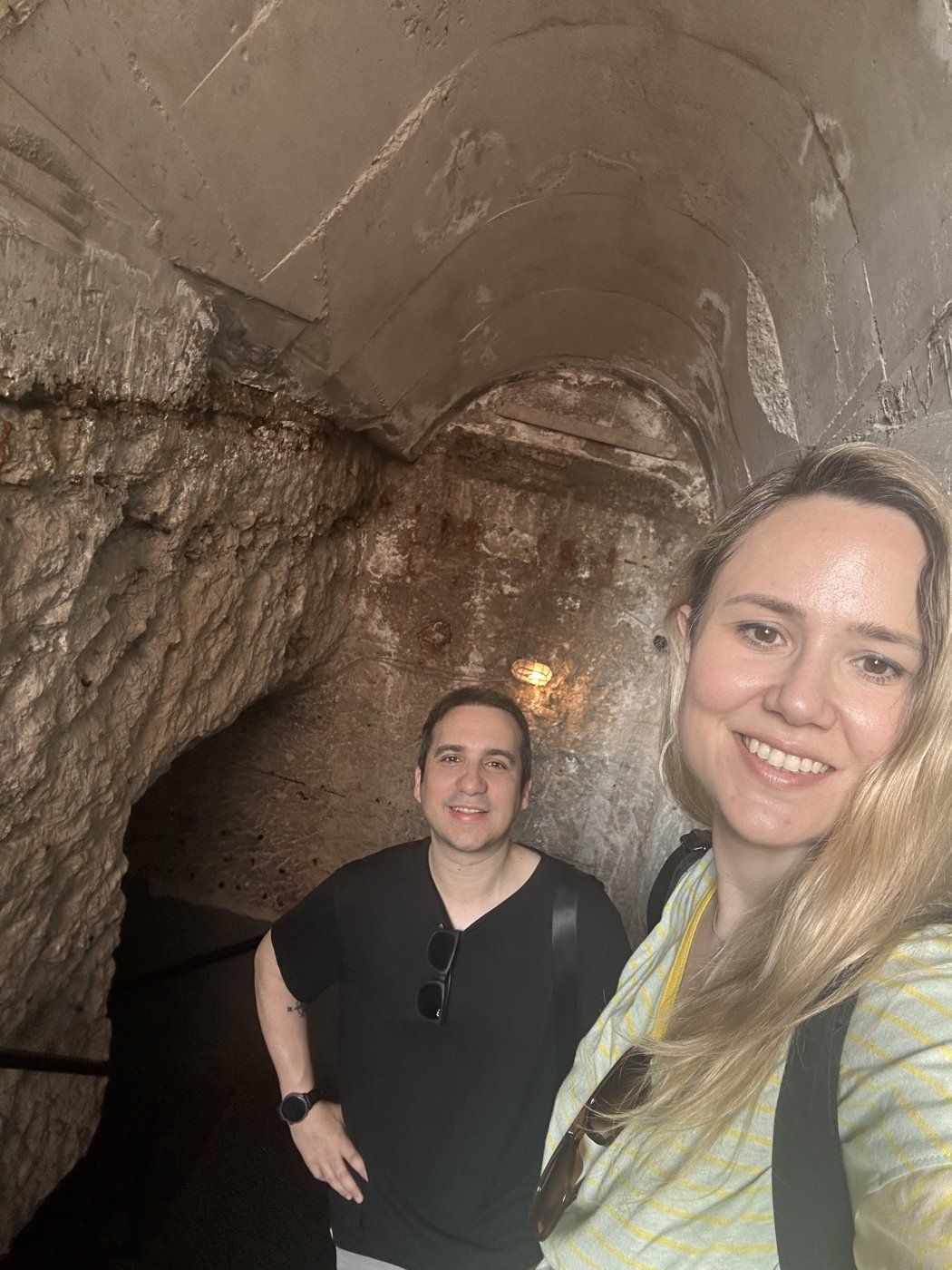
One of the mechanisms of control was precisely that uncertainty. You never knew who might inform on you — a neighbour, someone from work, even someone close to you. The former State security service built a vast apparatus of surveillance and persecution that Albania today preserves and shows in places like the House of Leaves, now the Museum of Secret Surveillance. That building, used for decades by the security services, still contains rooms dedicated to phone tapping, mail interception, espionage, interrogations and persecution.
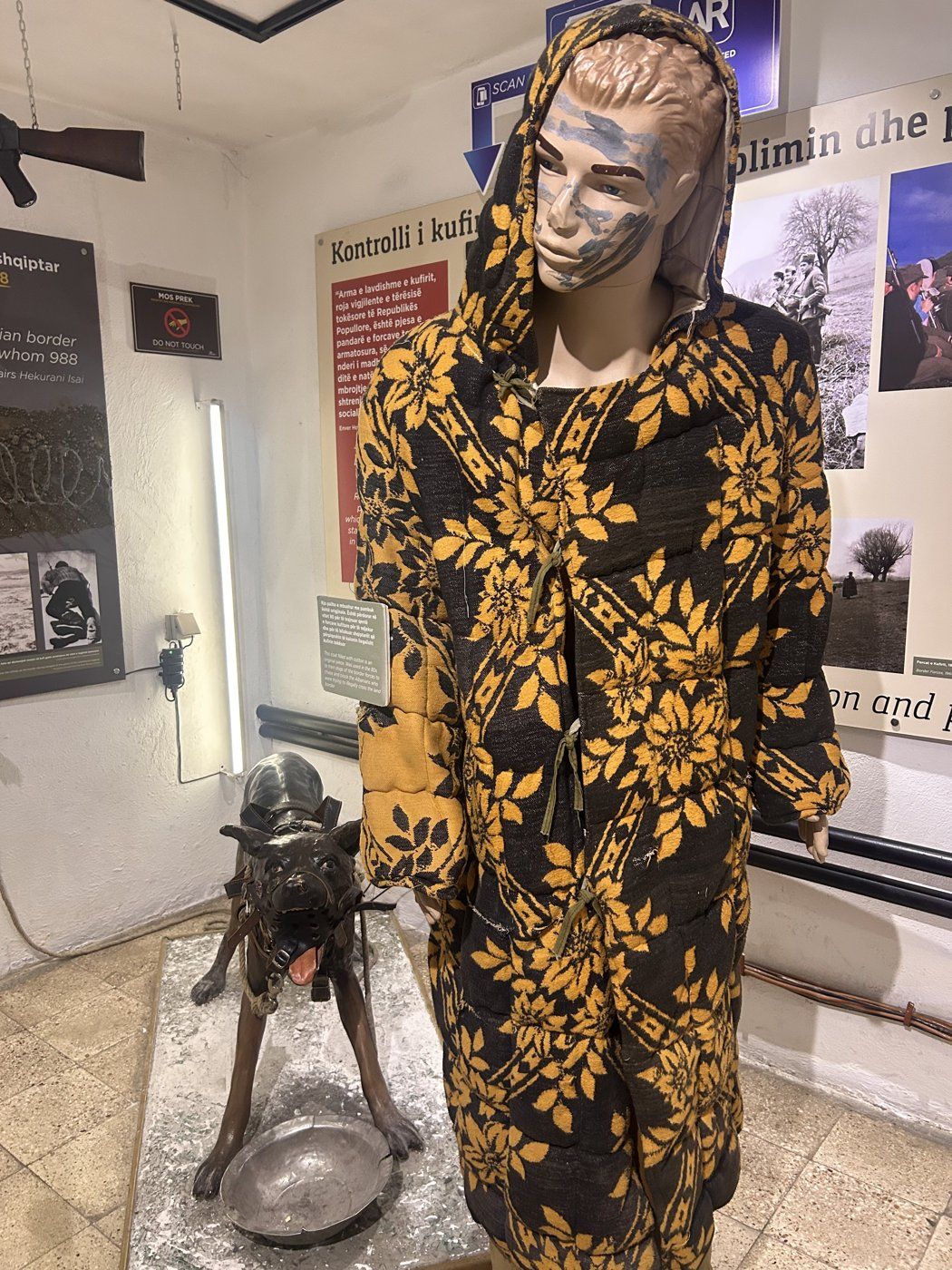
The museums and archives dedicated to that period also document executions, sentences, political prisoners, torture and purges that reached even senior members of the regime itself. There is something particularly disturbing about systems that end up needing to find enemies even among those who helped build them. But the most visible expression of that fear is still everywhere.
The bunkers: 173,371 ways to live in fear
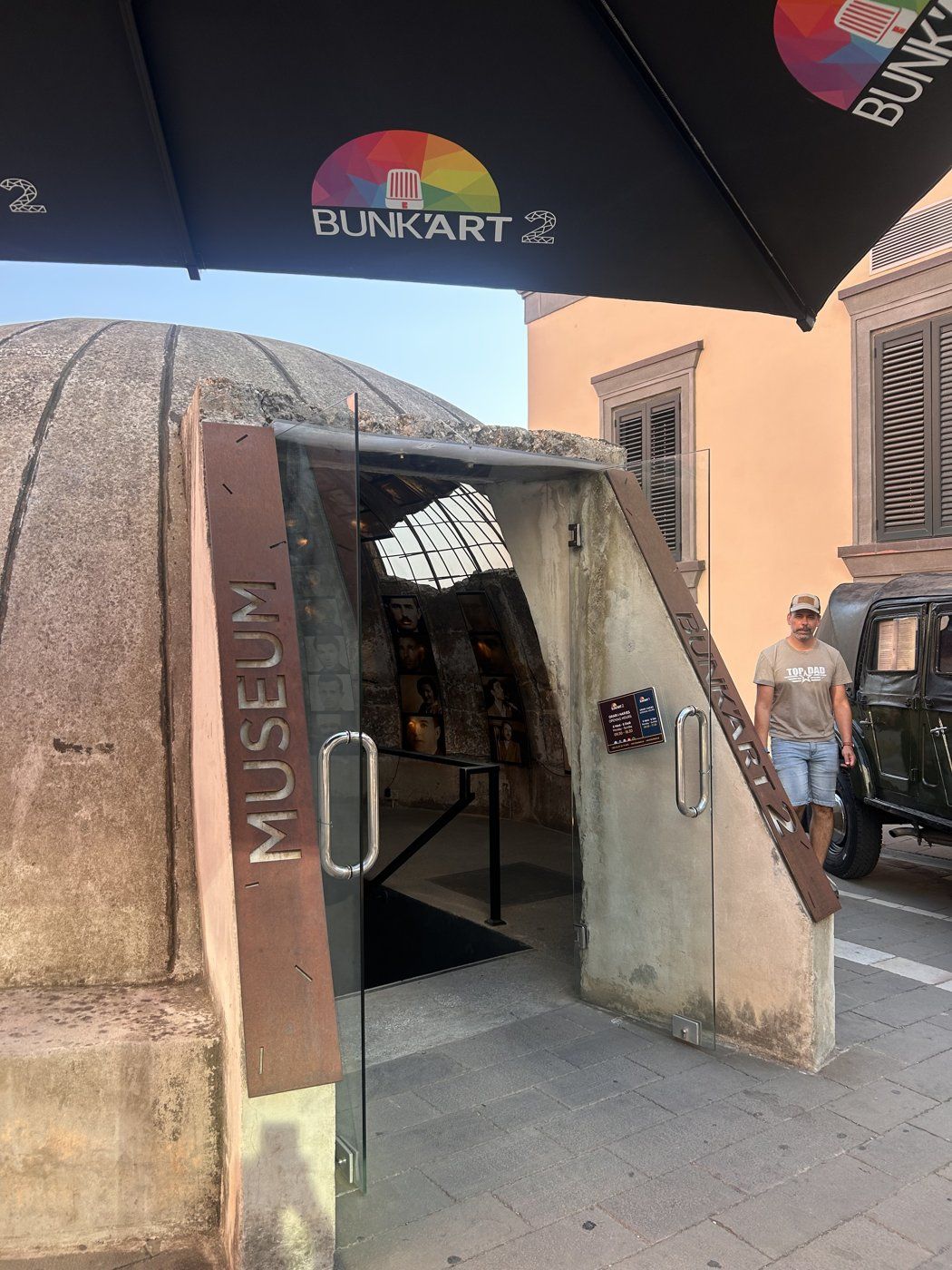
More than 173,000 concrete structures built to prepare the country against an invasion that never came. Hoxha turned the external threat into a permanent presence: you had to be ready, you had to be suspicious, you had to defend Albania from an enemy that could appear at any moment.
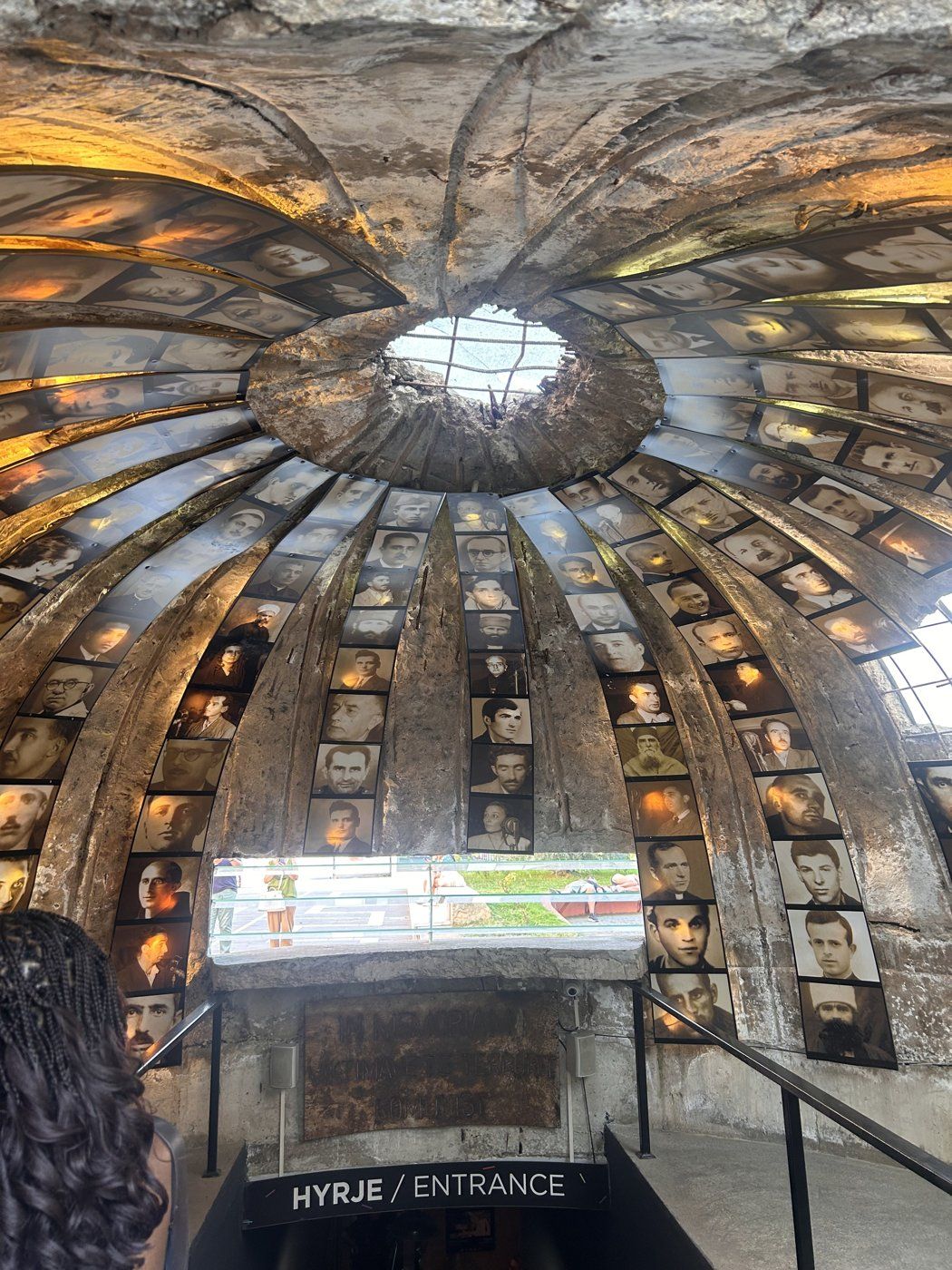
As we travelled through Albania, the bunkers were still there, but completely out of context. The regime had disappeared, the invasion had never come, and the small concrete domes were scattered across a country that now receives millions of foreigners every year. It is hard to imagine a greater contrast.
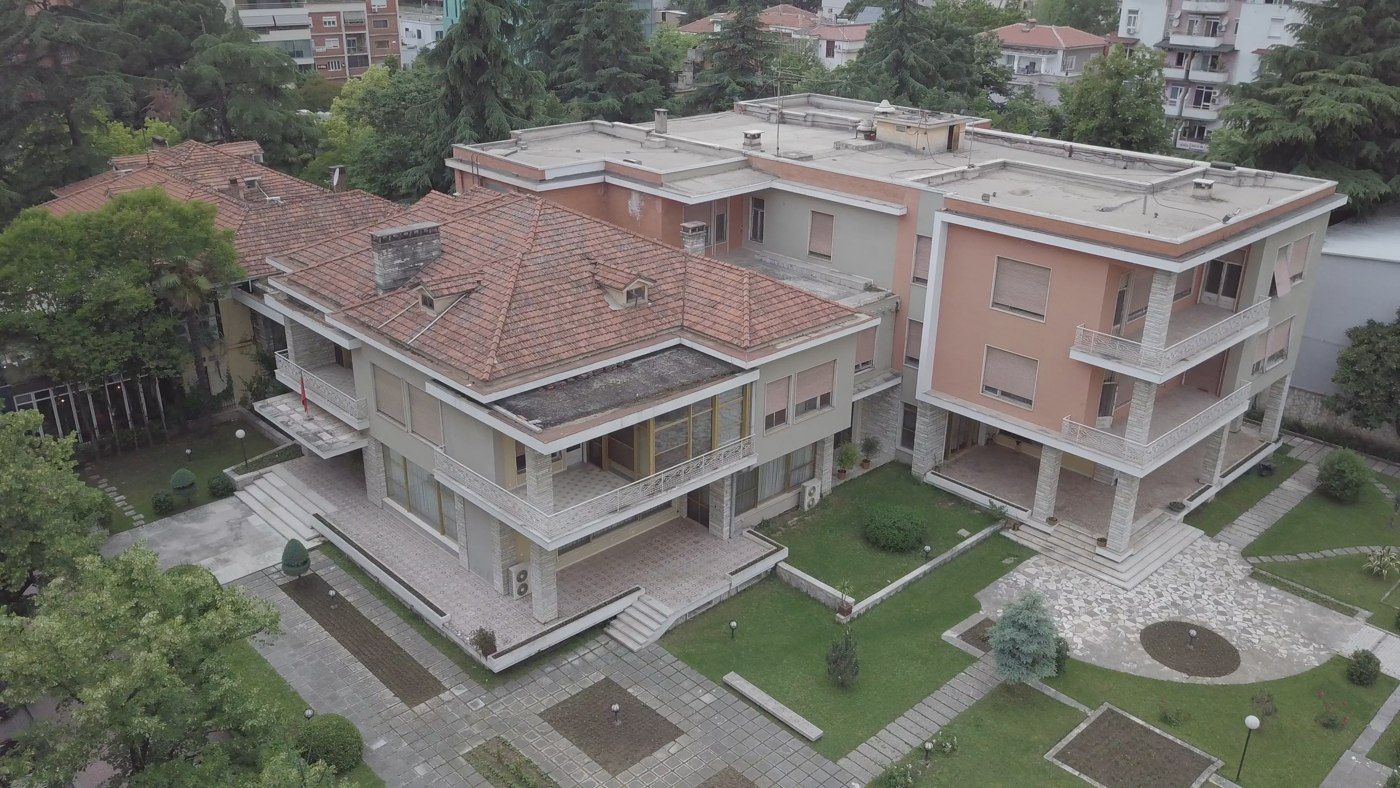
Another contrast came in Blloku, one of the nicest neighbourhoods to walk through in Tirana today: there you'll find what was Hoxha's last residence. For decades it was closed, guarded, inaccessible to anyone who didn't belong to the regime. It has only been open to visitors for just over a year — a French foundation bought it to exhibit its art collection there, and it opens its doors to the public once a month.
From closed doors to millions of tourists
For decades, leaving Albania without authorisation could cost you your life. The country's official museums and archives document executions at the borders and the persecution of those who tried to escape.
Now the movement flows in the opposite direction. Millions of people arrive every year and tourism has become an increasingly important part of the Albanian economy. The World Bank today describes an economy where services and construction are driving much of the growth, while tourism remains one of its strategic sectors.
But I think I understood that shift better when we got to Tirana, looking up.
The Pyramid
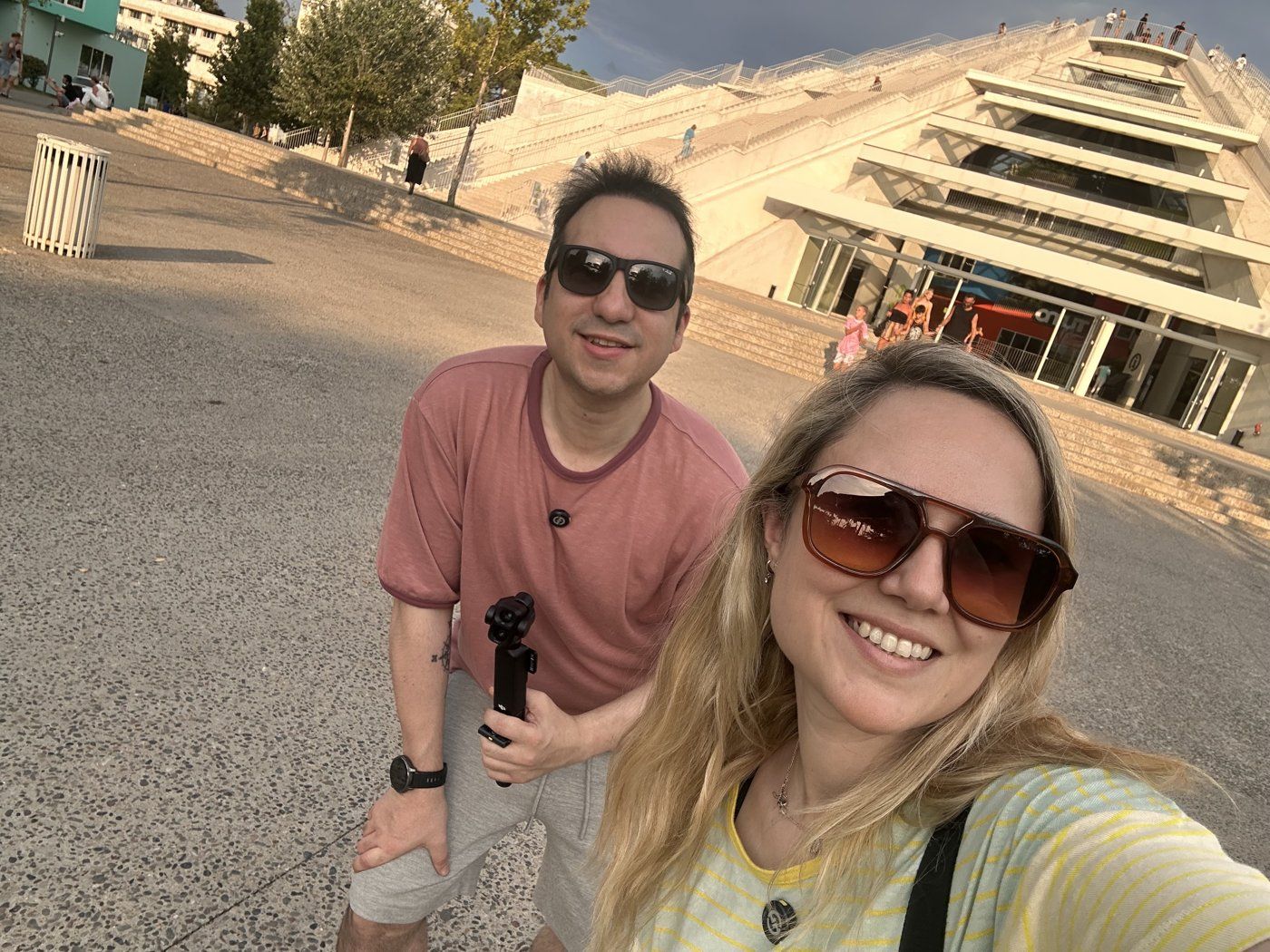
In the centre of Tirana there is a huge concrete pyramid, inaugurated in 1988, three years after Hoxha's death. It was built at the initiative of his daughter, at her father's request — he wanted "to be remembered like a pharaoh." A group of architects led by his daughter, Pranvera Hoxha, and her husband, Klement Kolaneci, worked on its design.
What's interesting is what happened afterwards: Albania debated for years what to do with it. Demolishing it would have been a perfectly understandable option; instead, they transformed it. Since 2023 you can climb up its façades, and inside there are spaces dedicated to technology, education, art and training for young people. The building once designed to preserve the memory of a dictator ended up becoming a place where teenagers learn coding and new technologies. The building is the same, but what a society decided to do inside it changed completely.
When I climbed to the top, what struck me most wasn't the Pyramid. It was Tirana. From up there I started counting new buildings and construction sites: I counted at least five, between glass towers, cranes and projects that were reshaping a city that until relatively recently had grown under completely different rules.
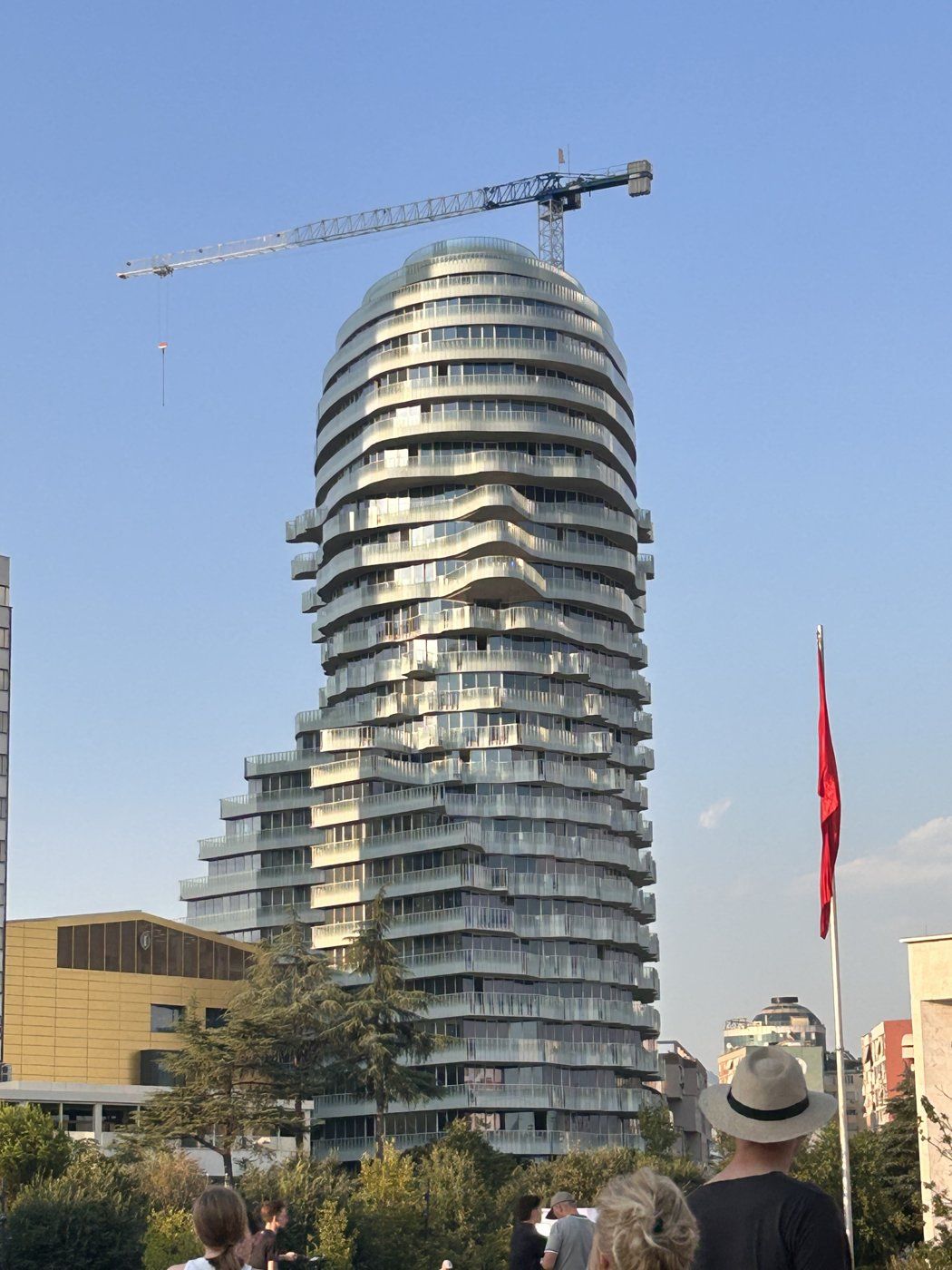
One building that had particularly caught my attention turned out to be the Skanderbeg Building, also known as Tirana's Rock. Its balconies are designed to form the face of Gjergj Kastrioti Skanderbeg, Albania's national hero, looking out towards the square that bears his name. Below it was a building constructed to remember Hoxha; in front of it, a city full of new construction. And within all of that, tourists, cafés, international hotels, cars, young people and others climbing up and down a structure that had once been one of the great symbols of the regime.
Remember or move on?
Our guide, with deep sadness, asked: "How can people still defend communism?" She told us that this communist period is taught so that new generations know what happened, but that at the same time she felt that Albania had decided to move forward by turning the page.
I got the sense that Albania managed something very difficult: it left the page there, without tearing it out, but decided not to live inside it. Perhaps that's why they kept the bunkers, why museums about surveillance and prisons exist, why the history is taught. And perhaps that's also why they didn't demolish the Pyramid.
I think that was the part of Albania that interested me most: not just how it survived nearly half a century of isolation, but what it decided to do afterwards with everything that remained. Because transforming a country doesn't always mean erasing what reminds you of the worst of your history. Sometimes it means leaving it there and deciding what it represents from now on.
A city building upwards, tourists flowing into one of the safest countries we have visited, an Albania that for decades was afraid of what might come from outside and that today seems determined to open its door.
What comes next: Vlorë
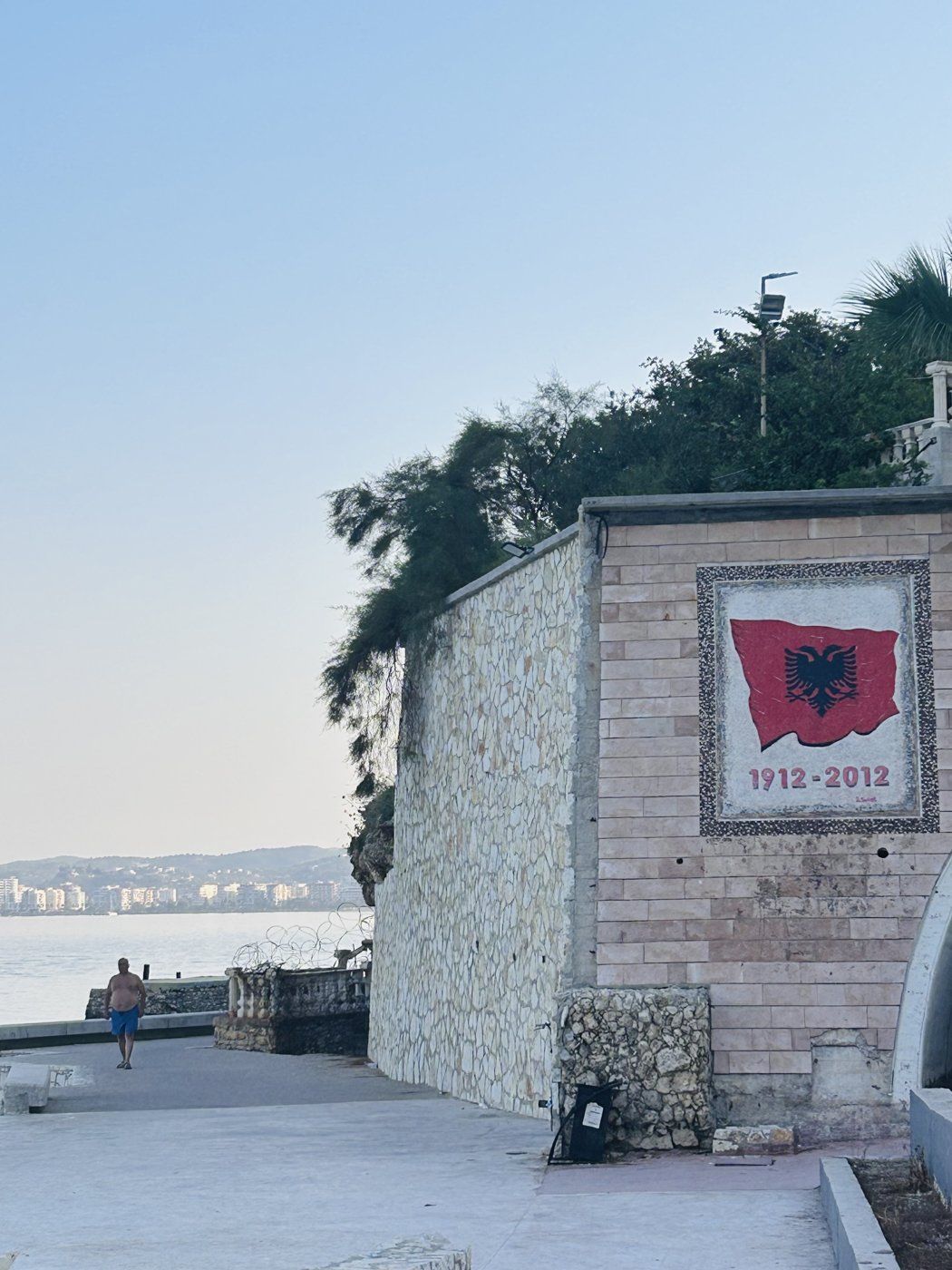
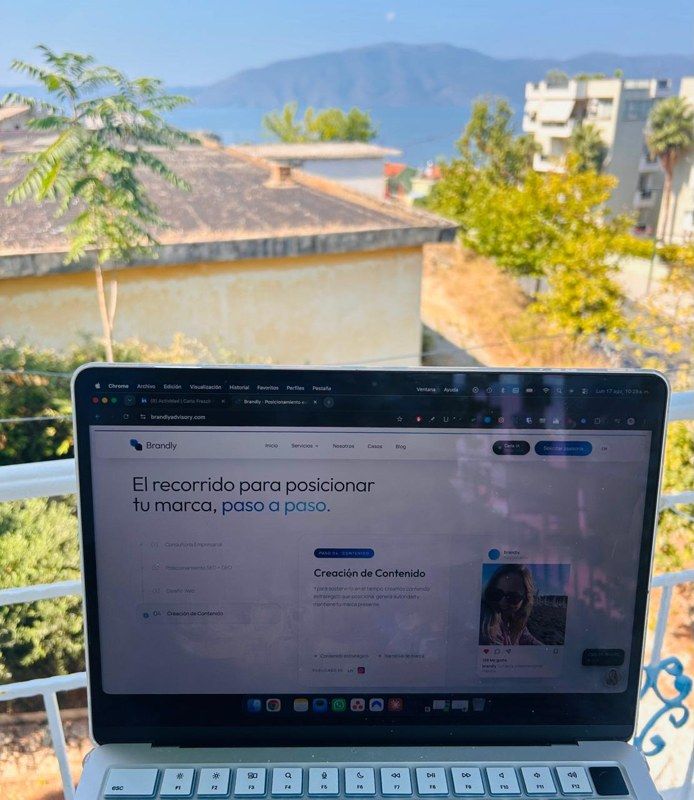
Our next destination was Vlorë, where we stayed for several weeks by the sea. The photos from that coast probably speak for themselves: working facing the Adriatic, with that view.
There we finished settling into a routine that had already become habit in every place on the trip: go to the sea, swim for a while, and come back to the computer to carry on working with that view still in front of us. Being a digital nomad, in practice, is mostly that: not choosing between working and experiencing the place, but finding in each destination a way to do both.
But anyone who sees them without knowing this history will only see the surface. Because Albania's real identity isn't in that beach. It's in everything it had to go through in order to show it to you without fear.
Keep reading
If you haven't read yet how it felt to enter Albania for the first time — sheep crossing in front of the Tesla and the legend of Rozafa Castle — start with Shkodër: Shkodër: Our First Stop in Albania.
And if you want to see all of this from inside the car, the episode Gonzalo filmed in Tirana is here: What to See in Tirana: The History of Enver Hoxha's Communism.


