Tesla claims the Model 3 Long Range has more than 600 km of WLTP range. When I started planning the trip I'm now doing with Carla, that number was the first piece of data I had to learn to read critically. Real-world range, on the highway, depends on variables the WLTP cycle doesn't measure. And those variables are what determine whether you arrive comfortably at the next Supercharger or whether you watch the percentage drop while climbing a mountain.
This article is the summary of what I learned driving my Model 3 Long Range across Europe before starting EchoRoute, the project of crossing the world in a Tesla. It's real-world range, measured by me, contrasted with what other owners report. If you're thinking of buying a Model 3 or already have one and want to understand what to expect on a long trip, this is for you.
What is the real range of the Tesla Model 3 Long Range
The big number, the one on Tesla's website: 629 km WLTP (about 391 miles). The honest number, after several thousand kilometers of real use: between 380 and 510 km (236 to 317 miles), depending on how you drive and where.
That range isn't a defect: it's how any electric car behaves in real conditions versus the European homologation cycle. WLTP is measured at low average speeds, no air conditioning, no gradient and no wind. Any of those four factors against you eats kilometers.
My personal average driving Spanish and French highways, with medium luggage, A/C running, and speeds between 110 and 130 km/h (68–80 mph): 450 km of real range (280 mi) at 100% battery. That's the number I use for planning.
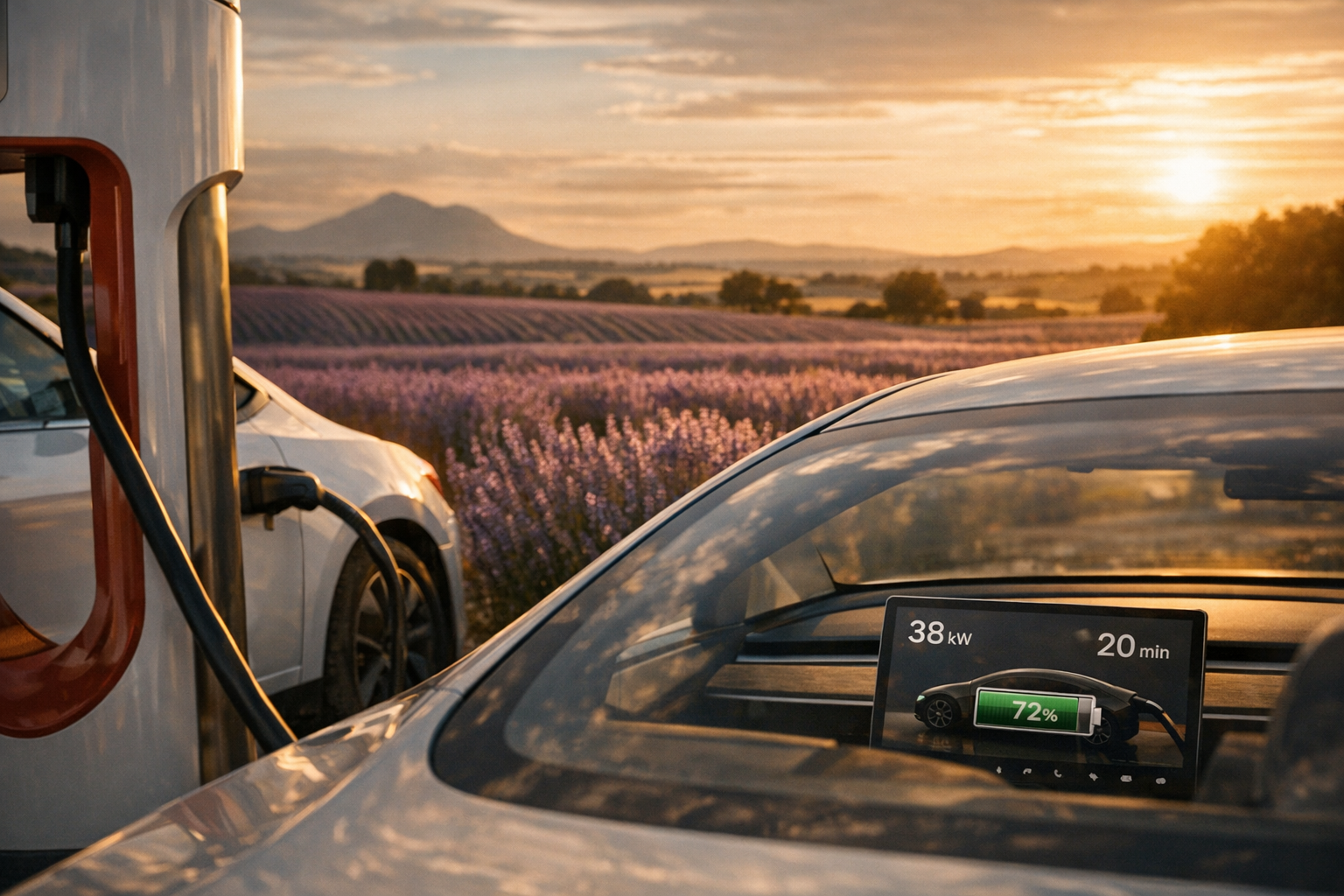
The 5 factors that most impact real range
1. Average speed
This is factor number one by far. The difference between driving at 110 km/h (68 mph) and 130 km/h (80 mph) on the highway is brutal: 14–16 kWh/100 km at 110, 18–22 kWh/100 km at 130. That translates to 80–100 km less range per charge.
At 90 km/h (56 mph) on a secondary road, consumption drops to 13–14 kWh/100 km. If you look closely, the most efficient Model 3 Long Range tests in the world are done at that speed. That's where the Model 3's aerodynamics shine.
2. Outside temperature
Cold is enemy number two. A Tesla at 25 ºC has much better range than at 0 ºC, and the difference can be 15 to 25% in range. The reason is double: lithium-ion battery chemistry is less efficient in cold, and you need more energy to heat the cabin.
Extreme heat also affects range, but less than cold. Above 35 ºC the air conditioning consumes significantly, but the battery still works fine. The worst case is driving in -10 ºC with full heat: range drops to 350 km (217 mi) or less.
3. Elevation
Climbing mountains hurts any car. In an electric car it also hurts, but with a consolation: regenerative braking recovers a good portion of what you spent. Crossing the Pyrenees through the Bielsa-Aragnouet tunnel, for example, eats 10–15% extra battery on one side, but you recover 5–8% on the descent.
The net is still negative, but less than you'd think. On mountain routes, calculate 10% additional consumption compared to flat-road averages.
4. Wind
The least intuitive factor. A sustained headwind of 30 km/h (19 mph) can cost you 15 to 25 km of range over a long trip. The Model 3 is aerodynamically efficient, but wind always shows up.
Tailwind, conversely, gifts you kilometers. Crossing the Castilian plateau with favorable wind, I logged 11 kWh/100 km at 110 km/h, equivalent to over 600 km of real range. It's an exception, but possible.
5. Vehicle load
If you're traveling with luggage, content-creation gear and two people, the extra weight matters. The difference between empty and loaded can be 5 to 10% in consumption. Not the biggest factor, but it adds up.
My real consumption table by scenario
These are the numbers I personally logged in different conditions, driving my 2023 Tesla Model 3 Long Range with 95% battery health (verified via Tessie):
Highway at 130 km/h (80 mph), flat, summer, A/C 22 ºC: 19 kWh/100 km → 395 km real range.
Highway at 110 km/h (68 mph), flat, summer, A/C 22 ºC: 14.5 kWh/100 km → 515 km.
Secondary road at 90 km/h (56 mph), flat, spring: 13 kWh/100 km → 575 km.
Highway at 120 km/h (75 mph) with moderate headwind: 21 kWh/100 km → 355 km.
Mountain route with 1,500 m elevation gain: 22 kWh/100 km outbound, 15 return (regen) → 18.5 avg.
Highway at 110 km/h with -3 ºC and heat at 21 ºC: 18.5 kWh/100 km → 405 km. Winter hurts.
How I plan each leg of the trip
Three tools I always use, in this order:
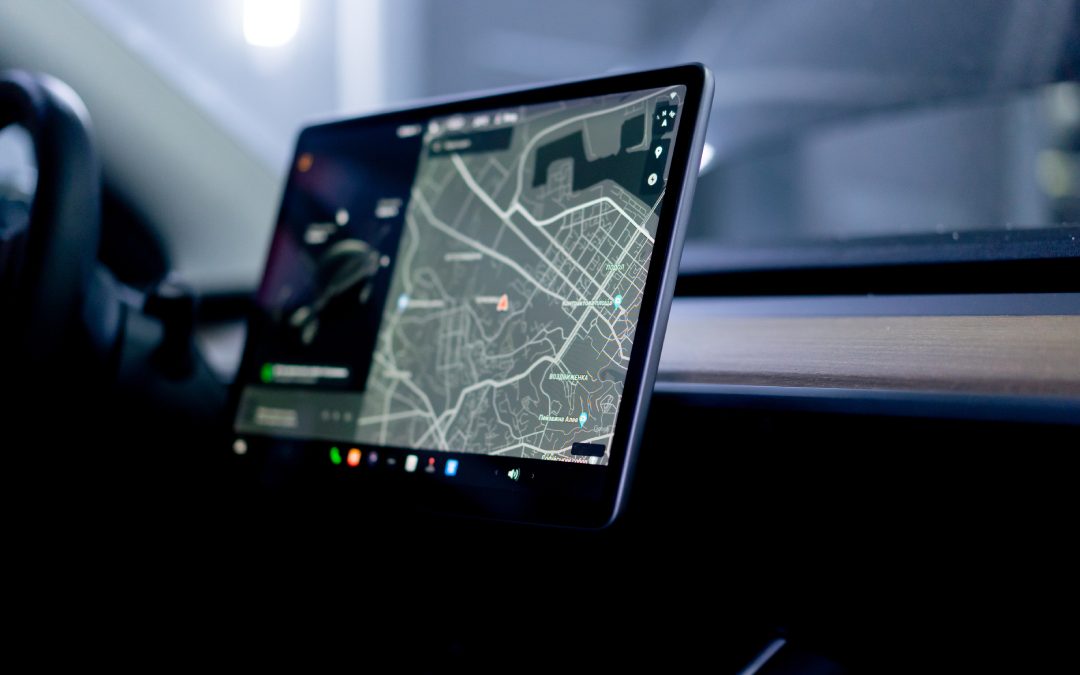
1. A Better Routeplanner (ABRP). The app every serious Tesla owner trusts. Lets you load your custom consumption, tells you how much battery you'll arrive with at each destination, and suggests optimal Supercharger stops. I use it for any trip over 300 km.
2. Tesla's native app. For shorter trips, its routing is excellent: suggests stops, tells you total time including charges, and pre-conditions the battery before arriving at a Supercharger so it charges at max speed.
3. Plugshare. For non-Tesla chargers. On remote routes without Superchargers nearby, Plugshare shows what's available and recent reviews from other users. Indispensable for Eastern Europe or any less-popular route.
Tips to maximize range without driving yourself crazy
You won't drive at 90 km/h glued to the right lane forever — that ruins the trip experience. But there are things you can do without sacrificing anything:
Pre-condition the battery using the charger. If you arrive at a Supercharger with a cold battery, you'll charge at half speed. If you enable "Trip Planner" in the Tesla, the battery pre-conditions automatically on the way to the charger. Huge difference.
Use Chill mode when you can. Settings → Driving → Acceleration → Chill. Reduces consumption from harsh accelerations you don't need. On constant highways it doesn't change much, but in city or stop-and-go, yes.
Correct and properly inflated tires. The factory aero wheels are the optimal ones. If you swapped them for wider sport wheels, you lose range. Correct pressure (see manual, depends on load) is critical.
Plan to arrive at Superchargers with 10–15% battery. Charging from 10 to 80% is much faster than 50 to 80%. If you arrive with 40%, you're losing total trip time.
Can you sleep in a Tesla Model 3?
One question I get asked often when people find out about EchoRoute: can you actually sleep inside a Model 3? Yes — but there are a few things a Model 3 owner needs to know that are different from, say, a Model Y.
Camp Mode: the feature that makes it possible
Tesla's Camp Mode keeps the climate system running while the car is parked, maintains the temperature you set, keeps interior lights and 12V outlets active, and silences Sentry Mode alerts. You turn it on from the climate controls (fan icon → Camp Mode). Energy consumption in Camp Mode: roughly 1 to 1.5 kWh per hour, depending on outside temperature. An 8-hour night costs 8–12 kWh — less than 3% of the battery. Completely negligible.
The real challenge: the Model 3 is a sedan
Unlike the Model Y, whose rear seats fold almost flat and create a full sleeping platform, the Model 3 has a fixed rear seatback and a narrower trunk pass-through. There is no way to create a 2-meter flat sleeping surface inside, as you can in an SUV.
What works: recline the front passenger seat fully flat, add a compact camping mattress or sleeping pad, and sleep diagonally across the front seats. I have done this on several nights during our Europe leg — one on a remote stretch of southern France where the next hotel was 150 km away, and once on a mountain road in northern Spain I did not want to leave at dusk. If you are under 180 cm (5 ft 11 in), it is genuinely comfortable. Above that, you will need to position yourself carefully.
The accessories that make it work: a window sunshade set for privacy, an inflatable pillow, and a sleeping bag rated for outside temperature. Camp Mode handles the climate, but having a bag means you are not dependent on battery percentage if you arrive with less charge than expected.
Our actual approach on EchoRoute
Most nights we use hotels or apartments where we charge on a standard outlet overnight, or near a Supercharger. Sleeping in the car is reserved for spontaneous stops or places we find that are too good to leave by 6pm. It is not a fallback — it is part of the flexibility that makes this kind of trip possible.
If your route includes long stretches between towns, Camp Mode is a real option. It works, it is safe, and the battery cost is minimal.
Is a Model 3 Long Range worth it for long trips?
My opinion, after planning and starting a continental trip: yes, but understanding what you're buying. The Model 3 Long Range is the sweet spot between range, price, efficiency and performance in Tesla's lineup. The Model S has more range but costs double. The Model Y has space but uses more energy due to aerodynamics.
For 1,000 km in a day (what you end up doing on a serious road trip), the Model 3 LR asks for 1 to 2 long Supercharger stops. That's 1.5 to 2 hours of "extra" time compared to a combustion car. For some that's a deal-breaker. For others, that's 2 hours to eat, answer emails and rest.
What's clear is that official WLTP numbers are not reality. If you base your planning on them, you'll have bad surprises. If you base it on real consumption measured by owners, you can plan ambitious trips with confidence.
Conclusion
The real range of the Tesla Model 3 Long Range, in my experience, is between 380 km worst case and 510 km best case, with a realistic planning average of 450 km. Tesla claims 629 km WLTP; subtract 20–25% for a number that actually works in real life.
The car isn't perfect. But it's good enough to make trips that were unthinkable in an electric five years ago. We're doing it with EchoRoute, and there will be many more after.
If you want to read how I plan each leg, check the how to plan a long Tesla trip without running out of battery article. And if you're curious about the trip itself, our travel stories are the place.