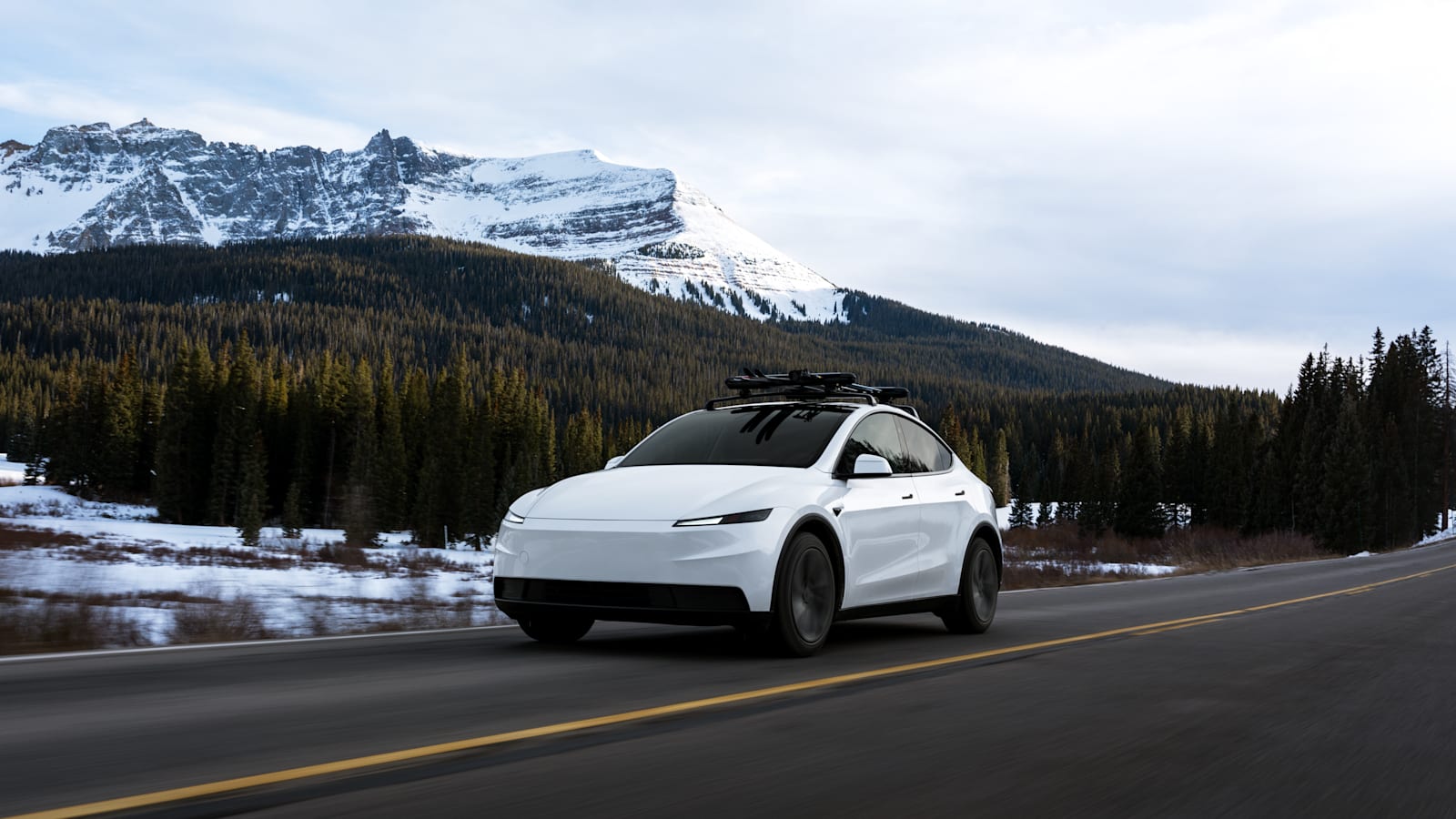
The Tesla Model Y Long Range Juniper is rated at 600 km WLTP. That's the number Tesla shows in the configurator, the ads, and the spec sheet. And it's exactly the number that confuses buyers most when they start asking in owner communities: how many kilometers does it actually get? Because taking that 600 onto a real highway at 120 km/h in real conditions gives you, in practice, between 450 and 475 km. Not 600.
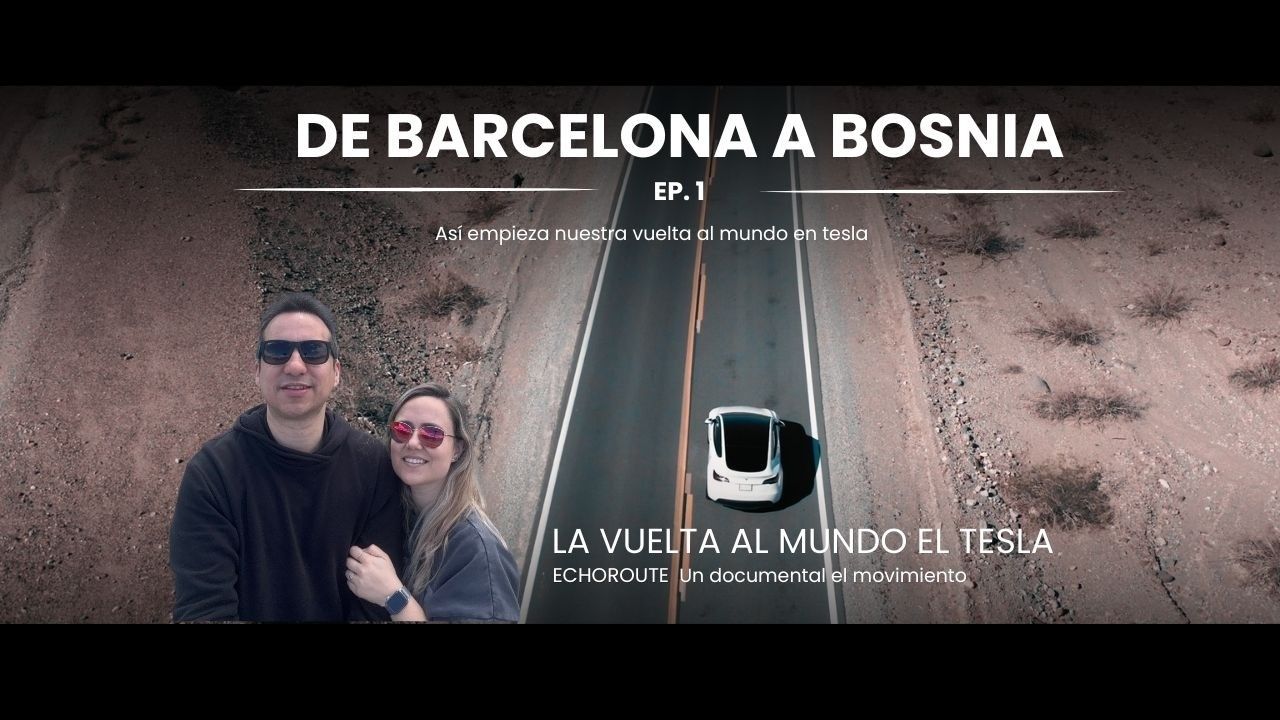
I drive a Model 3 Long Range — that's the Tesla Carla and I are using to cross the world on EchoRoute. But when the Model Y range question keeps coming up in the community, I decided to do the same thing I did with my own car: gather the most rigorous available measurements, apply the same framework, and give you the numbers that actually work for trip planning. Sources: ADAC (the German automotive club, which runs the most controlled real-world EV tests in Europe), EV-Database.org, Bjørn Nyland's systematic range tests, and data from European Tesla owner communities.
Here's what I found.
What's the real world range of the Tesla Model Y
Official figures for the Model Y Juniper 2024-2025:
— Model Y RWD: 466 km WLTP → real world range: 330–395 km.
— Model Y Long Range AWD: 600 km WLTP → real world range: 420–490 km.
— Model Y Performance: 514 km WLTP → real world range: 375–455 km.
The reduction from WLTP is 15 to 30% depending on conditions — exactly the same as the Model 3. The difference is the starting point: the Model Y LR Juniper starts from 600 km official, so its 450–490 km real range at moderate speeds is solid for long-distance driving.
On the highway at 120 km/h (75 mph) with ambient temperature (20–25 °C / 68–77 °F) and two people with standard luggage, the number that consistently shows up in rigorous tests is 450–475 km (280–295 miles) for the Long Range. That's the honest planning figure.
The 5 factors that most affect Tesla Model Y real world range
1. Speed: the dominant factor
Aerodynamic drag scales with the square of speed. Going from 110 to 130 km/h (68 to 81 mph) doesn't cost 18% more energy — the proportional increase is nearly double that.
For the Model Y Long Range, Bjørn Nyland's documented systematic tests give these consumption figures:
— At 90 km/h (56 mph): 14–15 kWh/100 km → over 520 km real range.
— At 110 km/h (68 mph): 17–18 kWh/100 km → 455–475 km.
— At 130 km/h (81 mph): 21–22 kWh/100 km → 375–400 km.
— At 140 km/h (87 mph): 25–27 kWh/100 km → 305–335 km.
The difference between driving a 300 km leg at 110 vs 130 km/h is 65–80 km less range in the second case. In practice: one extra charging stop per long driving day.
2. Temperature: the Model Y has an edge older Model 3s didn't have
The Model Y has had a standard heat pump since 2021 in European models. This makes it significantly more efficient in winter than older Model 3 versions that relied on resistive heating elements.
In cold weather, the range drop is real but manageable: at 0 °C (32 °F), the Model Y LR loses between 18 and 25% of its range compared to 20 °C (68 °F). At -10 °C (14 °F), the drop can reach 30–35%. ADAC measured 380–410 km at 120 km/h in winter conditions (0–5 °C) for the Long Range — the same drive gives 450–475 km in summer.
3. Elevation and regeneration
Mountain driving costs extra battery, but regeneration on the way down recovers 40–60% of what you spent going up. The net on a pass with 1,000–1,500 m of accumulated elevation change is 8–12% extra consumption compared to flat terrain. Less painful than it sounds.
4. Load and passengers
The Model Y has 854 liters of total cargo space. Fully loaded with luggage and four passengers, the additional weight adds 5–8% to consumption. Not the main factor, but at full load and 130 km/h in summer, range will be near the lower end of the estimates.
5. Climate control
AC in summer adds 1–2 kWh/100 km (5–10% extra). Heating in winter adds 1.5–3 kWh/100 km depending on outside temperature. With the heat pump on the Model Y Juniper, these figures are noticeably better than on older Model 3s without one.
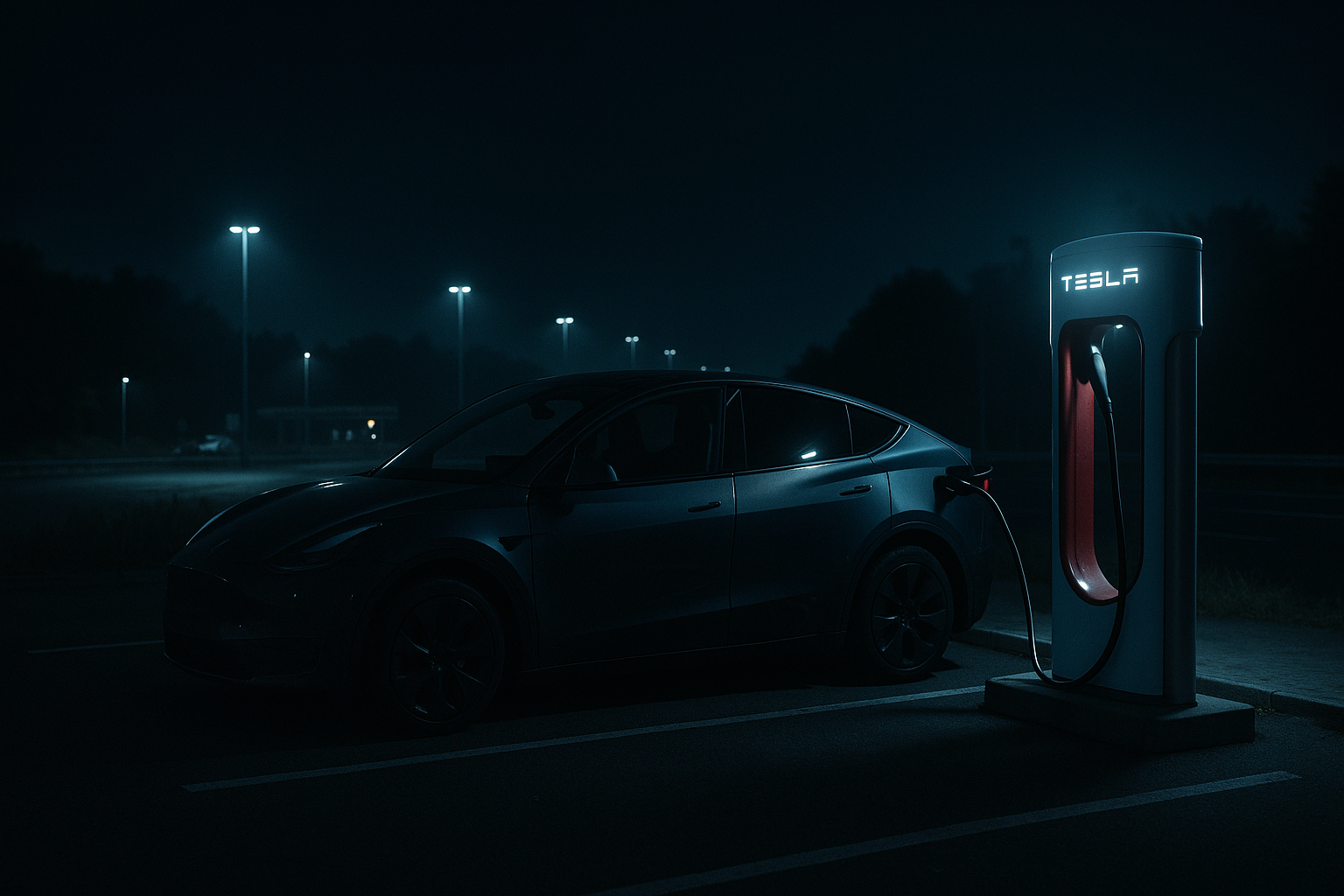
Tesla Model Y real world range by scenario
Consolidated data from ADAC, EV-Database.org and Bjørn Nyland. Usable battery of the Model Y LR Juniper is ~78.4 kWh net, per independent tests.
| Scenario | kWh/100 km | Real range |
|---|---|---|
| Highway 130 km/h · 20 °C · moderate AC | 21–22 | 375–400 km |
| Highway 120 km/h · 20 °C · moderate AC | 19–20 | 415–445 km |
| Highway 110 km/h · 20 °C · moderate AC | 17–18 | 455–475 km |
| Highway 120 km/h · winter 0 °C · heating | 22–25 | 340–380 km |
| Secondary roads 90 km/h · spring | 14–15 | 525–575 km |
| City · 25 °C · minimal AC | 13–15 | 540–620 km |
Model Y vs Model 3: which uses more energy and why
At the same speed and version, the Model Y uses 2–4 kWh/100 km more than the Model 3 Long Range. Two reasons: the Model Y weighs about 200 kg more (~1,980 kg vs ~1,760 kg for the Model 3 LR), and its SUV body has a slightly higher aerodynamic drag coefficient — though Tesla improved this significantly with the Juniper redesign.
In concrete terms: at 110 km/h in standard conditions, my Model 3 LR uses ~14.5 kWh/100 km. The Model Y LR in the same conditions uses ~17–17.5 kWh/100 km. That's 3 kWh of difference which, with 78 kWh of usable battery, translates to about 50 km less range per charge.
When does the Model Y make sense over the Model 3 for long trips? When space, headroom, or rear-seat accessibility matter more than efficiency. For pure highway efficiency, the Model 3 wins. For families or heavy cargo, those 50 km are easily worth the tradeoff.
→ Read the detailed Model 3 analysis with my own km-by-km measurements.
First-hand data: Barcelona to Batumi in a Tesla
The Model 3 LR I reference throughout this article isn't sitting in a garage. It's on the road. Carla and I have covered more than 7,000 km from Barcelona as part of EchoRoute, a project documenting what it's really like to cross the world in a Tesla while working. Every leg we drive is real-world data: actual temperature, actual speed, actual charger. You can follow the journey in our travel documentaries and on our YouTube channel.
One of the most revealing legs was the final stretch through Turkey toward Batumi, Georgia. Leaving the last Turkish Supercharger at 99%, the Tesla's navigation predicted arrival at -3%. That means 525 km was beyond what the car could cover even at near-full charge, in summer conditions with AC running at highway speed. We had to find an alternative charger before crossing into Georgia, because the Tesla Supercharger network ends before the border.
The previous 400 km leg was doable: starting at 99%, arriving at 9%, we used 90% of the battery. That works out to roughly 444 km of real-world range on a full charge for the Model 3 LR under those conditions. On other legs of the same trip we reached 450 km.
These figures align directly with what you would expect from a Model Y LR, minus the 10-15% weight and aerodynamic penalty. In similar conditions, the Model Y delivers 375-440 km of real range. The table above, in other words, is calibrated to reality.
Did the Juniper actually improve real world range over the previous Model Y?
Yes, meaningfully. The pre-Juniper Model Y Long Range was rated at 533 km WLTP. The 2024 Juniper is rated at 600 km — an official 12.6% improvement. In real-world European tests, the Juniper shows 40–60 km more range at 120 km/h highway compared to the previous version, going from ~410–430 km to ~450–475 km.
The changes behind that improvement: higher energy density battery chemistry, reduced aerodynamic drag from the exterior redesign, and updated thermal management software. It's measurable, not just marketing.
RWD or Long Range: which makes sense for most drivers
If your primary use is urban or semi-urban with occasional longer trips (under 300 km), the RWD is enough. Its 330–390 km of real range handles most day-to-day scenarios comfortably, with a single charging stop for anything longer.
If you regularly do longer drives, drive frequently in winter, or travel in mountainous areas, the Long Range gives you the planning margin the RWD doesn't. The real-world range difference between the two is 80–100 km — enough to eliminate one charging stop on many long journeys.
Tips to maximize Tesla Model Y real world range on road trips
Use the built-in Trip Planner for navigation, not just to pre-condition the battery before arriving at a Supercharger, but to let Tesla manage the full route with optimal stops. Battery pre-heating in cold conditions makes a major difference in charging speed.
Arrive at each Supercharger with 10–20% battery. Charging from 10 to 80% is 3–4x faster than from 70 to 95%, because the charging curve drops sharply in the final stretch.
Pre-cool or pre-heat the cabin while plugged in. If you leave home with the car already at temperature, the climate system uses significantly less energy on the first leg.
Check tire pressure before long trips. The Model Y has larger wheels than the Model 3, and optimal pressure varies with load. Under-inflated tires cost 3–5% in efficiency.
Frequently asked questions about Tesla Model Y real world range
Can the Tesla Model Y drive from Madrid to Barcelona without charging?
Not directly — it's 620 km and real Long Range highway range is 420–475 km at normal speeds. With a 20-minute stop at the Zaragoza Supercharger (charging to 80%), you complete the trip comfortably.
How much does the Model Y consume at 120 km/h?
Between 19 and 20.5 kWh/100 km at ambient temperature. That translates to 415–445 km real range with the Long Range.
Does the Model Y use more energy than the Model 3?
Yes — 2 to 4 kWh/100 km more on the highway, primarily due to weight and SUV aerodynamics. The difference is smaller in city driving.
How much does the Model Y real world range drop in winter?
At 0 °C (32 °F), 18–25% less than in summer. At -10 °C (14 °F), up to 30–35%. The Juniper's standard heat pump mitigates part of that loss compared to older versions without one.
Is the Long Range worth it for mostly city driving?
If 90% of your use is urban, the RWD is enough — city real range exceeds 500 km easily, which covers weeks of daily use.
Sources
— ADAC — Real-world EV range tests: controlled temperature and speed testing, methodology published.
— EV-Database.org — Tesla Model Y Long Range: real-world efficiency data aggregated from owner registrations.
— Bjørn Nyland: systematic range tests with documented methodology and controlled conditions.
— Official WLTP specs: Tesla Model Y — official Spain page.