The Tunnel of Hope in Sarajevo: visiting the siege of Bosnia
Travel stories
BosniaSarajevoHistoriaEl viajeGonzaloCarla
15 ago 2026
por Gonzalo

The Tunnel of Hope in Sarajevo: visiting the siege of Bosnia

A few kilometers from Sarajevo's center, next to the airport, there's an apparently normal house. A yard, a door, rooms. For four years, from 1992 to 1996, it was one of the most important houses in Europe. Because underneath it ran the only way in or out of a besieged city.

The Tunnel of Hope was the underground connection that allowed Sarajevo to survive the longest siege endured by a modern European capital.

The Siege of Sarajevo: context to understand the tunnel

When Bosnia declared independence in 1992, Bosnian Serbs and Serbia refused to accept it. Sarajevo was surrounded. In 1993, during the war, someone proposed something bold: build a tunnel under the airport runway.

The construction: 800 meters in silence

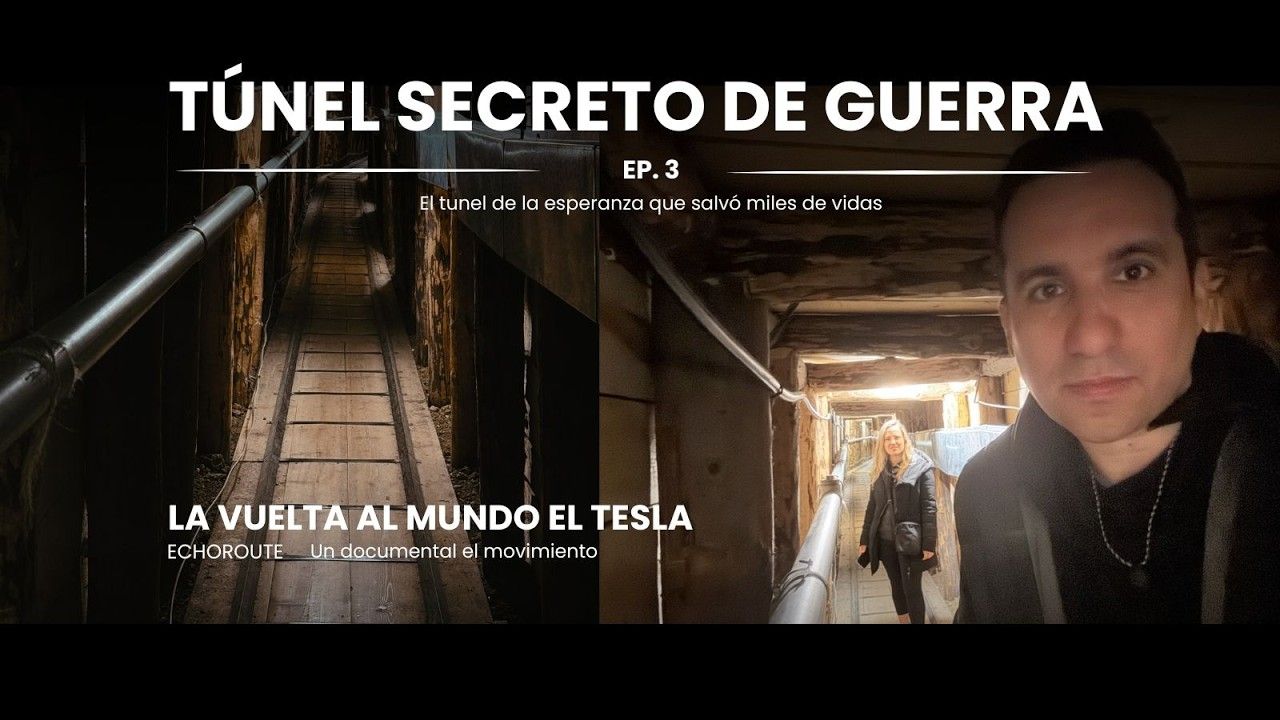
The tunnel is approximately 800 meters long, 1 meter wide, and 1.6 meters high. Excavated in 1993, it took months of day-and-night work. At first everything was carried by hand. Later, rails and carts were installed. Through that space passed people, food, medicine, weapons, fuel, and electrical cables.

The Kolar family: the house that became history

The Kolar family lived in this house, right next to the airport. When construction began, one of the tunnel entrances ended up literally inside their property. Their home became one of the most important points for the city's survival. After the war, they chose to preserve this history. The same house that helped hide the tunnel entrance is now the museum we can visit today.

Visiting the Tunnel of Hope today

The museum is in the Butmir neighborhood, near Sarajevo Airport — about 10-15 minutes by taxi from the center. Inside, you'll find photographs, tools, objects from the siege, and real footage from those years. Today only a small section of the tunnel can be walked. But even those few meters — narrow, dark, humid, cold, with a maximum height of 1.6 meters — are enough to understand.

The numbers of the Siege of Sarajevo

The siege lasted from 1992 to 1995. 11,500 people died during the war in Bosnia. 1,600 of them were children. The sign outside the tunnel says it all: "Don't let them kill us."

Gonzalo Castro

Written by

Gonzalo Castro

Co-founder de EchoRoute. Apasionado por la movilidad eléctrica — viajando el mundo en Tesla y documentando esta revolución desde adentro.

Consultor de negocios & IA

Related articles

Ohrid, North Macedonia: Europe's Oldest Lake That Almost Nobody Knows

Ohrid, North Macedonia: Europe's Oldest Lake That Almost Nobody Knows

Lake Ohrid is between 2 and 3 million years old, has 200 endemic species, and its historic center holds a dual UNESCO designation. We arrived planning to stay one week. We left after two.

See more
What to See in Tirana: Enver Hoxha and Albania's Communist History

What to See in Tirana: Enver Hoxha and Albania's Communist History

We walked through Tirana and discovered firsthand what it meant to live 50 years under Enver Hoxha's communism: the House of Leaves, bunkers, Blloku district, and the story of a people that stood back up.

See more
What to see in Albania: our first week in Shkodër

What to see in Albania: our first week in Shkodër

Shkodër was our first stop in Albania. A country that endured 50 years of communism, now surprising visitors with its contrasts: luxury cars in humble neighborhoods, Rozafa Castle, and people who genuinely welcome you.

See more
New Year's in Paris and reuniting with the Tesla

New Year's in Paris and reuniting with the Tesla

Traveling to Paris for New Year's, leaving Argentina behind and reuniting with the Tesla in Europe. A real story about movement, decisions and new paths.

See more
Returning to Buenos Aires after emigrating: 7 months living in the city I left behind

Returning to Buenos Aires after emigrating: 7 months living in the city I left behind

What it's like to return to Buenos Aires after living abroad. A real reflection after spending 7 months in the city and rediscovering it from a new perspective.

See more
My first month back in Argentina and an unforgettable trip through Salta, Jujuy and Salinas Grandes

My first month back in Argentina and an unforgettable trip through Salta, Jujuy and Salinas Grandes

A month ago I returned to live in Argentina after more than two decades in Europe, and coming back as a resident was very different from visiting.

See more
Returning to Argentina after 23 years living in Barcelona

Returning to Argentina after 23 years living in Barcelona

A few days ago I published a very special video. I went back to live in Buenos Aires after 23 years in Barcelona. It wasn't an impulsive decision.

See more
I visited Auschwitz in winter: my real experience at the most impactful concentration camp in history

I visited Auschwitz in winter: my real experience at the most impactful concentration camp in history

A destination you don't choose lightly. And an experience that honestly changes you.

See more
Walking through the Jewish ghetto of Krakow: the most impactful day of my trip through Poland

Walking through the Jewish ghetto of Krakow: the most impactful day of my trip through Poland

Krakow is a city full of cobblestones, music, history and life. But beneath all that, there's a much deeper layer.

See more
Bay of Kotor: Kotor, Perast and the best of Montenegro

Bay of Kotor: Kotor, Perast and the best of Montenegro

Kotor is a UNESCO World Heritage Site since 1979. Perast has 349 inhabitants and views that leave you speechless. We drove the bay and here's what you can't miss.

See more
What to see in Budva, Montenegro: old town, beaches and nightlife

What to see in Budva, Montenegro: old town, beaches and nightlife

Budva has it all: centuries-old Venetian walled city, Adriatic beaches, bars, nightlife, and affordable prices. Here's what to visit and who it's perfect for.

See more