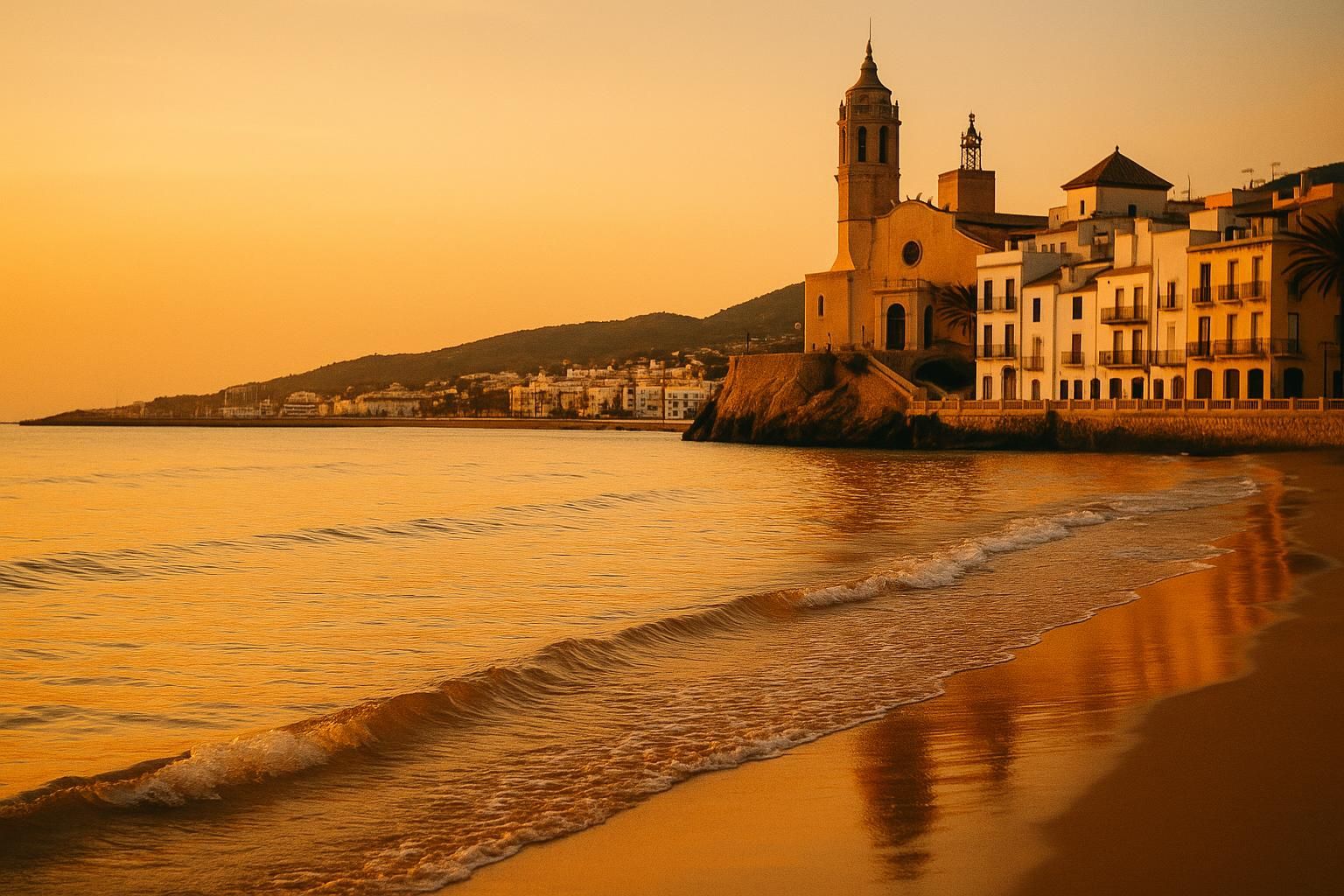
The magic of Paris at Christmas was behind us: the lights, the rhythm, that sense that everything was designed to feel special. We were heading toward the place that would be our home for the next three months.
A destination where the only thing set in stone was how long we’d stay. And maybe for that very reason, it had something different about it from the start. We arrived in Sitges after a few days in Carcassonne, and this time it wasn’t about discovering a new place, but about continuing to get to know each other inside a routine that didn’t exist yet.
Sitges had a different energy. There was no Christmas scene, nothing external setting the tone for what we were living. Its streets hold old facades, cafés, tourists, neighbors, and different languages, alongside an everyday life that keeps its own rhythm. As if it could change without ceasing to be what it is.
Learning to Inhabit the New
Between us, something started to shift. It wasn’t the intensity of Paris: intimacy took another form. Walking without rushing, looking at the sea, coming home, making some mate, and staying up talking as if the day still had something left to tell us.
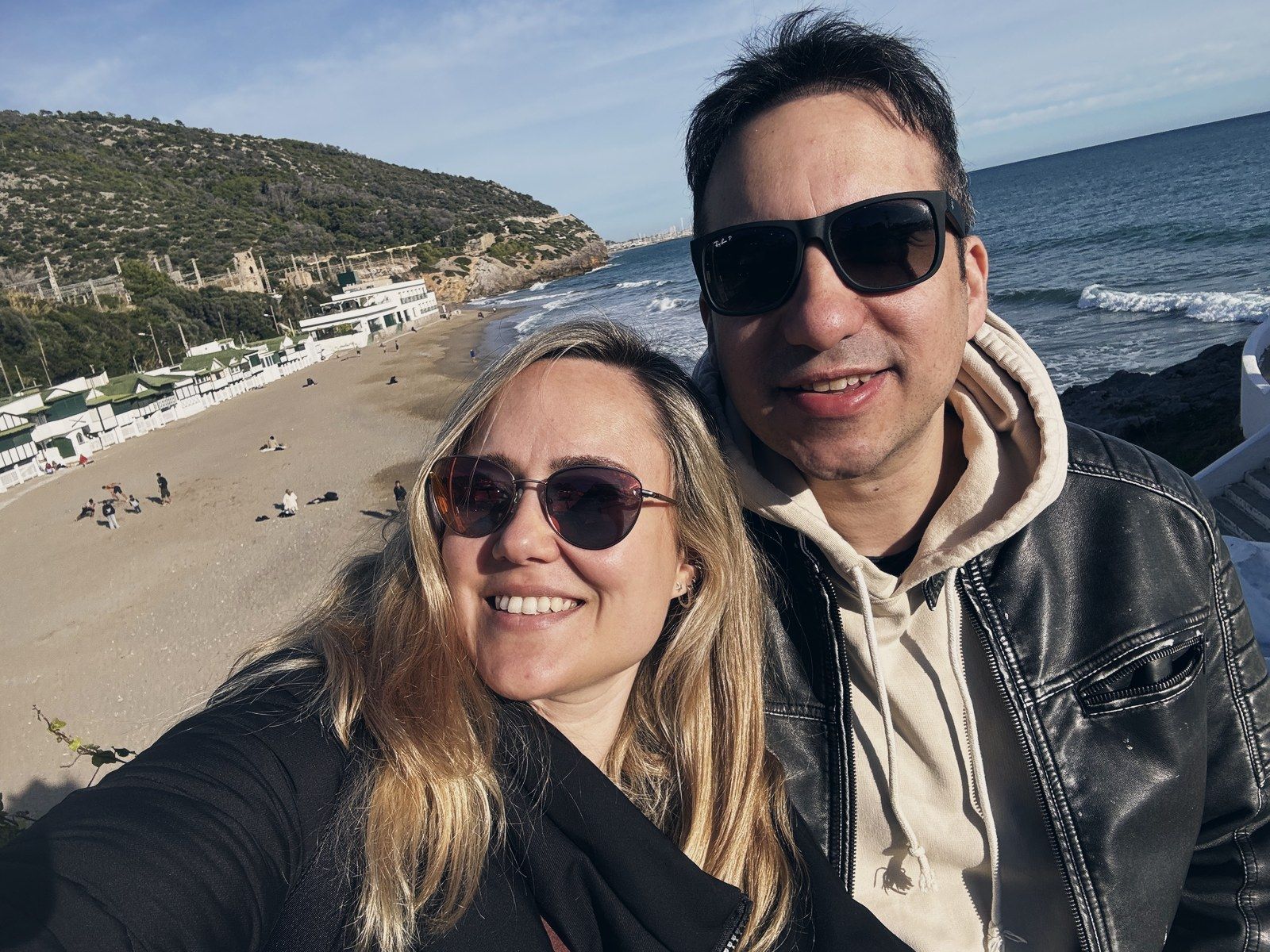
There was something romantic in that. Not in the extraordinary, but in what starts to feel like your own with someone. In the way an unfamiliar place starts to feel like home: not because of the place, but because of who you’re living it with.
When Two Worlds Coexist
Over time I understood that Sitges was showing me something I couldn’t yet name. It isn’t just a pretty Mediterranean town: the old and the new are right there, side by side, not always in order, but coexisting.
And that was what resonated with me most. Because something similar was happening inside me: one part clung to what was familiar, to that idea of stability I’d built over years; the other no longer found any sense in going back. One moved faster than the other.
In those days, most of my focus was on work. Building something of your own takes a lot of energy, even when you still don’t know what shape it will take; and, without realizing it, it was another version of the same thing: letting go of the familiar to make room for something that didn’t exist yet. At the same time, we were building something between us. Not just a trip, but a way of living together.
Walking to Return to Myself
The idea of continuing to move, of traveling the world in a Tesla, of designing a life more ours than traditional, was starting to feel less far off and more real. But, like everything worthwhile, it didn’t come with instructions.
In living together, those small differences that come with learning to share a life started to appear. Sitges was close to Barcelona, just 30 minutes away, but for him it wasn’t simply a place we’d arrived at. It was part of his story. He had friends there, routines, even a football club he’d founded years earlier. He moved through those streets with the ease of someone who knows every corner.
I, on the other hand, was still building my own place there. I’d come from leaving many certainties behind, trying to give shape to a new professional and personal chapter, while learning to inhabit a life that was still taking form.
That difference, between someone returning to a familiar place and someone learning to inhabit it, was also part of what we were building together.
In the middle of all that, something I wasn’t expecting showed up: the need to return, even if only for moments, to that place of mine where everything settled. Not to pull away, but to listen to myself. To understand where I was choosing from.
So some days I walked alone. Without trying to get anywhere, just to come back to myself for a while. I almost always ended up at the Church of San Bartolomé and Santa Tecla, at the edge of the sea, exposed, with nothing to fully protect it. And yet it’s been standing there for centuries.
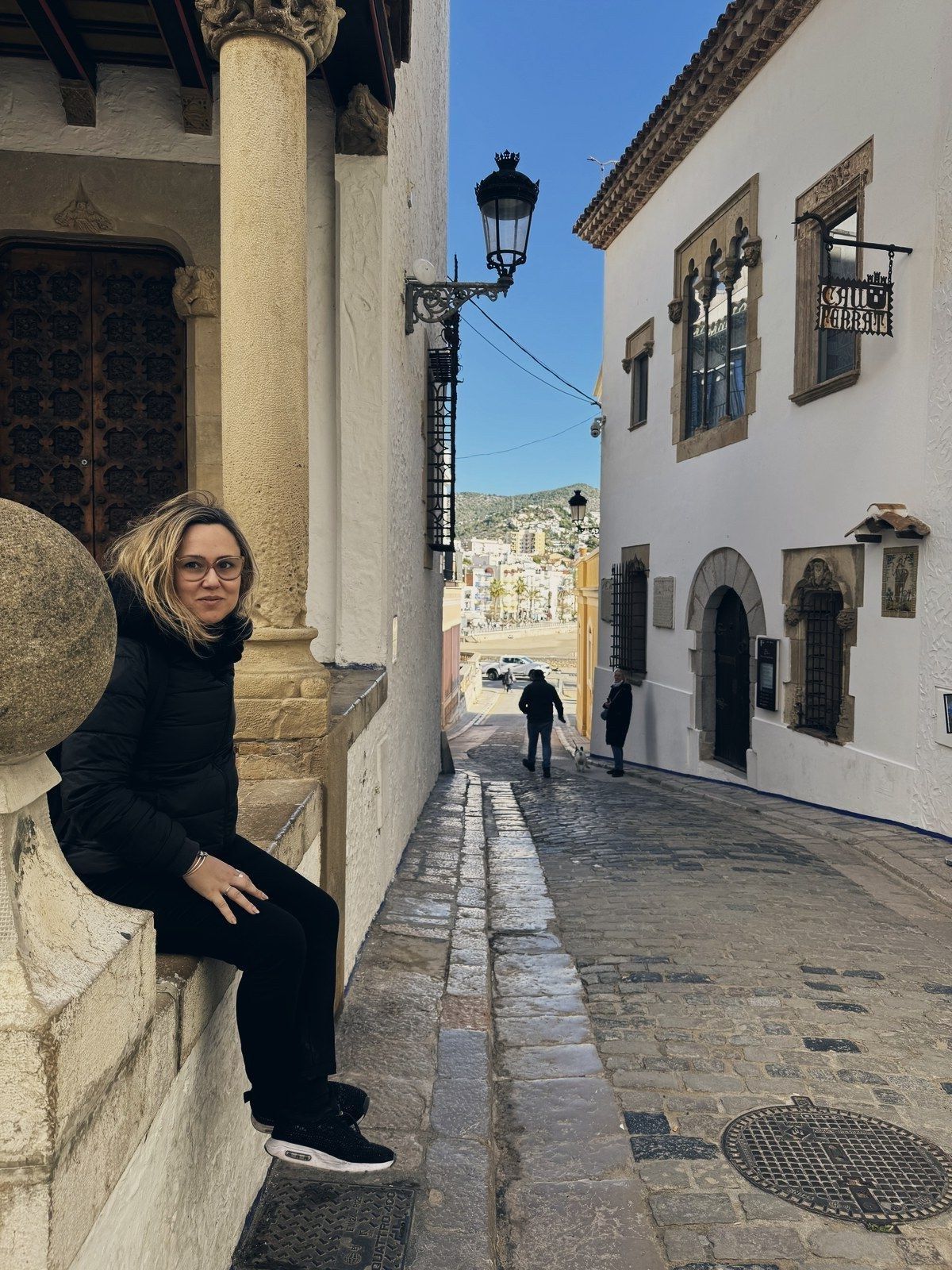
It doesn’t stay standing by being invincible. It stays because it learned to live with what changes: the wind, the sea, the passing of time. None of that erases it; in a way, it also shapes it.
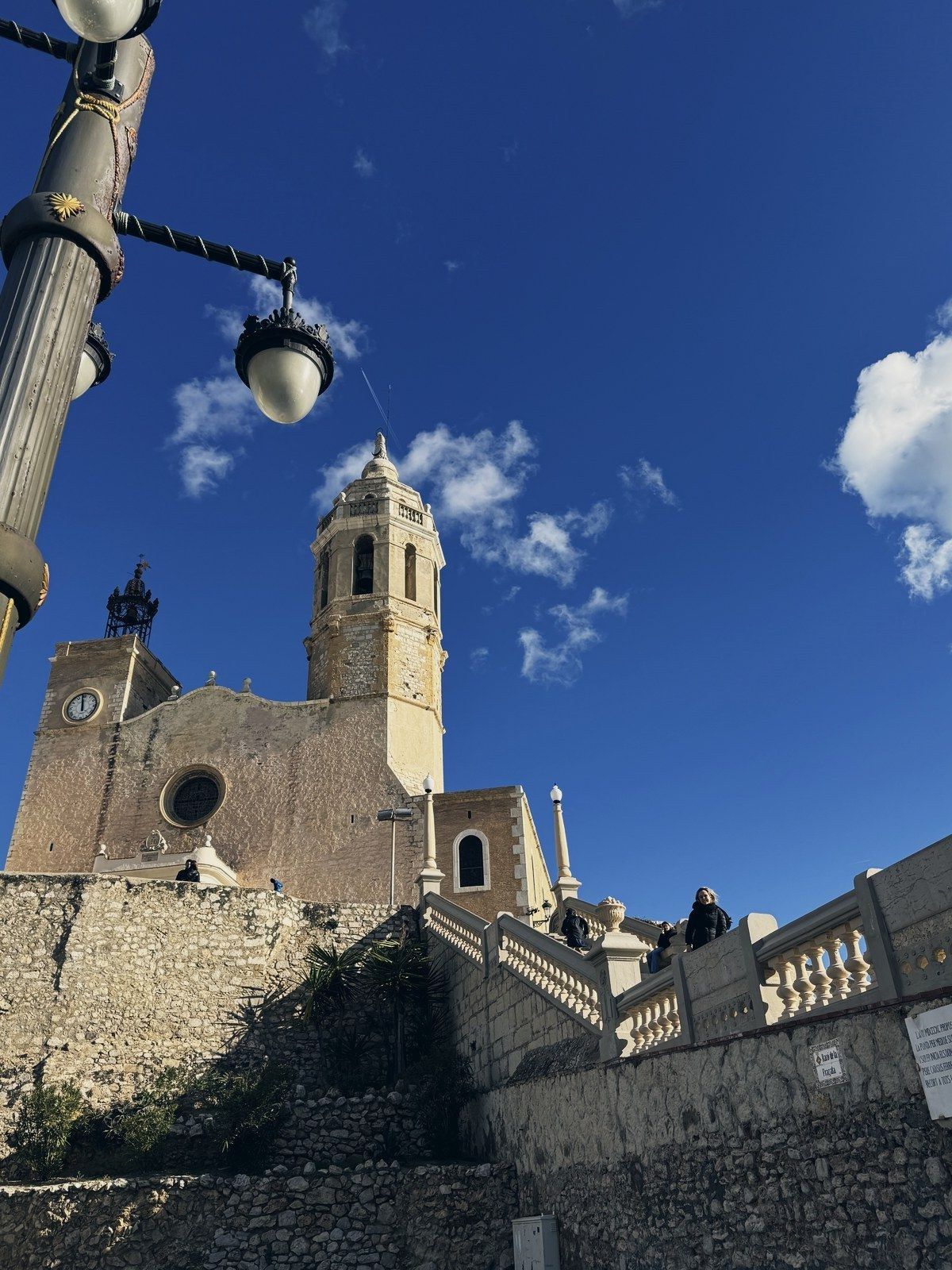
What lasts over time doesn’t stay intact. It adjusts, gives way in some places, holds firm in others. And something of that was starting to happen between us.
The Stories of Sitges (and Sant Magí)
Sitges has something particular about it: every corner seems to hold a story. In the tiles on the walls, on the corners, in the doorways, in the textures. At times I’d find myself wondering who had passed through there before.
It made me curious, and instead of letting it go, I started taking photos of those details and asking ChatGPT where they came from. That’s how I came across the story of Sant Magí.
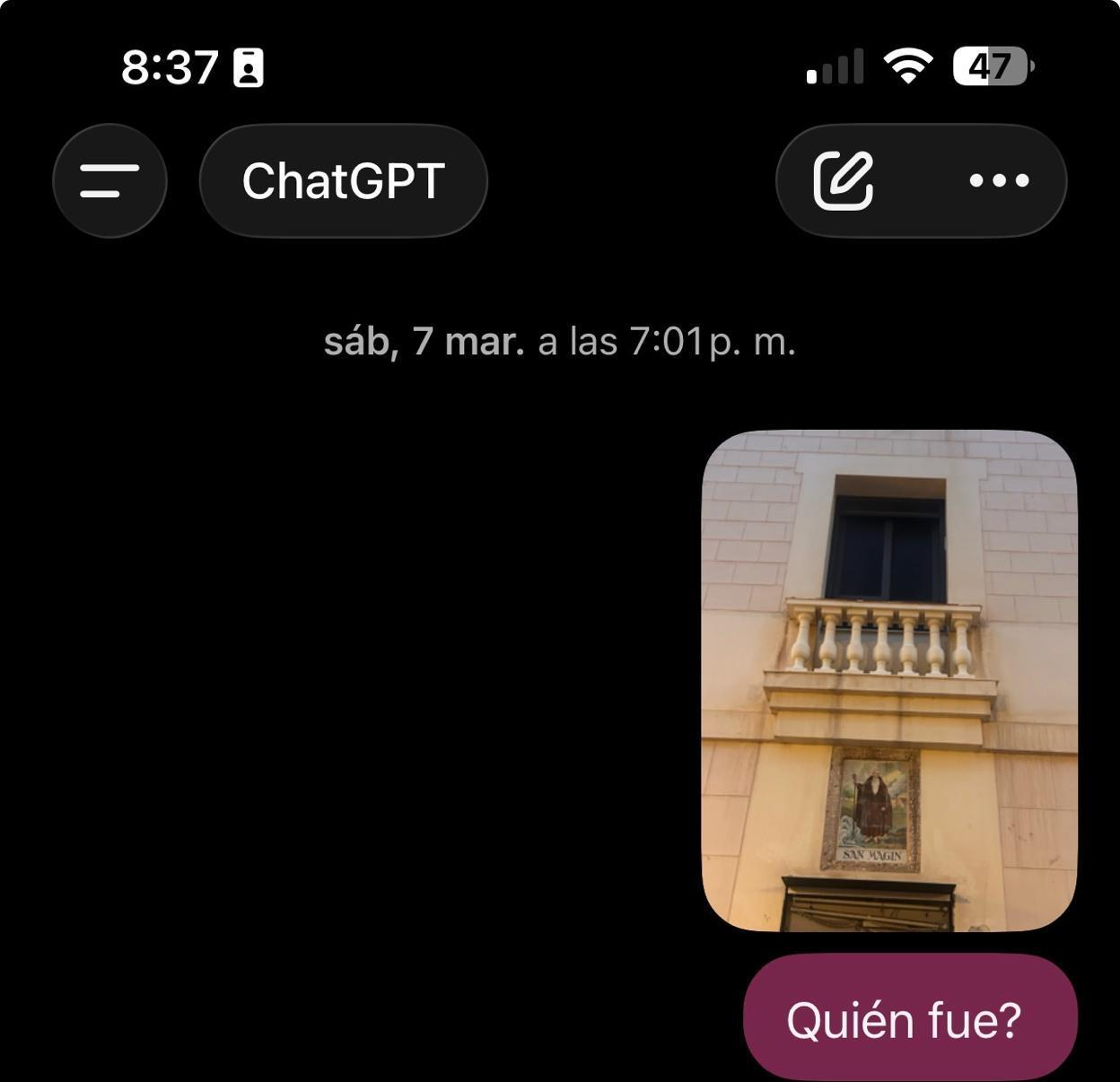
A Christian hermit who, according to tradition, lived in seclusion in La Brufaganya, in Tarragona, until the Romans began persecuting him for refusing to give up his faith. They say that when the soldiers came for him, he made water spring up by striking the ground with his staff; in some versions, that water appears to quench the thirst of the very men taking him to his death.
They kill him. And yet the story doesn’t end there: still today, every August, the water of Sant Magí returns to the city.
As if it weren’t only about a saint, but about something harder to ignore: holding onto what’s yours, even when everything pushes you to let it go.
I don’t know if it was the story or the moment I found it, but it stayed with me. I was also learning what I wanted to transform and what I needed to keep.
What We Were Learning to Hold Onto
It didn’t have the kind of stability I knew, but there was something real in how we kept finding each other: talking before silence built up tension, adapting without having to fit into something we weren’t, understanding that what wears you down is rarely one enormous moment, but those small things that need to be talked through and adjusted in time.
And there was the way we went through it together, even with all the questions I still had.
That’s where I started to understand that it wasn’t about looking for certainties where there weren’t any. It was about letting go of what I’d been carrying and discovering what could be built with what was there: with the person beside me and with what I didn’t know yet.
In that step away from the familiar, something else appeared: trusting that I could stay without carrying what no longer went with me.
Everything was moving, yes.
But I had Gonzalo beside me, a life that was starting to take shape as a pair, and a still-timid certainty: not everything that shakes the ground beneath you comes to throw you into disarray. Some things do it so you can build in a different way.


