Budva has it all, and that's exactly what makes it hard to categorize. It's not just beach, not just history, not just nightlife — it's a bit of everything, and depending on what you're looking for, it can be the perfect destination or leave you wanting something more.
I arrived in Montenegro with low expectations and left wanting to come back. Budva was the first stop.
What is Budva and why visit
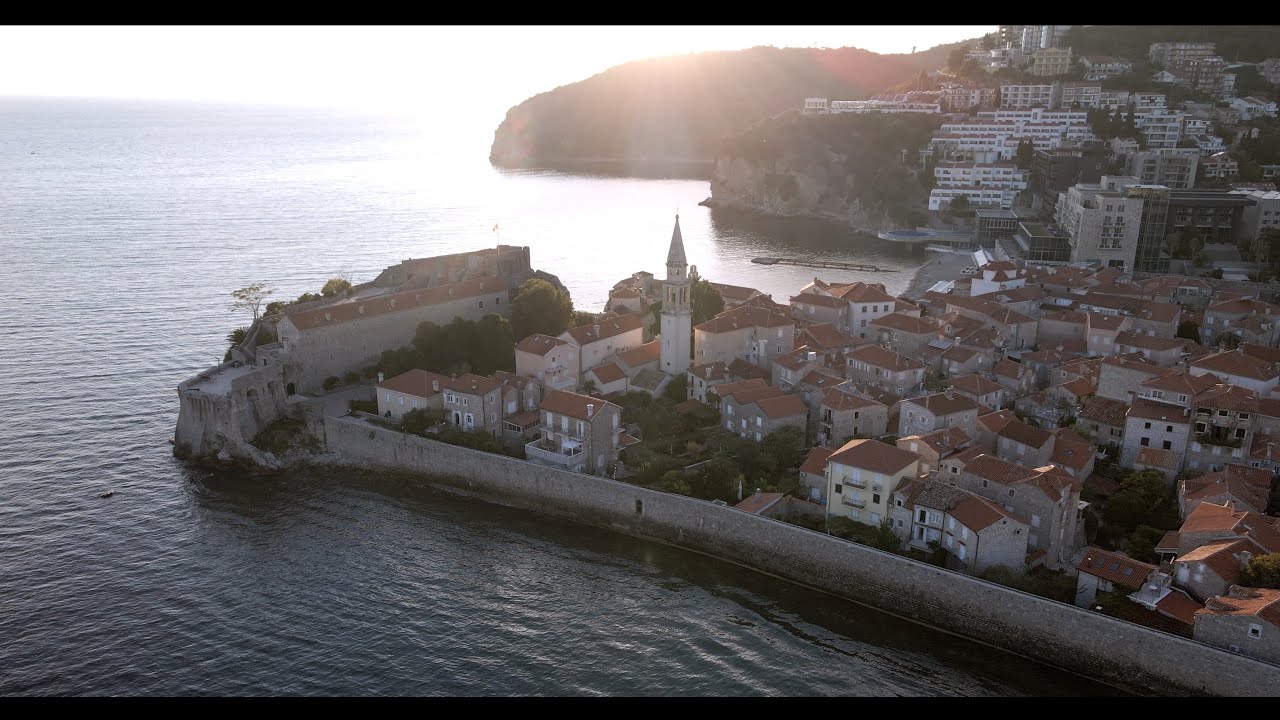
Budva is a coastal city in southern Montenegro, on the Adriatic Sea. What defines it visually is the contrast between its Stari Grad (walled old town) and the modern area that grew around it, with hotels, beaches, and an active nightlife scene.
The old town was founded by the Greeks and later dominated by Venice in the 14th-15th centuries. If you look at the buildings, you can see it immediately: everything is Roman stone, medieval walls, narrow Venetian-style streets. That Venetian influence makes complete geographic sense — just across the Adriatic is Italy.
Around 1780, a massive earthquake devastated much of the city. Reconstruction began in the early 19th century, and you can still see the difference in stone tone on the walls: darker stones are older, lighter ones are from the rebuilding.
What to see in Budva
Stari Grad: the walled old town
The heart of Budva is the Stari Grad, accessible through several gates. Inside: cobblestone streets, churches, restaurants with sea terraces, and stunning views from the walls. The final tower was the watchtower defending the town from sea invasions — stand there and it's easy to imagine how raiders would arrive across the Adriatic.
The Dancer Statue
On the path between the beach and the Stari Grad, there's a statue of a dancer. The story goes that she used to come there every day, dancing while waiting for her sailor, who one day went to sea and never returned. They say that if you touch her, she brings luck in love.
Morgan Beach
Morgan Beach is one of Budva's most recommended beaches, on the southern end of the coast. To get there, you walk from the Stari Grad or the main beach, and at one point you need to take your shoes off to cross a small water passage. Worth it.
Budva at night
Budva has two faces, and the night one surprises you. The Stari Grad by day is history and tourism; at night it's fully lit, restaurants with terraces hanging over the sea, music, and a completely different atmosphere. From the modern part, when you look toward the old town and see it all illuminated, you understand why it's worth coming more than once.
There are fireworks some nights, concerts in the main square. The lit-up walls above the Adriatic, with lighthouse lights and boats on the horizon, is one of those images you keep.
Food and drinks
Inside the Stari Grad there are restaurants that literally extend over the sea: you have breakfast with the water below you. Bars on every corner, all cobblestone, with light filtered through stone walls. Prices are notably cheaper than in Spain or most of Western Europe — having breakfast with sea views costs roughly what the supermarket does back home.
Montenegro: a brief history
You might know Montenegro as part of a bigger country — because it was, for a long time. It belonged first to the Kingdom of Serbs, then to Yugoslavia, which included Montenegro, Serbia, Croatia, Bosnia, Kosovo, Macedonia, and others. Yugoslavia dissolved in the 1990s, and in 2006 Montenegro peacefully became independent. If you follow football: in the 2006 World Cup, Argentina played against "Serbia and Montenegro" as one country. That was their last year together.
For digital nomads
Montenegro is launching a digital nomad visa. There are coworking spaces, decent WiFi, and a city scale that doesn't overwhelm. It's manageable, walkable, affordable, and busy enough not to get boring. Low season (May, for example) is ideal: people around but no summer chaos.
How to get to Budva and practical tips
The closest airport is Tivat Airport (TIV), about 25 minutes by car. You can also fly into Podgorica (POD), about 65 km away. From Dubrovnik, Croatia, it's roughly 2 hours by car.
With one day you can cover all of Stari Grad and reach the main beaches. Two days lets you do it at a relaxed pace, visit Morgan Beach, and have a night out. Three or more days and you start exploring the surroundings: Sveti Stefan (the medieval islet turned luxury hotel, 5 km away), southern beaches, or Kotor.
Frequently asked questions about Budva, Montenegro
Is Budva worth visiting? Yes. Even if you're more of a history traveler than a beach person — the Stari Grad alone justifies the stop.
How many days do you need in Budva? 1-2 days to cover the essentials. 3+ if you want to use it as a base for the rest of Montenegro.
Is Montenegro expensive? Compared to Western Europe: significantly cheaper. A sit-down breakfast costs what a supermarket run costs in Spain.
Is there a digital nomad visa for Montenegro? Montenegro is rolling one out. Check the official Montenegrin government website for the latest status.