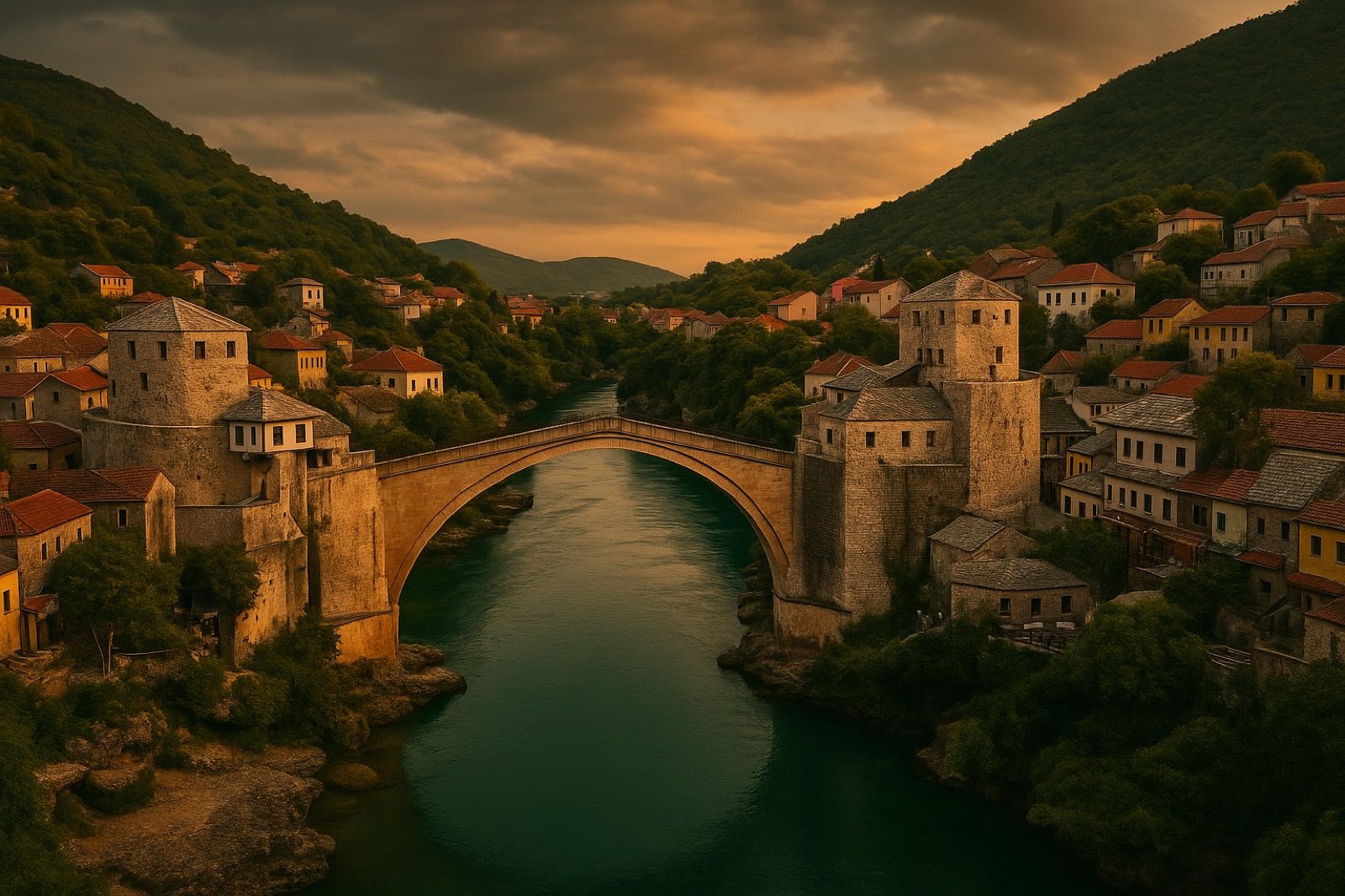
Sarajevo had left us with more questions than answers. We had discovered a country with a three-member Presidency, cultural identities represented right inside its political structure, and a recent history that stayed present without taking over every moment of everyday life.
Bosnia and Herzegovina are not two countries. They are two historical and geographical regions within a single territory. Bosnia takes up mostly the north and center, while Herzegovina stretches across the south, with a more Mediterranean, mountainous landscape cut through by river valleys.
Sarajevo is in Bosnia. Mostar and Trebinje are in Herzegovina.
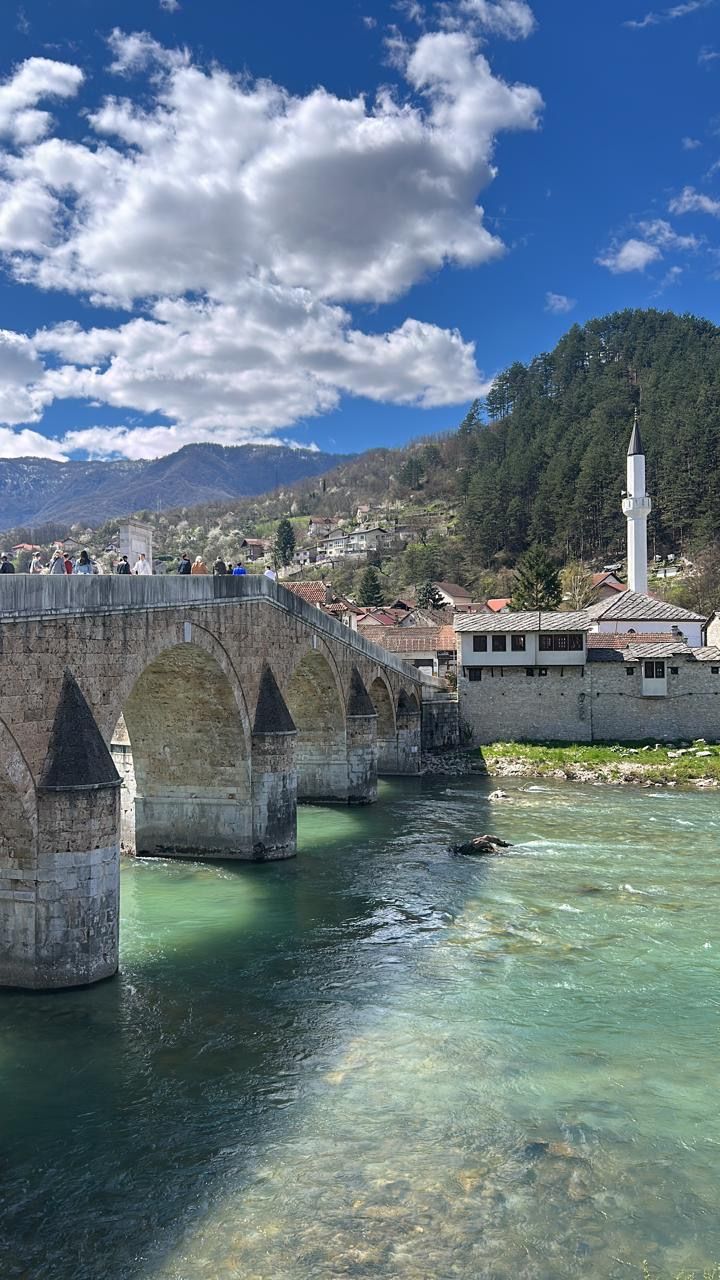
Before reaching Mostar, on the road in the Tesla, we stopped somewhere that was not on any plan: Konjic. We saw the bridge over the river, with a church right beside it, and I was speechless. It looked like it belonged somewhere else entirely.
Gonzalo wanted to keep going. We still had road ahead and Mostar waiting for us. But I pushed for it, asked him to stop even if just for a coffee, and he gave in. I think, deep down, he liked giving me that.
That few minutes detour reconnected me with one of the reasons I travel in the first place: letting myself be amazed by something I did not see coming.
We Got to Mostar Through the Voice of a Local Guide
To explore Mostar we looked for a local guide. We wanted to hear the history from someone who could also tell us what it was like to actually live there. He was of Croatian and Italian descent, spoke Spanish, and had lived in Mostar for 20 years, something that gave the conversation a depth that facts alone cannot provide.
He was the one who helped us see the second layer of the map. After the war, the country ended up organized into two entities: the Federation of Bosnia and Herzegovina, with a Bosniak and Croat majority, and Republika Srpska, with a Serb majority, plus the autonomous district of Brčko. The historical regions and the political entities overlap, but they do not match: we could be in Herzegovina and, depending on the city, find ourselves inside one entity or the other.
He talked to us about his neighborhoods, about differences that still surface, and about what it means to live alongside a history that from the outside we tend to sum up in dates, religions, or sides. During the war, Mostar was split in two: a western zone with a Croat majority and an eastern one with a Bosniak majority, with the Neretva River marking a fracture far deeper than the one on the map.
It still showed. Even though much of the city has been rebuilt, plenty of facades were still pitted with bullet and shrapnel holes, and whole buildings stood abandoned, empty since then. He explained that these were scars from the Bosnian War (1992-1995), and specifically from the fighting that split Mostar in two between 1993 and 1994.
He told us that on the Croatian side, where he lived, services were better than on the Bosniak side, partly because it was an area with more purchasing power, partly because of long-standing support from Croatia and better-funded institutions of its own, and that, although today neighbors and tourists cross the bridges on foot or by car with complete freedom, a kind of invisible line still persists: each population tends to stay on its own side.
The example he gave us hit hard. He said: "if a Croat feels sick on the Bosniak side, they still cross over to get treated at the Croat hospital, and a Bosniak does the same on the other side."
The division is no longer military; it is human and administrative. Much of Mostar's public services are duplicated: two separate bus companies with stations on each side, two garbage collection services, two postal services, even two hospitals.
He was not claiming to speak for the whole city: it was his own view, shaped by his history and by the experience of living in Mostar. That was exactly why it mattered to us.
Hearing that the divide had gone as far as splitting the healthcare system left me genuinely sad. The wounds of the body seem to heal long before the wounds in the social fabric do.
Stari Most: Mostar's Old Bridge and Its History
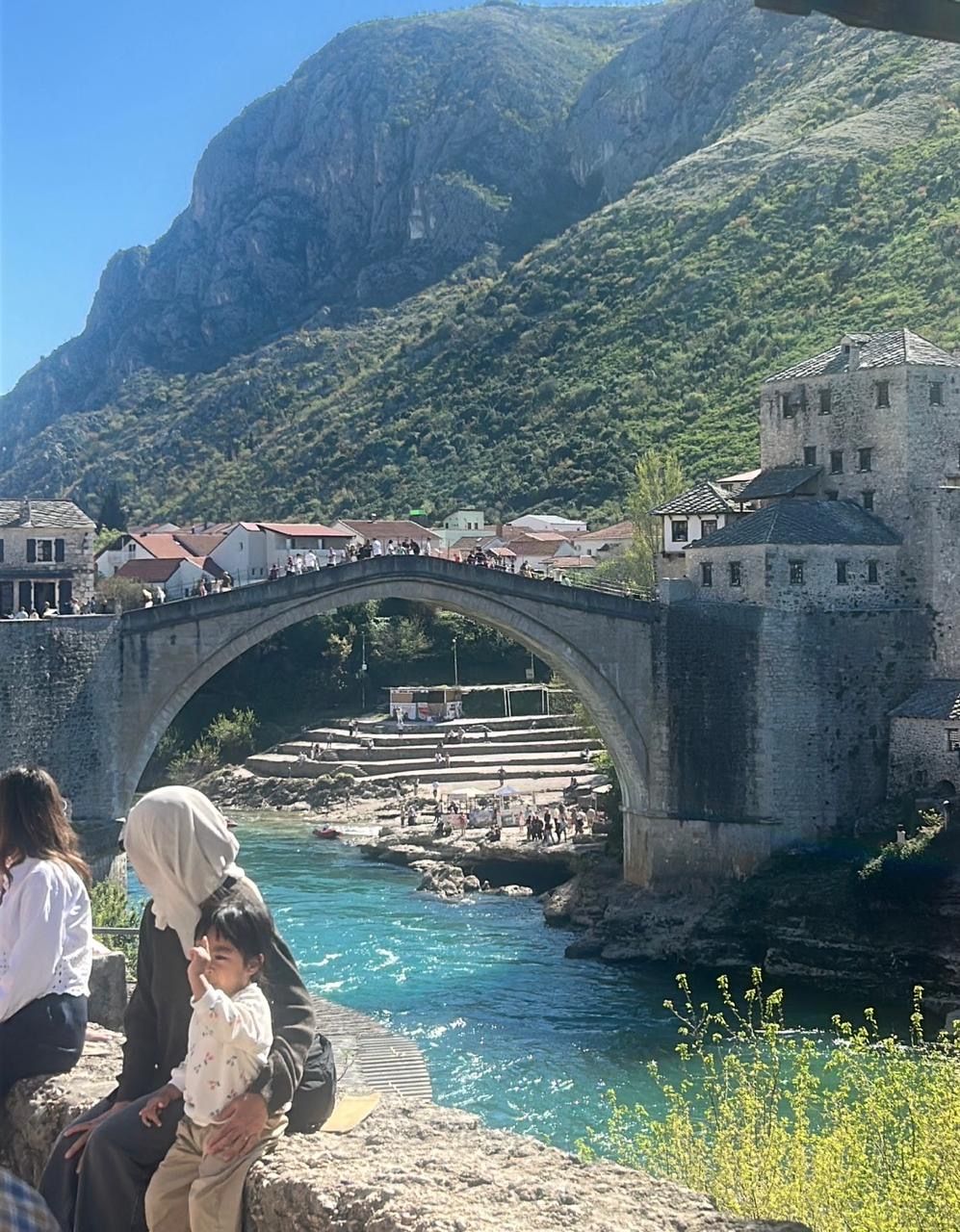
The Stari Most had connected the city for centuries before it was destroyed in 1993. After the war it was rebuilt, and today it once again links both riverbanks, having become the image most of us associate with Mostar.
When I saw it, I understood why everyone wanted to photograph it. The arch over the water, the stone streets, and the mountains around it made for a scene that was hard to ignore.
But what really struck me was learning its history of conflict.
After listening to the guide, I could no longer see it as just a pretty postcard. There were tourists looking for the best angle, people crossing from one side to the other, a city going about its business around it, while I kept thinking about everything that bridge had witnessed, and everything it had stopped connecting during the war.
The bridge was joining the two banks again, but that did not mean everything that had been torn apart around it was fully repaired too. Living side by side does not always mean the differences are gone. Sometimes it means sharing a city, institutions, and everyday life, even while each community holds onto a different memory of what happened.
Coming from Latin America, we tend to think of political divisions as clashes between parties, social classes, or economic interests. In Bosnia and Herzegovina, cultural and ethnic identity is built into the structure of the state itself.
It was hard for us to understand, partly because it really is complicated, and partly because we kept trying to read it through a logic we already knew, one that did not always work there.
On the way from Mostar to Trebinje we stopped at the Kravica waterfalls. We did not need much more than that: we got out of the Tesla, brewed some mate, and stood there for a while watching the water fall before getting back on the road.
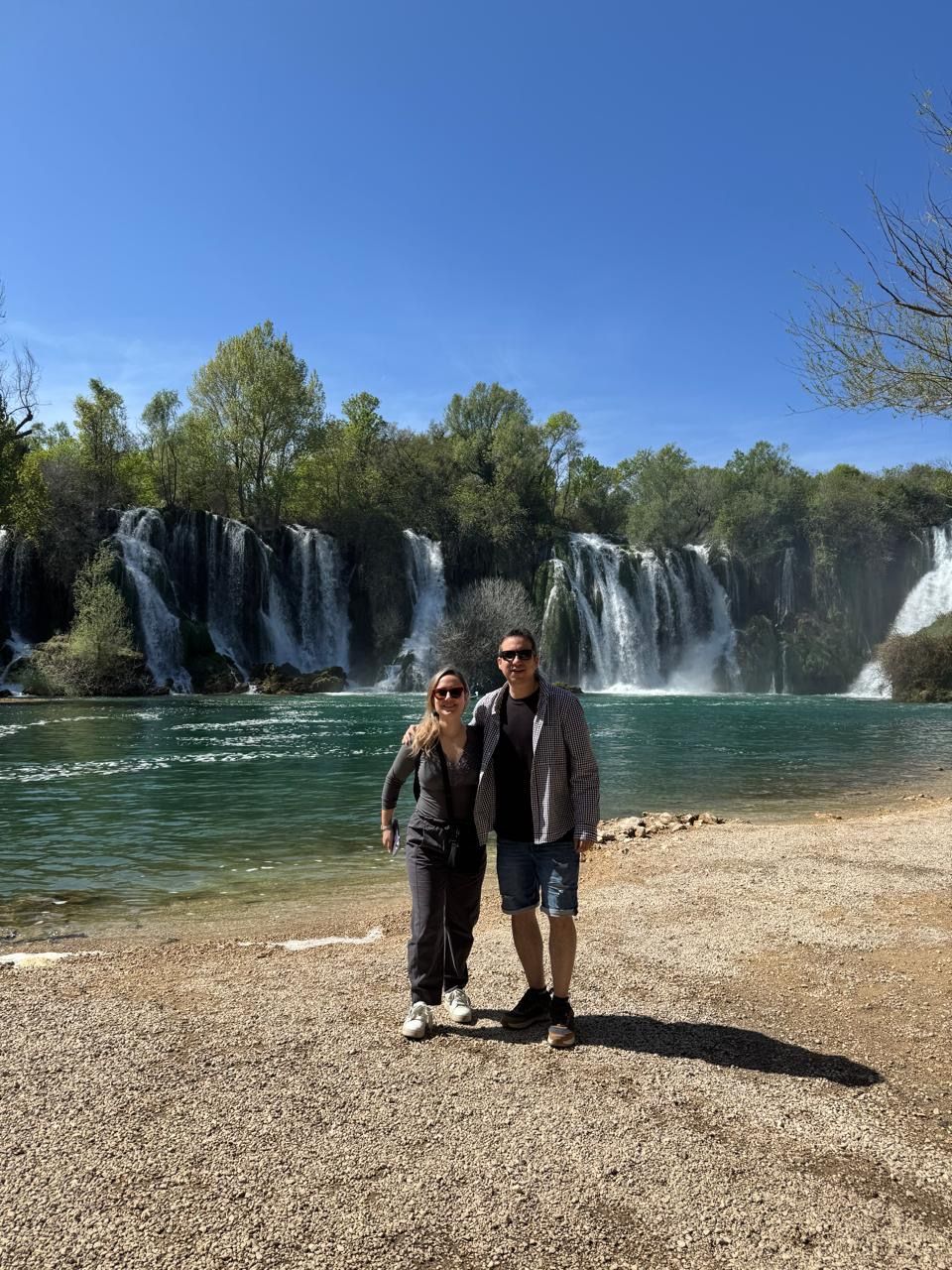
That is exactly the kind of flexibility traveling in the Tesla gives us: stopping for no reason, drinking mate in front of something beautiful, and moving on.
Trebinje and Republika Srpska: When We Stopped Trying to Interpret Everything
After the beauty of Mostar, Trebinje showed up with a different energy. We were still in southern Herzegovina, but we had crossed into Republika Srpska.
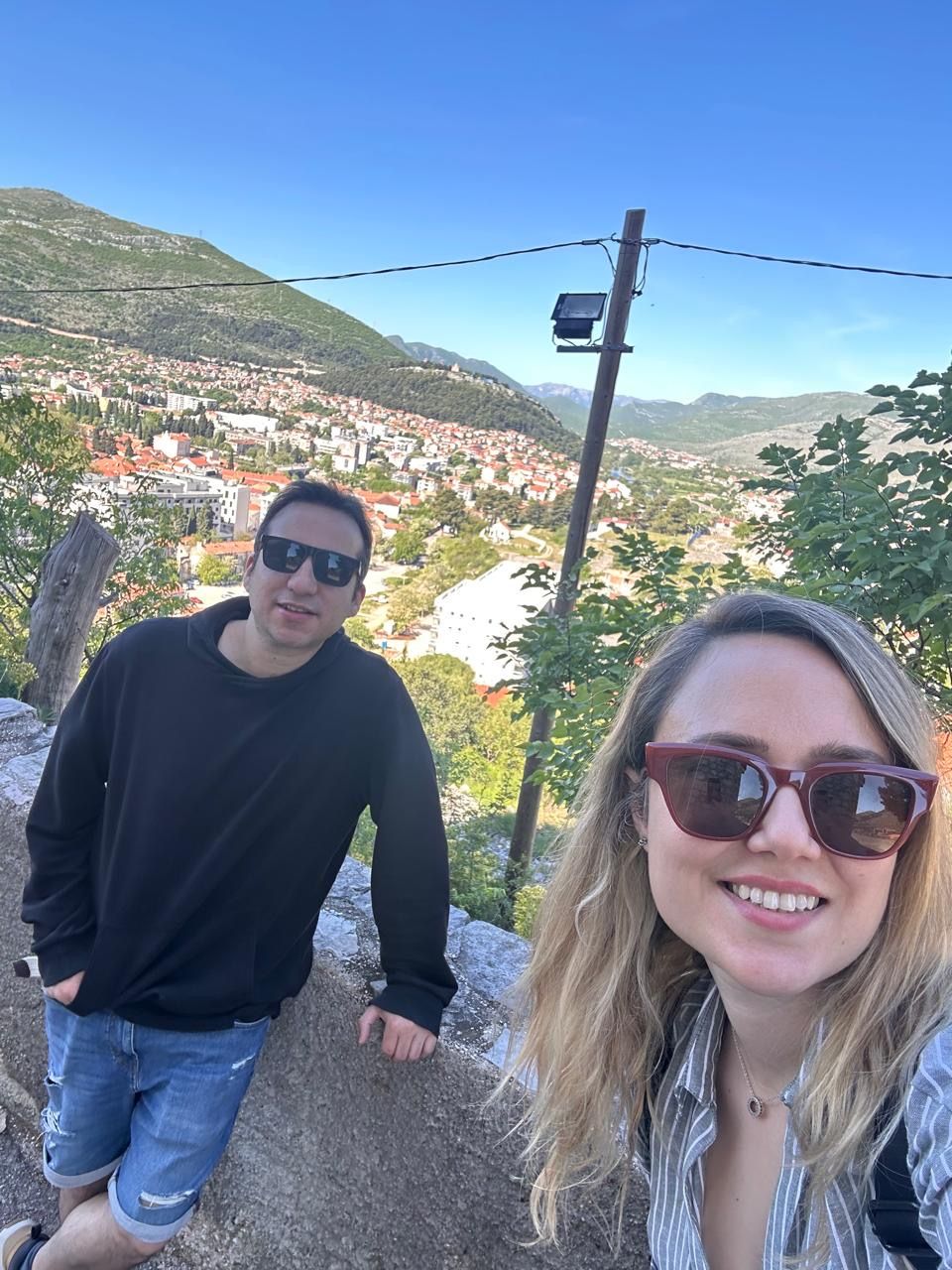
It was the same country and the same historical region, just a different political entity. Only then did the map stop feeling like an abstract explanation.
We did not arrive in Trebinje with an endless list of places to see. We got there at a point when we needed to work more, keep to a schedule, and get some kind of routine back. The trip kept moving forward, even on the many days that went by in front of a computer.
The Airbnb was a bit out of the center, about a twenty minute walk away, but we loved the decor. Very aesthetic, the kind of place that makes you want to take photos the second you walk in.
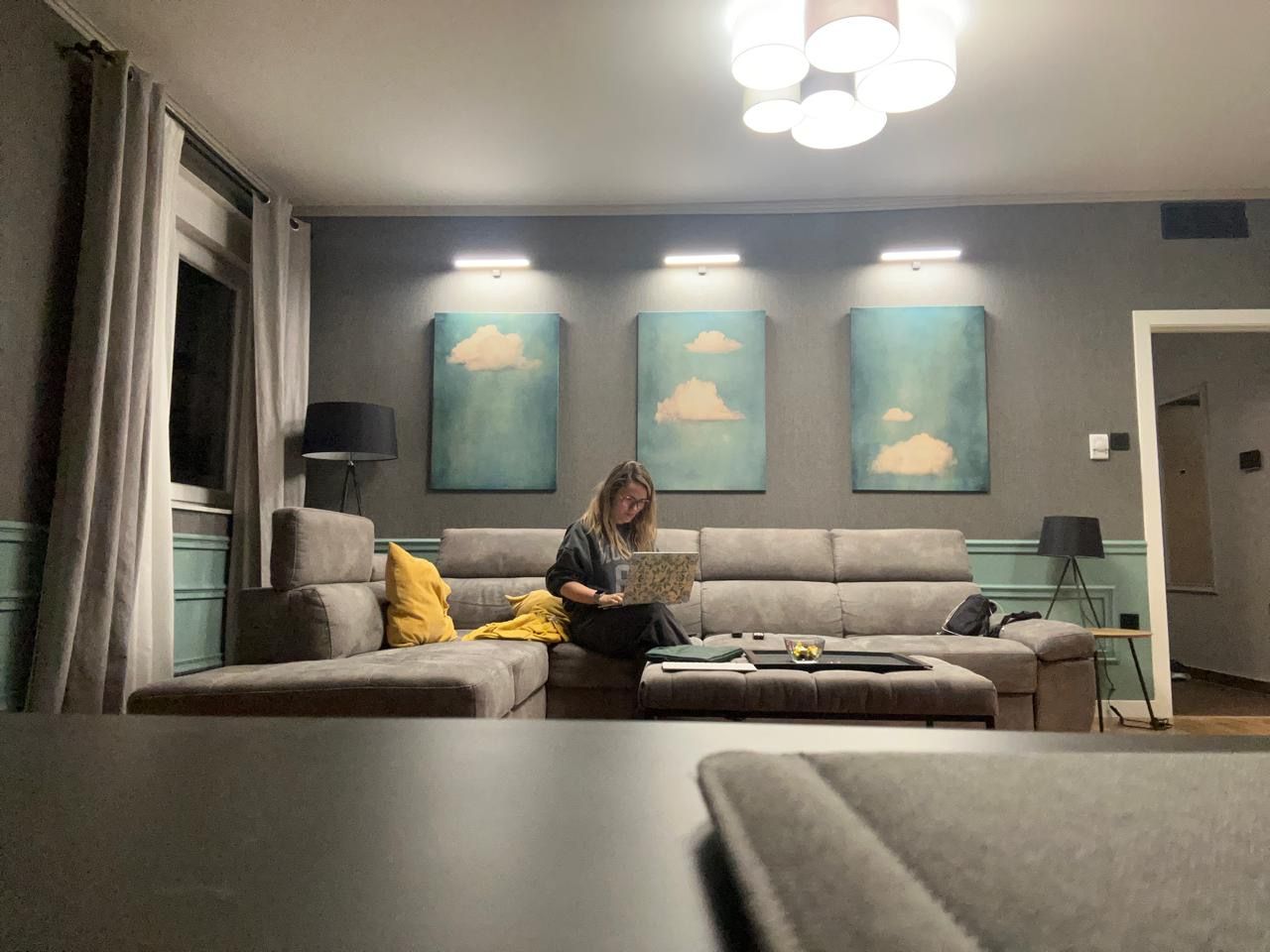
We spent most of our time there working. I made coffee in the morning, Gonzalo started on the mate a bit later. I had not brought my own gear from Buenos Aires yet, so we shared his, even though mate is still pretty much non-negotiable for me. Sometimes we both worked right there, and when one of us had a call, the other would grab the laptop and go get something at a nearby cafe, we ended up picking them by how close they were more than anything else.
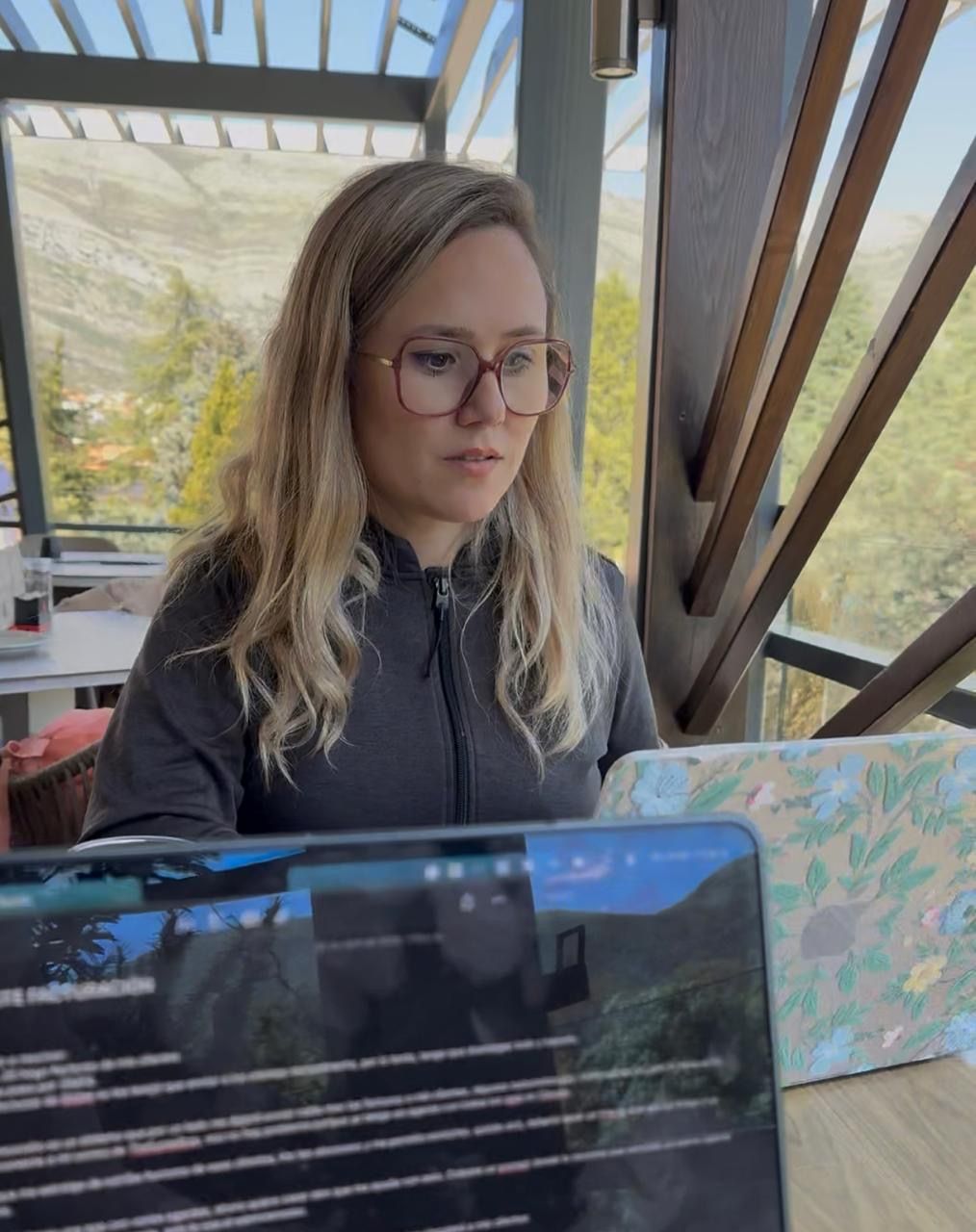
We started repeating places and paying attention to what everyday life there actually looked like.
It stops being only about where the most famous monument is. It also becomes about where to buy food, which cafe has decent wifi, or which walk you repeat when you need to clear your head after hours of work.
Trebinje showed us a more local Bosnia and Herzegovina, less explained and less concerned with putting on a show. After Sarajevo and Mostar, two cities that had forced us to look straight at history, there we got to watch something simpler: how life keeps going when no one is trying to narrate it for a visitor.
After Trebinje we headed toward Montenegro. We left Bosnia and Herzegovina knowing a lot more than when we arrived, but without feeling like we could fully explain it.
Next stop: Montenegro.


