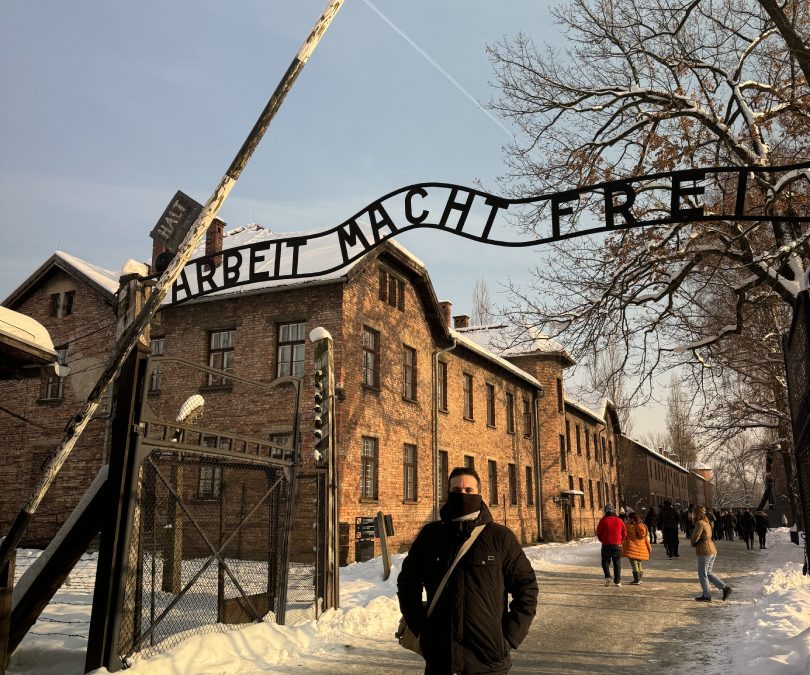
Auschwitz. A name that needs no further context.
A destination you don't choose lightly. And an experience that honestly changes you.
During my trip through Poland, I decided to visit the most emblematic concentration camp of the Holocaust. I had imagined it many times. I had read, watched documentaries, heard stories. But nothing, absolutely nothing, compares to setting foot in Auschwitz-Birkenau, to feeling the cold that penetrates bones... and soul.
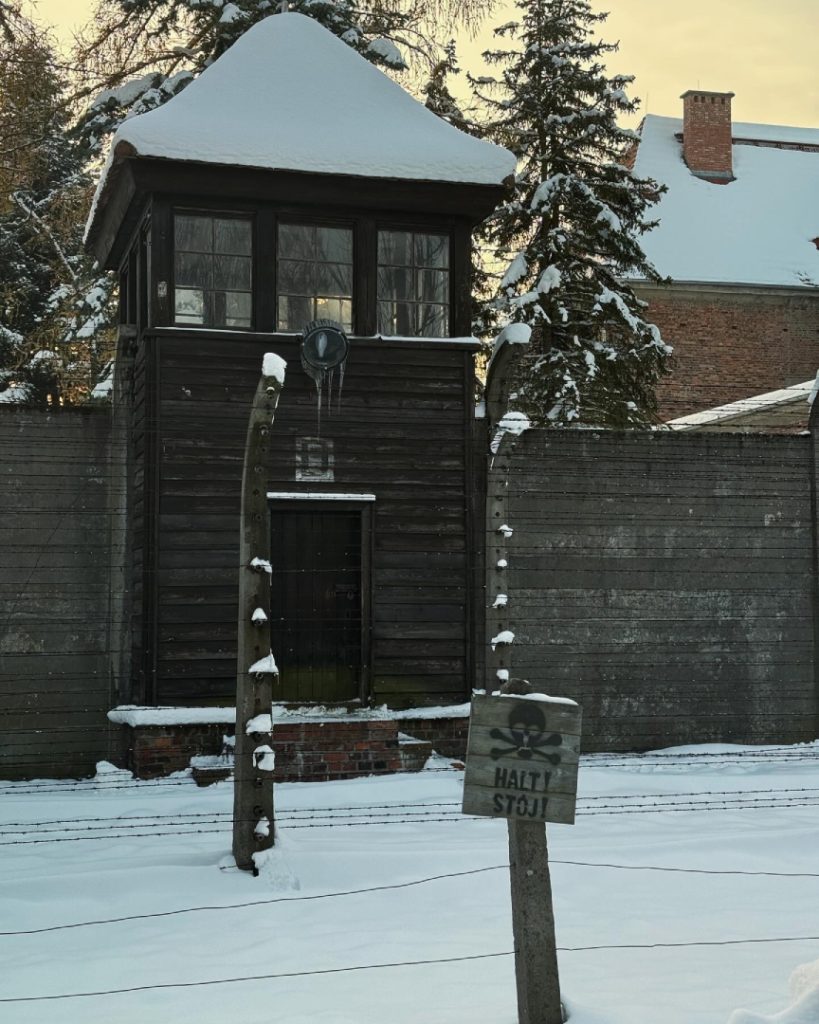
From Krakow to Auschwitz: the beginning of silence
While walking through the streets of Krakow, part of me was already there. I imagined the train tracks, the towers, the barracks. I thought about what I would feel, not just upon arriving, but upon leaving.
Auschwitz is divided into two main camps: Auschwitz II - Birkenau, the largest, most symbolic and ruinous, and Auschwitz I, the first to be built, with museums and preserved structures.
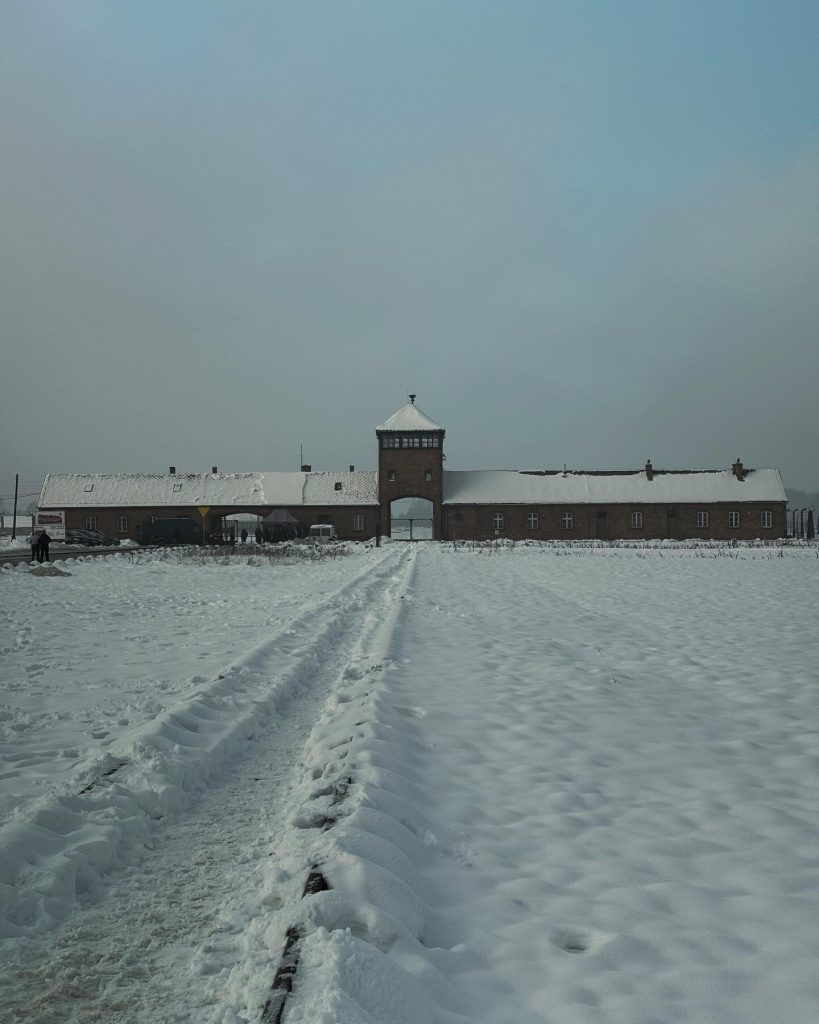
I started with Birkenau, where winter covered everything in snow, as if the white was trying to cover up history. But no weather or landscape can do that.
The cold in the bones and in memory
I entered through the main tower, the one I had seen so many times in images. I walked along the frozen train tracks, the ones that marked the entry of thousands of people who didn't know they were walking toward death.
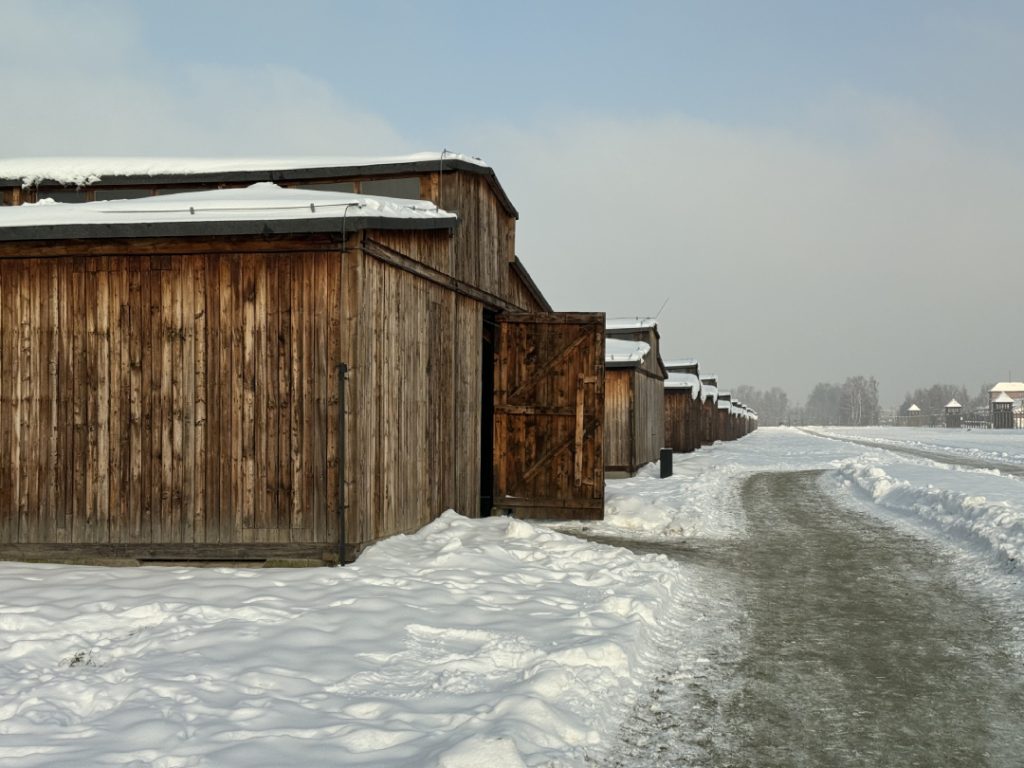
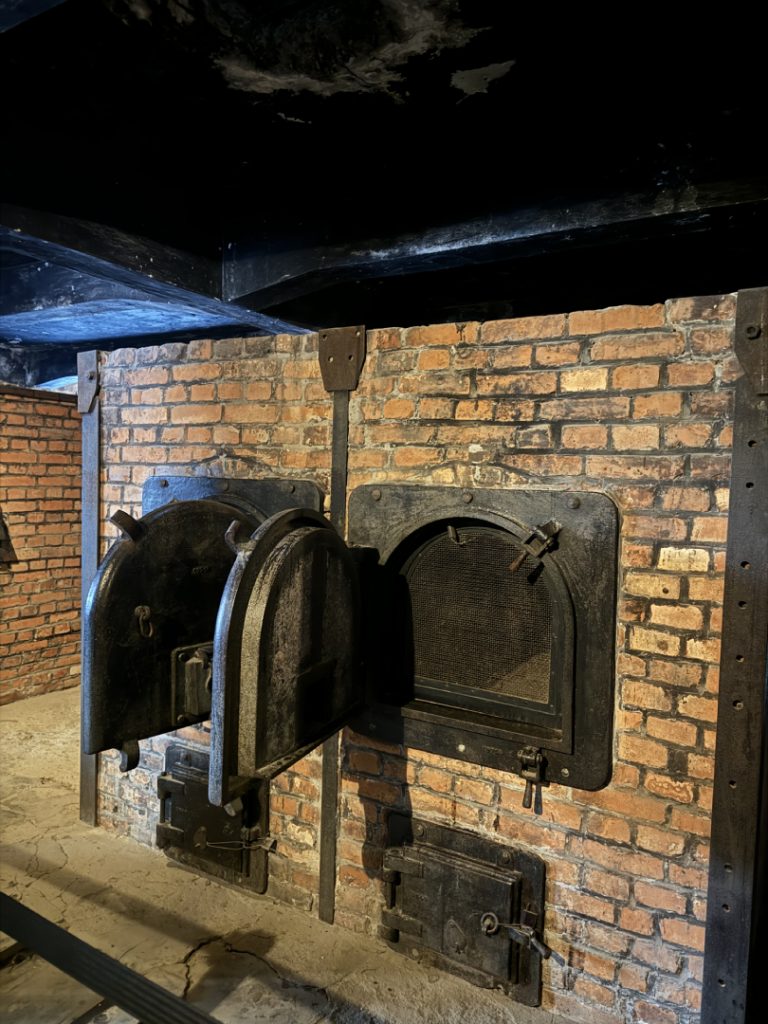
I visited the women's barracks, saw the primitive latrines, the inhumane conditions, the remains of the crematoria. Everything I had imagined was real... and worse. The cold was unbearable, and not just because of the weather. My hands trembled with the camera. Every step was a reminder of what happened there.
The memorial stones, at the end of the tracks, represent nameless graves. And the remains of the barracks are only a minimal part of what that hell was.
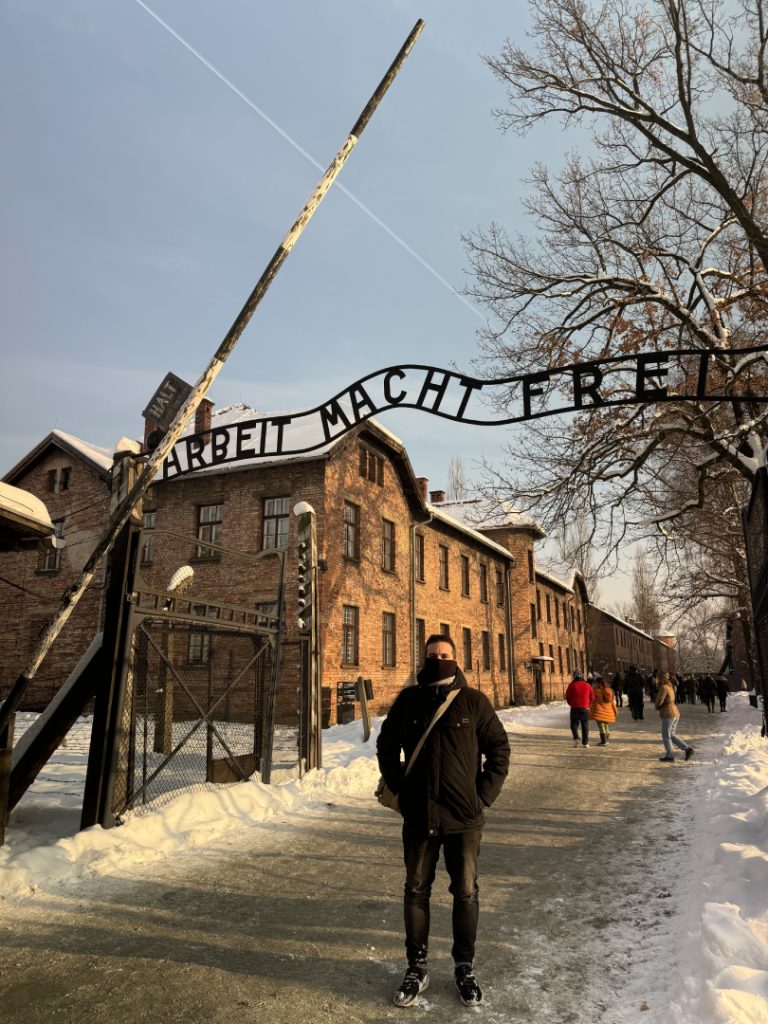
The ruins and planned destruction
Before the war ended, the Nazis tried to destroy the evidence. That's why today we see ruins of gas chambers, crematoria, solitary chimneys. Where there was fire and death, there is now snow and silence. But everything is felt. Everything.
I passed through what they call the "death barracks", where they locked up women who were no longer useful for work. Many died inside without food, without water, awaiting their sentence.
Auschwitz I: organized horror
Then I crossed to Auschwitz I. And if Birkenau hit me, this directly broke me.
I saw the entrance with the phrase "Arbeit macht frei" (work sets you free). I saw the orchestra that played to receive prisoners and keep them calm before being separated. I saw the firing wall, with the windows boarded up so nobody could see what was happening.
I walked through the blocks where experiments were conducted on people, the Mengele block, and also the hallways through which thousands were directed to the gas chambers, where today you can still see nail marks on the walls.
I stood still. I couldn't speak. I didn't want to speak. I felt a weight impossible to explain. An invasion of sadness.
Horror at an unimaginable scale
In 1944, approximately 400,000 people arrived from Hungary. More than 70% were executed upon getting off the train. The figures say they could kill between 1,000 and 10,000 people per day. And that approximately 100 bodies were cremated daily.
But beyond the numbers, what marked me was seeing that every corner of Auschwitz breathes absence. Every space was designed to kill. Systematically. Efficiently. Inhumanely.
Final reflection: beyond tourism
They say you should visit Auschwitz to not forget the past. But it's much more than that.
Being there is connecting with the darkest part of humanity. It's facing questions that have no answer. It's wanting to scream that this should never have happened. It's doubting whether we've really learned anything.
While the world continues with wars, interests, politics and power... Auschwitz is there, immobile. Waiting for someone else to look at it, walk through it, understand it, even if it can never be fully understood.
Hopefully, as I said in my previous Krakow video, the good in the world will manage to bury the bad forever. And that we won't have to write stories like this again.
Historical context of Auschwitz
The Auschwitz concentration and extermination camp was created by Nazi Germany in 1940, near the Polish city of Oswiecim. Over time, it became the most powerful symbol of the Holocaust. It consisted of three main camps:
Auschwitz I: the original camp, where offices, experimentation areas and the first gas chamber operated.
Auschwitz II - Birkenau: the largest and most lethal, designed for mass extermination, with gas chambers and crematoria.
Auschwitz III - Monowitz: a labor camp linked to German factories.
It is estimated that more than 1.1 million people were murdered in Auschwitz, mostly Jews, but also Poles, Roma, Soviet prisoners of war and other persecuted groups.
Since 1947, it has functioned as a State Museum, and in 1979 it was declared a UNESCO World Heritage Site.