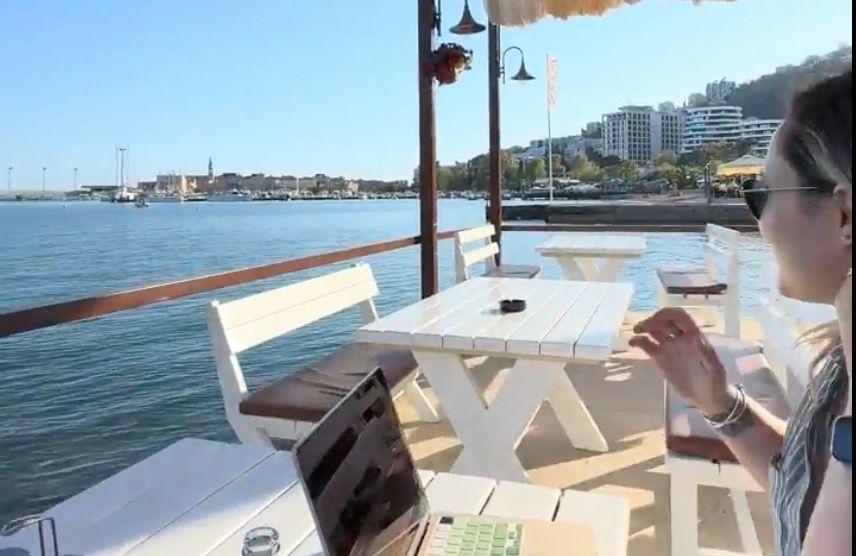
Every time I post a photo working by the sea, someone on LinkedIn appears to explain that "you can't really work at the beach."
The screen glare, the posture, the wind. And they're right about almost all of it. That doesn't mean it can't be done.
I never said I spend eight hours sitting by the water with a laptop on my knees. But I have answered messages from a beach bar, reviewed a document next to the water, or used a quiet afternoon to write.
For an important meeting, I prefer a comfortable chair, a stable connection, and a door I can close. For reading, thinking, or answering messages, a café by the sea can work perfectly well.
The difference is not expecting every place to work for every task.
Though there's another part that almost never makes it into those photos: to be able to work one afternoon by the sea, we first had to build a far more organized routine than it might look.
The trip is organized around remote work
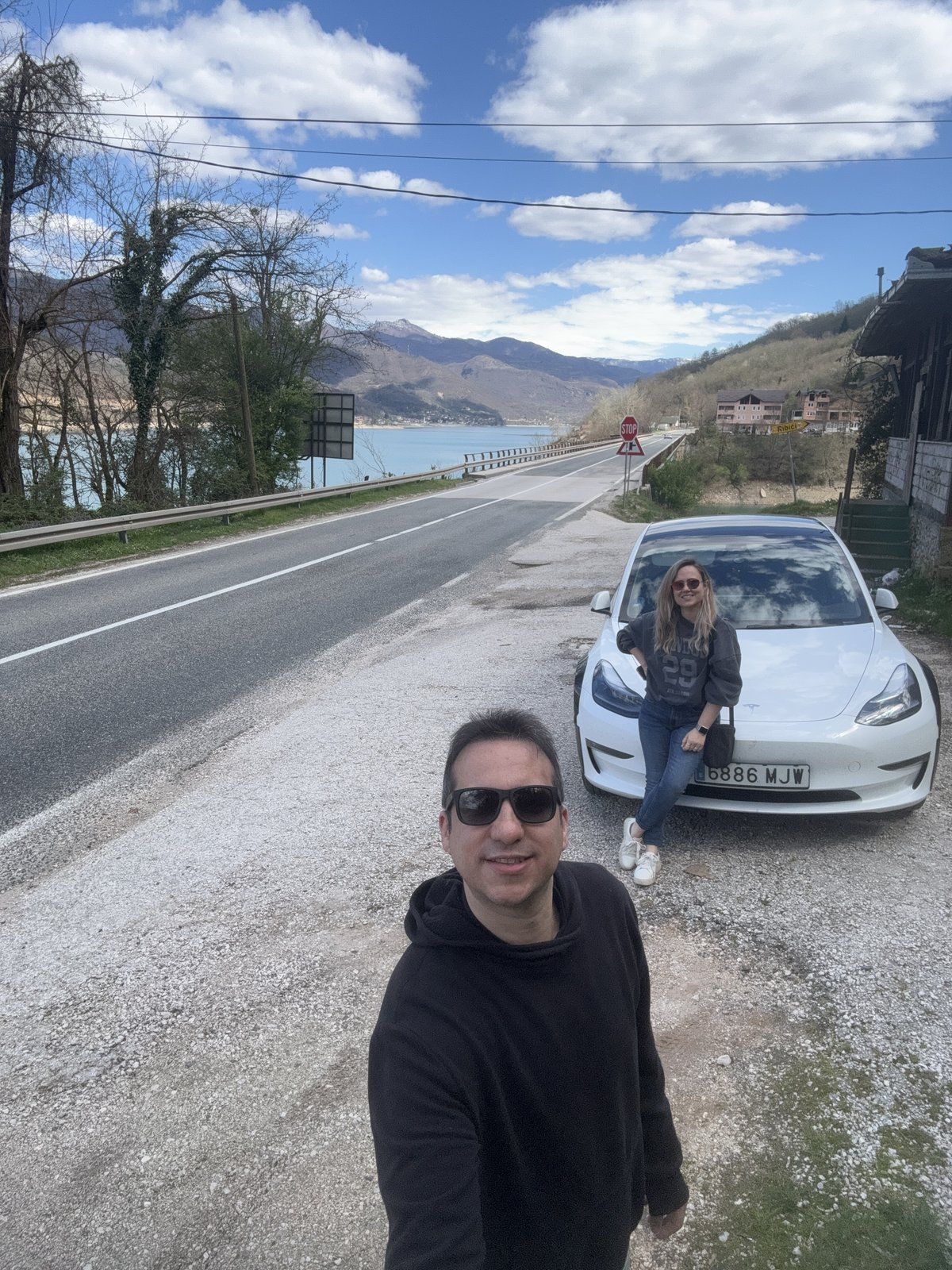
We're crossing the world in a Tesla, but we don't live permanently on the road.
During the week, we work. We attend to clients, have meetings, write, sell, and keep building our projects. We move between cities and countries on weekends.
We decided this because a client shouldn't receive a later reply because we happen to be crossing a border, looking for a charger, or trying to find the keys to a new apartment.
Our trip is a personal choice. That's why, Monday through Friday, our life looks more like that of any remote worker than the traditional image of someone traveling the world. The difference is that when we close the laptop, we might be looking out at Lake Ohrid, a city in Albania, or anywhere else along the route.
Before booking, we think about how the week will go
We no longer choose accommodation purely based on location, kitchen, or a nice view. Before booking, we try to imagine what it'll be like to work there for several days.
We check for a real desk — not a decorative shelf described as a "workspace." We read comments about the wifi, look for nearby outlets, and think about what will happen if both of us have meetings at the same time.
A door that closes can end up being worth more than a balcony.
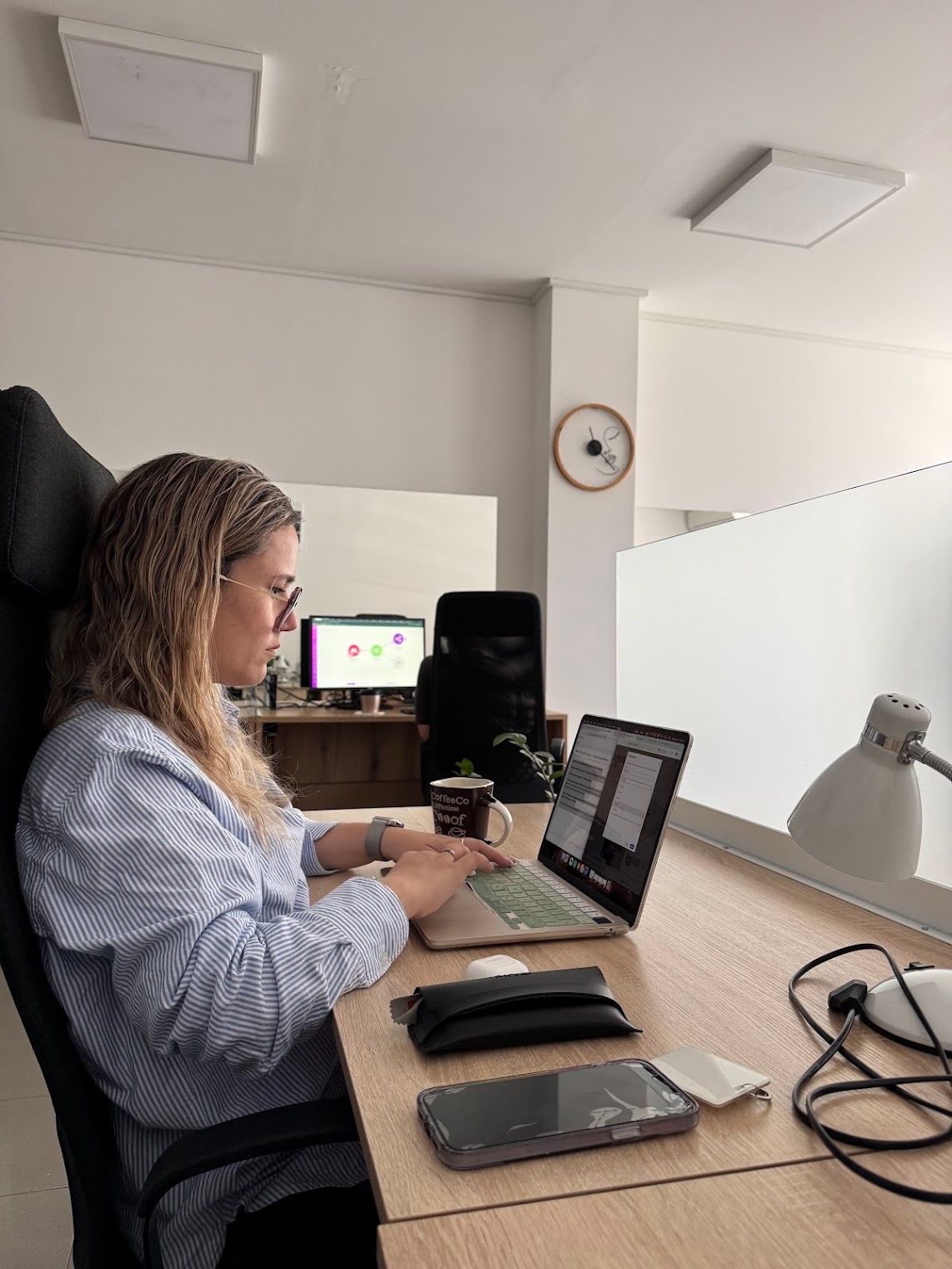
Our basic setup travels with us: laptops, phones, headphones, and a few accessories. Everything else depends on the place. The desk, chairs, lighting, quiet, and layout change every time.
Sometimes we find a spacious apartment where we can work comfortably. Other times, we decide it's better to separate home from office and look for a coworking space.
We're not trying to reproduce the same space in every city. We choose the base that best addresses what the weeks ahead will demand.
Every option solves something and complicates something else
An apartment offers a kitchen, more space, and the ability to work without going out. It also means grocery shopping, cooking, cleaning, and handling small tasks that, added up, consume quite a bit of time.
A hotel simplifies that side of life. However, a single room can stop being comfortable once two people need to work, rest, and take meetings in the same place.
In North Macedonia, for example, we chose a hotel precisely for its conveniences. We wanted to forget about shopping, cooking, and cleaning for a few days. Eating out wasn't a consequence we had to endure — it was part of a conscious decision to recover time.
At the same time, we didn't want to turn the room into a bedroom, office, and meeting space all at once. So we found a coworking space open 24 hours, with good chairs, a stable connection, and enough room to work separately.
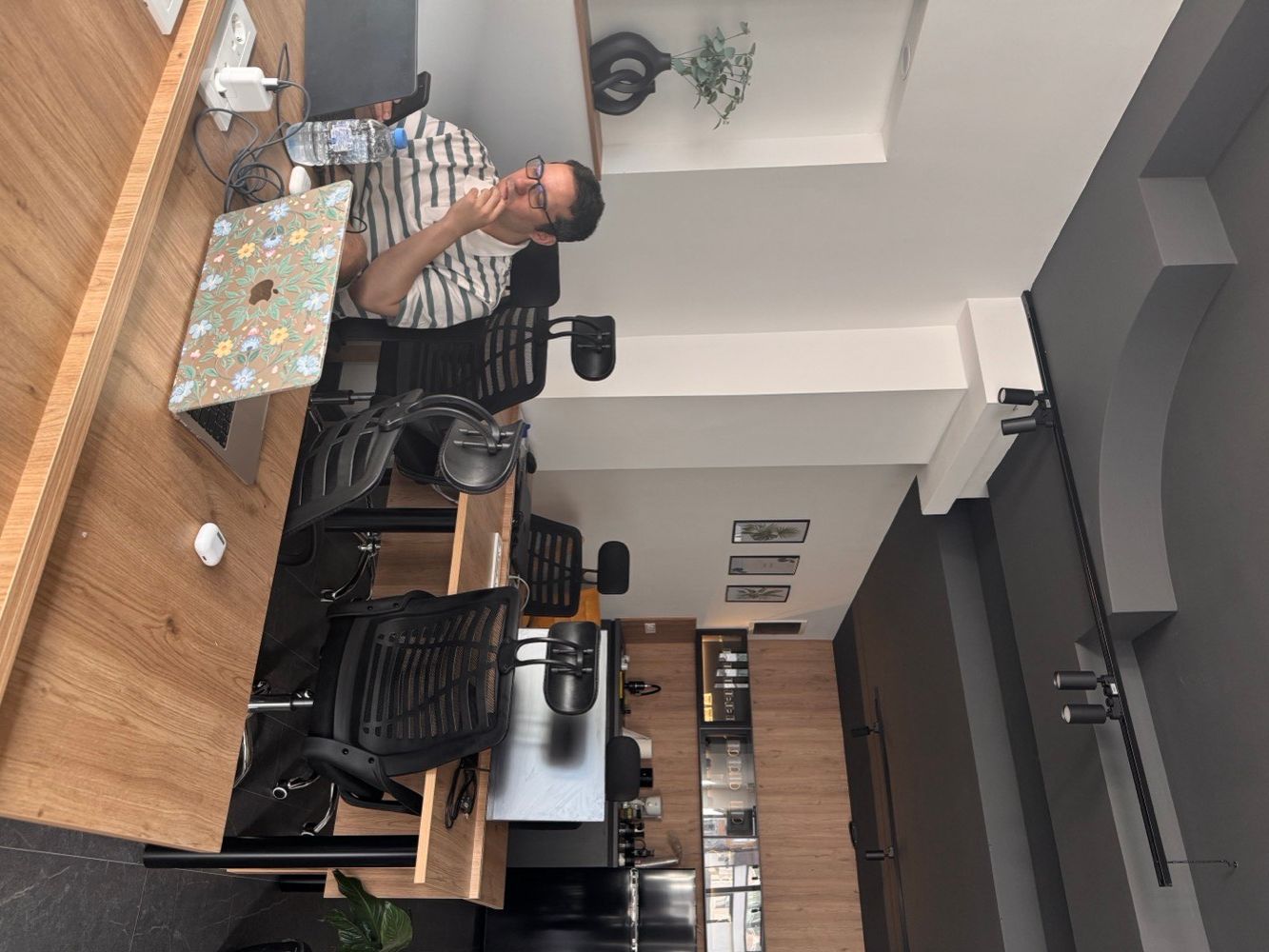
The combination worked because each place had a clear function. The hotel was for resting. The coworking was for working.
In another destination, we might do the opposite and choose an apartment with a good desk. We're not loyal to any type of accommodation. We first think about what we'll need, then choose whatever solves it best.
It sounds very organized when I describe it this way. In practice, it sometimes finds us zooming into a photo of the accommodation trying to figure out if that thing by the window is a desk or just a side table barely big enough for a mug.
Being a digital nomad depends on the task
I don't need the same conditions to answer messages as I do to present a proposal, write an article, or have an important conversation with a client.
For meetings, we look for quiet, privacy, and a stable connection. For tasks that require concentration, we try to protect blocks of time without interruptions. For reading, reviewing something, or answering emails, a café is often enough.
Coworking spaces aren't an obligation at every destination either. We choose them when we need to separate rest from work, get better conditions, or solve the small challenge of two people sharing a home, projects, and schedules without hearing each other repeat the same presentation over and over.
Working on the move doesn't mean forcing every place to behave like an office. It means understanding what we can do well in each one.
Our calendars live across several countries
We might be in the Balkans, but our clients and teams are spread across the US, Latin America, and Europe.
That requires more than just setting the right time zone in our calendars. We need to organize our days to be available when others need us, without turning every workday into a string of scattered meetings from morning to night.
A normal call time for someone in Mexico might be quite late for us. Other times, it means starting work at five in the morning. That's not usually the most glamorous side of remote work: there's tiredness, headphones, and a few seconds of effort to remember which language the first conversation starts in.
That's why we try to batch meetings, protect focus blocks, and choose spaces that allow us to work in hours different from those of the country we're currently in.
A 24-hour coworking space doesn't mean we want to work all night. It means our workday doesn't always match the city's schedule outside the window.
The geographic flexibility works because we don't transfer it as uncertainty to our clients. They know when we're available, meetings happen from a proper space, and work continues normally — even if we changed countries over the weekend.
The road is for the weekend
Travel days have too many variables to treat them like normal workdays.
Before leaving we have to pack everything, check the charge, calculate the route, and locate the chargers. If we're crossing into another country, we also have to account for the border crossing, the documents, and possible delays.
Then we need to find the accommodation, carry the bags up, connect to the wifi, and set up our workspace again.
That's why we travel on weekends. We don't schedule meetings from the Tesla or expect to handle important tasks during a border crossing. We also don't promise to finish something "when we arrive," because arriving in another country is rarely as simple as coming back from running an errand.
Saturday and Sunday are for moving, sorting out the logistics, and settling in. When the week begins, we're already at our new base and ready to work.
This slows the travel pace a bit. We can't move every time we feel like it or improvise every day. But it also makes the whole thing sustainable, and it lets us take care of the professional side that makes everything else possible.
Yes, sometimes I do work by the sea
Being a digital nomad isn't about swapping an office for a succession of beautiful views. But I also don't think I have to prove I'm really working by always appearing behind four walls.
I wouldn't take a client meeting somewhere with wind, noise, or an unstable connection. But I can write some ideas, read, or answer messages while having a coffee by the water.
Sometimes the sun makes the screen impossible to see, the battery dies faster than expected, and the table wobbles. Between "this isn't the right place to work for eight hours" and "you can't work here" there's an enormous difference.
The photo by the sea is real. What it doesn't show is the organized calendar, the booked coworking space, the meetings that are already done, and everything we did beforehand to be able to sit there without leaving anything important unattended.
The freedom of remote work needs structure
Remote work made this trip possible. It lets us move between countries without putting our careers or projects on hold.
But geographic freedom doesn't eliminate the need for a routine. It makes it more important.
We need to check the connection, choose each base carefully, protect schedules, and separate work days from travel days. We also need to leave room to actually experience the places we're in — because it would be fairly absurd to travel the world and spend all the time looking at the same screen.
We don't automatically look for the cheapest accommodation, the most beautiful, or whatever a digital nomad is supposedly supposed to choose. We choose what allows us to live well, work in good conditions, and maintain the quality our clients expect.
Some weeks that means an apartment with a kitchen and a good desk. Others, a comfortable hotel paired with a 24-hour coworking space. And some afternoons, when the work is done, it means opening the laptop by the sea.
Someone on LinkedIn will probably tell me again that you can't work from there.
They're probably right if we're talking about spending eight hours in front of a screen.
Fortunately, I never said I did.